
1-805-484-2992
Quotes - Engineering - SalesCummins KTA19 Heat Exchanger
Heavy continuous duty cooling
The KTA19 is a towing and dredging engine. Published marine ratings sit in the region of 500 to 800 horsepower, and the vessels that carry it typically hold high load for hours at a stretch, not minutes. That is the hardest thing you can ask of a raw water cooler, because there is no recovery period during which the tube side gets a break and the coolant temperature comes back down.
The KTA19 works for a living. Ratings run roughly 500 to 800 HP in tugs, dredges and offshore boats, at loads held for hours, and the cooler has to carry that duty with the tubes in a fouled condition.
Sizing follows the same route as every engine here: the jacket water heat rejection figure from the engine data sheet for your rating and duty class, then the design seawater inlet temperature and the raw water flow available. What continuous high load changes is the fouling allowance. Under sustained duty the difference between a clean cooler and one at the end of its cleaning interval is the difference between full power and a derate, and on a tow that is a commercial problem.
For a Cummins KTA19 heat exchanger replacement, send the rating and duty class, the nameplate or old part number, connection sizes and thread type, the design seawater temperature and the raw water pump capacity. The standard build is copper-nickel tubes in bronze bonnets with zinc anodes; titanium bundles are a common upgrade on these boats. Call 1-805-484-2992 or email Sales@HeatX.com.
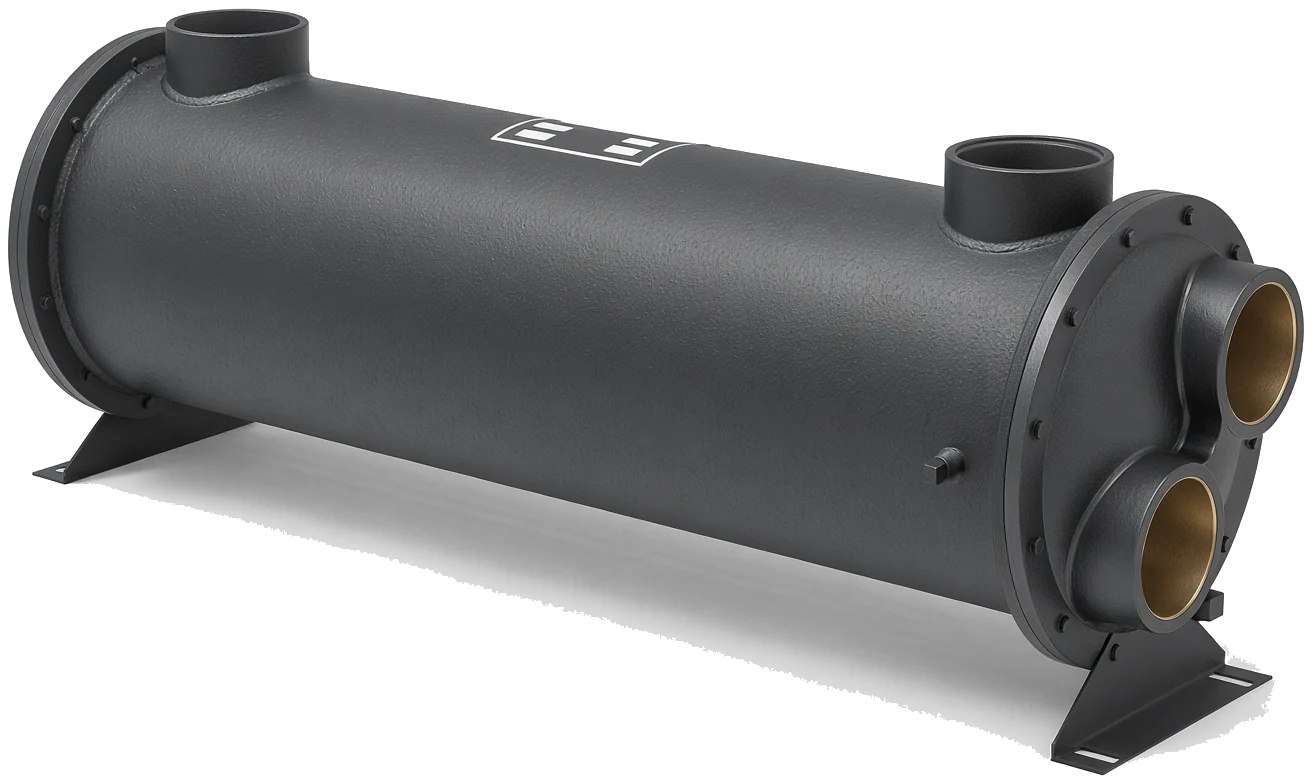
 Large HC Frames
 Tug Duty
 Titanium Upgrade
 Lube Oil
Specifying For Sustained Load
A KTA19 selection is quoted with both clean and fouled performance so the margin is visible.
Duty Inputs
- Rating and duty class
- Jacket water rejection at sustained load from the data sheet
- Hours at high load per day
- Design seawater inlet temperature
- Raw water flow and head available
We Supply
- Large frame shell and tube cooler
- Copper-nickel or titanium tube bundle
- Bronze bonnets with multiple anode ports
- Clean and fouled duty figures
- Pressure drop stated both sides
Duty Profile
- Seawater on the tube side
- Jacket coolant on the shell side
- Two pass to limit head loss
- Surface carried for the fouled case
- Anode ports reachable in place
| MODEL / RATING | HORSEPOWER | DUTY | TYPICAL SELECTION |
| KTA19 continuous rating | About 500 to 600 HP | Towing, continuous | HC Series upper frames |
| KTA19 intermittent rating | About 600 to 700 HP | Workboat propulsion | HC Series, two pass |
| KTA19 high output | About 700 to 800 HP | High output propulsion | Largest HC frames, call for rating |
| KTA19 prime power set | About 500 to 700 HP | Prime power generation | AB Series or HC with ASME |
| Warm or sandy water | Any KTA19 rating | Seawater duty | Titanium tube bundle |
| Lube oil duty | Sized on oil load | Lube oil cooling | Lube Oil Cooling |
Why Towing Duty Is The Hard Case
Load held, not peaked
Most marine engines see high load in bursts, and between bursts the cooling system catches up. A tug on a tow does not work that way. The engine sits near its rating for as long as the job takes, and every part of the cooling system has to be in equilibrium at that condition rather than riding out a transient.
For the raw water cooler that means the design point is the sustained condition with the tube side in the state it will actually be in, not spotless. Tell us the hours you hold high load and we will state both the clean and the fouled performance so you can see the margin you are buying.
Dredges, harbor work and stirred water
Boats on these engines often work in water they are themselves stirring up. Dredging, harbor towing and shallow river work all put suspended sediment through the sea chest, and some of it ends up in the tube bores. High velocity keeps most of it moving, but it also erodes tube inlets on copper-nickel over time.
That is the balance titanium resolves. It tolerates the velocity needed to keep sediment moving without the erosion penalty copper-nickel pays at the tube inlets, so the bundle stops being a consumable renewed every few seasons. Strainer maintenance still matters either way. See Seawater Velocity and Erosion.
Related


ENGINEERING • CORROSION
Velocity And Erosion
The velocity band that keeps sediment moving without eroding tubes
+ Learn More
VESSELS & ENGINES • BY VESSEL
Tugs And Workboats
Duty cycles that decide the fouling allowance
+ Learn MoreQuestions we get on this model
It depends on where in the roughly 500 to 800 horsepower band your engine is rated, your design seawater temperature and the raw water flow available. Most KTA19 duties sit in the upper HC frames. Send those three inputs and we will size it against the heat rejection on the data sheet.
It is a strong candidate. A cooler that meets duty when clean and cool will not when the water is warm and the tubes are partly fouled, and an engine protecting itself pulls power back rather than alarming. Compare coolant temperature at the same load against earlier in the season.
Sustained high load runs the tube side warmer, and zinc consumption rises with water temperature. On a hard-working KTA19 that often means changing anodes far more often than a general recommendation implies. Additional anode ports and spares aboard are the practical answer; extreme rates justify a stray current check.
Frequently, yes. These boats work in water they stir up themselves, and the velocity needed to keep sediment moving through the tubes is the same velocity that erodes copper-nickel inlets. Titanium tolerates it, so the bundle stops being a consumable item on a short cycle.
On oil heat load, oil grade and allowable pressure drop rather then engine horsepower. We also check pressure drop at cold start, not just at hot running, because a cooler that is comfortable when warm can choke the oil circuit on a cold morning. Send the oil flow and target temperature.
Two pass is the usual selection at KTA19 flows. The raw water pump moves enough volume to keep tube velocity in the useful range without the head penalty that two extra passes add, which matters when the same line also feeds a lube oil cooler. Four pass only comes in where the flow reaching the cooler has been cut by a long run or a crowded header. Send the pump capacity and what else shares the line.

