
1-805-484-2992
Quotes - Engineering - SalesAir Conditioning
Cooling the Chiller
Air conditioning is the load that runs when everything else is stopped. A vessel at anchor in the tropics has its main engines off, a genset running, and a chilled water plant working flat out through the afternoon and most of the night. The condenser is rejecting the whole cooling load plus the compressor work into seawater that is warm, still, and often drawn in a harbor rather than offshore. There is no forward speed helping the intake and no cool water passing the hull.
Marine air conditioning runs hardest at anchor in the tropics, on the hottest day, with the warmest water the boat will ever see. That is the condition a chiller condenser has to be selected for, not the average.
That makes condenser approach the whole story. Condensing temperature is seawater temperature plus whatever approach the condenser can achieve, and condensing temperature sets both the compressor's power draw and the plant's available capacity. A marine HVAC condenser that has picked up a season's fouling raises head pressure, cuts capacity, loads the genset harder and eventually cannot hold the setpoint on the day everyone is aboard. The complaint arrives as warm cabins, not as an equipment alarm.
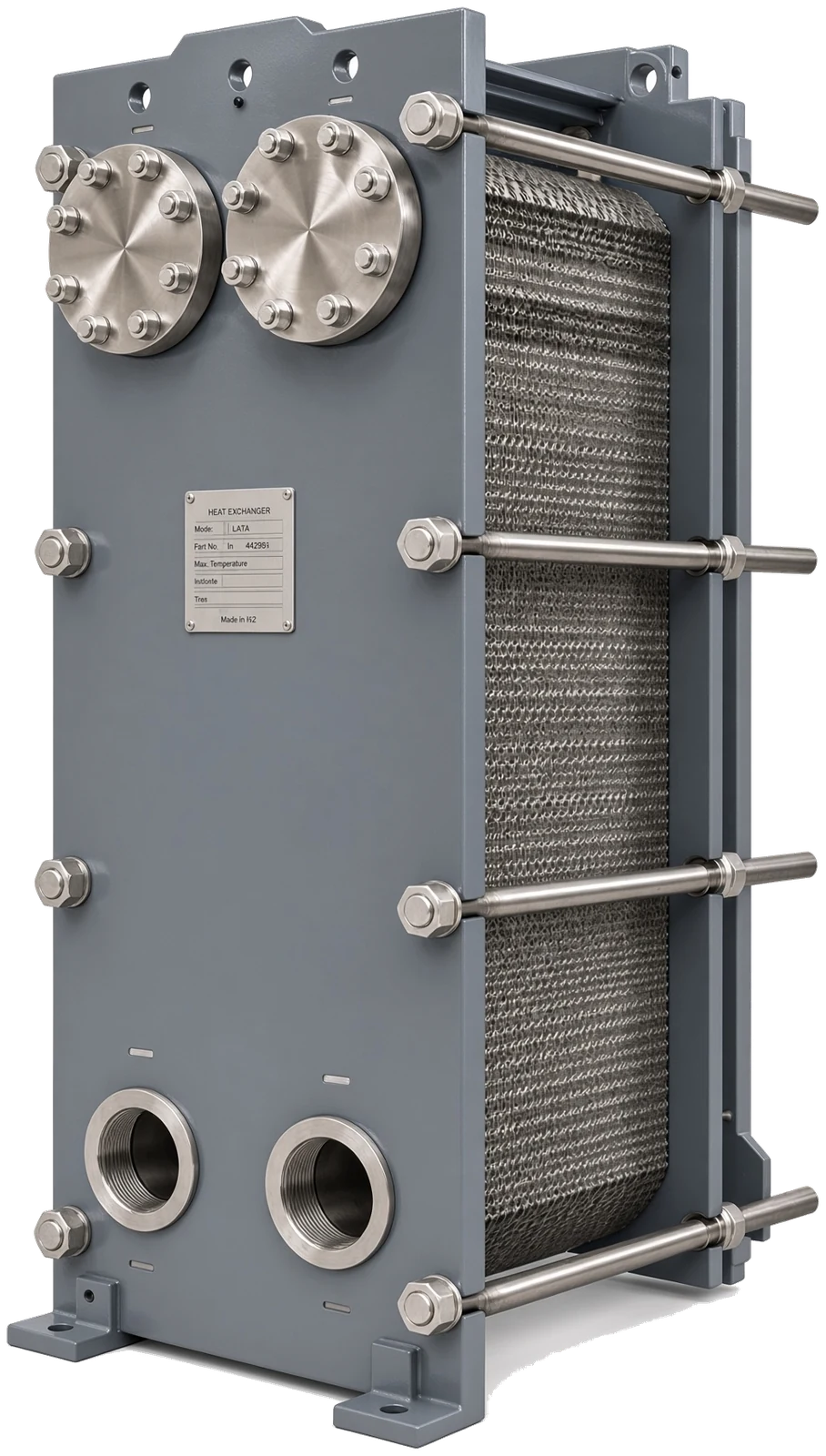
Condenser water pumps on air conditioning plant are often the smallest and most neglected pumps on the boat, yet the whole system's capacity depends on them. Check the pump, the strainer and the through-hull before concluding the condenser has failed.
Request a QuoteDesign for the Anchorage
The worst case for a chiller condenser is a still tropical anchorage, and a selection made on cruising conditions will disappoint on exactly the day it matters most.

Warm Cabin Diagnosis
Work through in this order
- Condenser water flow and strainer
- Head pressure against water temperature
- Refrigerant charge and air in system

Annual Service
Keep the capacity you paid for
- Rod and flush the condenser tubes
- Renew anodes in the bonnets
- Clean intake grating and strainer
Why Warm Water Hurts So Much
A chiller's capacity and its power consumption both depend on the difference between evaporating and condensing temperature. Raise the condensing side by ten degrees and you lose capacity and gain compressor power at the same time, which is a double penalty. In warm water with a fouled condenser both effects arrive together.
- Air conditioning runs hardest with the mains stopped
- Condensing temperature sets capacity and power together
- Design for the warmest still water the boat will sit in
- Fouling raises head pressure and loads the genset
- Condenser water pumps are the least maintained part
- Titanium suits warm silty harbor and chlorinated berths
The Condenser Water Circuit
Air conditioning condenser water is usually supplied by a small centrifugal pump with its own strainer and through-hull, and it is frequently the least maintained part of the system. Growth in the intake, a strainer that has never been opened, an impeller worn round, or air locking on a long suction all reduce flow, and the symptoms are identical to a fouled condenser.
- Warm cabins are the symptom, not an alarm
- Discharge water temperture is a quick flow check
- Copper-nickel is fine for temperate cruising boats
- Surface margin absorbs a season of fouling
- Titanium condenser ratings are quoted per duty
Selection questions
Because that is when seawater is warmest and the plant is at full load, so any lost condenser capacity shows immediatly. Check condenser water flow and the strainer first, then head pressure against seawater temperature. A fouled condenser produces exactly this pattern without ever alarming.
Feel the condenser water discharge with the compressor running. Barely warm discharge with a hot plant means insufficient flow, so look at the pump, strainer and intake. Warm discharge with high head pressure means the condenser has lost surface and needs cleaning or replacing.
In warm harbors, tropical cruising grounds or berths near chlorinated discharges, generally yes, because those conditions are hardest on copper alloys and the plant runs long hours. For temperate cruising with an annual clean and maintained anodes, copper-nickel with zincs is the better value.
Annually as a baseline, and more often for boats in warm silty water. Rod and flush the tube side, renew the anodes and clean the intake grating and strainer at the same time. If head pressure is already high, clean before the season rather than after.
Often yes, if the space and the piping allow, and extra surface buys useful fouling margin. The constraints are the water side pressure drop your condenser pump can accept and the refrigerant connection arrangement. Send dimensions and plant data and we will look at what fits.
Related

APPLICATIONS • SEAWATER
Refrigeration
The same condensing problem on fish hold and freezer plant.
+ Learn More
VESSELS & ENGINES • BY VESSEL
Ferries
Passenger comfort as a critical system on scheduled boats.
+ Learn More
HEAT EXCHANGERS • PARTS
Anodes
Zinc anodes for condenser bonnets and how often to check.
+ Learn More
