
1-805-484-2992
Quotes - Engineering - SalesFishing Fleet
Cooling a Working Boat
Fishing vessels are the hardest duty we routinely supply. The main engine runs at high sustained load for days, the deck hydraulics work continuously through a haul, the refrigeration plant runs from the moment there is fish in the hold, and all of it draws seawater from inshore ground that is warm, silty and full of things that block a strainer. On top of that the boat earns its money in a window, so a cooler failure in the middle of the season is not a maintenance issue, it is a lost trip.
A fishing boat works its cooling harder than almost anything else afloat: high sustained load, dirty inshore water, deck hydraulics on relief for hours, and a season that gives you no time to be broken down.
The wear pattern is predictable. Jacket water coolers scale and lose margin over two or three seasons until August exposes them. Hydraulic coolers on the net drum and winch circuits are undersized because the original selection assumed a duty cycle nobody actually runs. Refrigeration condensers foul and lose capacity, and the plant starts running longer to hold the same hold temperature. Tube ends thin out because the anodes were last replaced two owners ago.
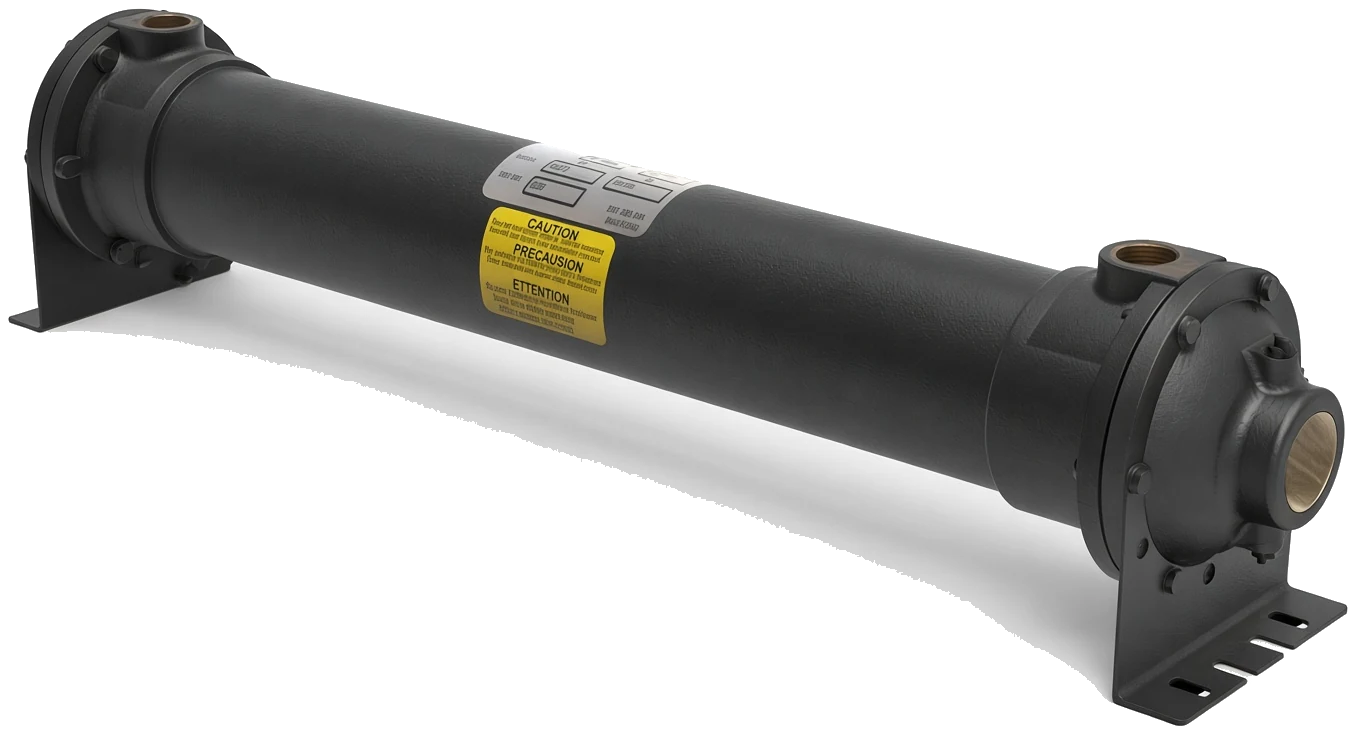
Nearly every fishing boat we deal with benefits from more surface than the bare calculation asks for. Fouling is certain, cleaning windows are short, and the extra cost at purchase is trivial against a trip lost to a hot engine in the middle of a season.
Request a QuoteSeason Beats Schedule
On a fishing boat maintenance happens when the fish are not there, which means the cooling has to hold for the whole season on one cleaning, not on a calendar.

Pre-Season Check
Do this before the first trip
- Rod and descale every seawater side
- Renew all zinc anodes
- Record nameplates and part numbers

Stores List
What to carry for a season
- Spare bundle for the main cooler
- Two sets of anodes per unit
- Complete gasket sets aboard
Fouling Is the Main Enemy
Fishing ground is rarely clean water. Silt, sand, weed, jellyfish and shell all arrive at the strainer, and what gets past it lands in the tubes. Carbonate scale builds on top of that in warm water, and a tenth of an inch of deposit takes a real bite out of capacity. The result is an engine that held temperature in June and is climbing by late August.
- High sustained load with no cleaning window
- Inshore water brings silt, weed and shell to the tubes
- Net drum circuits run near full pump power as heat
- Refrigeration condensers lose capacity without alarming
- Two pass frames rod out with one bonnet off
- Surface margin costs little and saves trips
Deck Hydraulics Run Hot
A net drum holding tension against a relief valve for twenty minutes dissipates close to full pump power as heat. Multiply that by a full day of sets and hauls and the oil temperature climbs to where seals and hoses start giving up. The original cooler on many boats was sized for an average that the boat has never once operated at.
- Copper-nickel tubes take a brush without damage
- Titanium suits condenser duty and warm fast water
- Air cooled units serve deck machinery without seawater
- Record nameplates before you need a replacement
- Bundle plus gaskets is the standard fishing spares kit
Questions engineers ask
Enough to hold the engine through a full season on one cleaning in the warmest water you fish. In practice that means selecting above the bare thermal minimum. Extra surface costs a modest amount at purchase and buys the fouling margin that decides whether you finish the season.
Cooler. A larger reservoir only delays the temperature rise; it does not remove heat. If the circuit holds tension against a relief valve for long periods you are generating heat at near full pump power, and only a properly sized cooler with guaranteed cooling flow will hold it.
Often worth it. Condenser duty runs seawater at higher velocity and the plant is warmer than a jacket circuit, which is harder on copper alloys. If you have already lost one condenser to tube attack, or you work warm chlorinated harbors, titanium usually pays back over the vessel's life.
With the right product and dilution, yes, and rinsed thoroughly afterward. What ruins copper-nickel is aggressive acid left to long, or wire brushing that scores the protective film. Mechanical rodding with a nylon or soft brass brush plus a mild descaler is the routine we recommend.
Related

APPLICATIONS • OIL COOLING
Hydraulics
Deck machinery heat loads and how they are actually sized.
+ Learn More
HEAT EXCHANGERS • TITANIUM
Condensers
Titanium condensers for RSW and brine refrigeration plant.
+ Learn More
ENGINEERING • CORROSION
Velocity
Seawater velocity limits that protect copper-nickel tubes.
+ Learn More
