1-805-484-2992
Quotes - Engineering - SalesSemi-Welded Cassettes
Welded Where the Gasket Would Fail
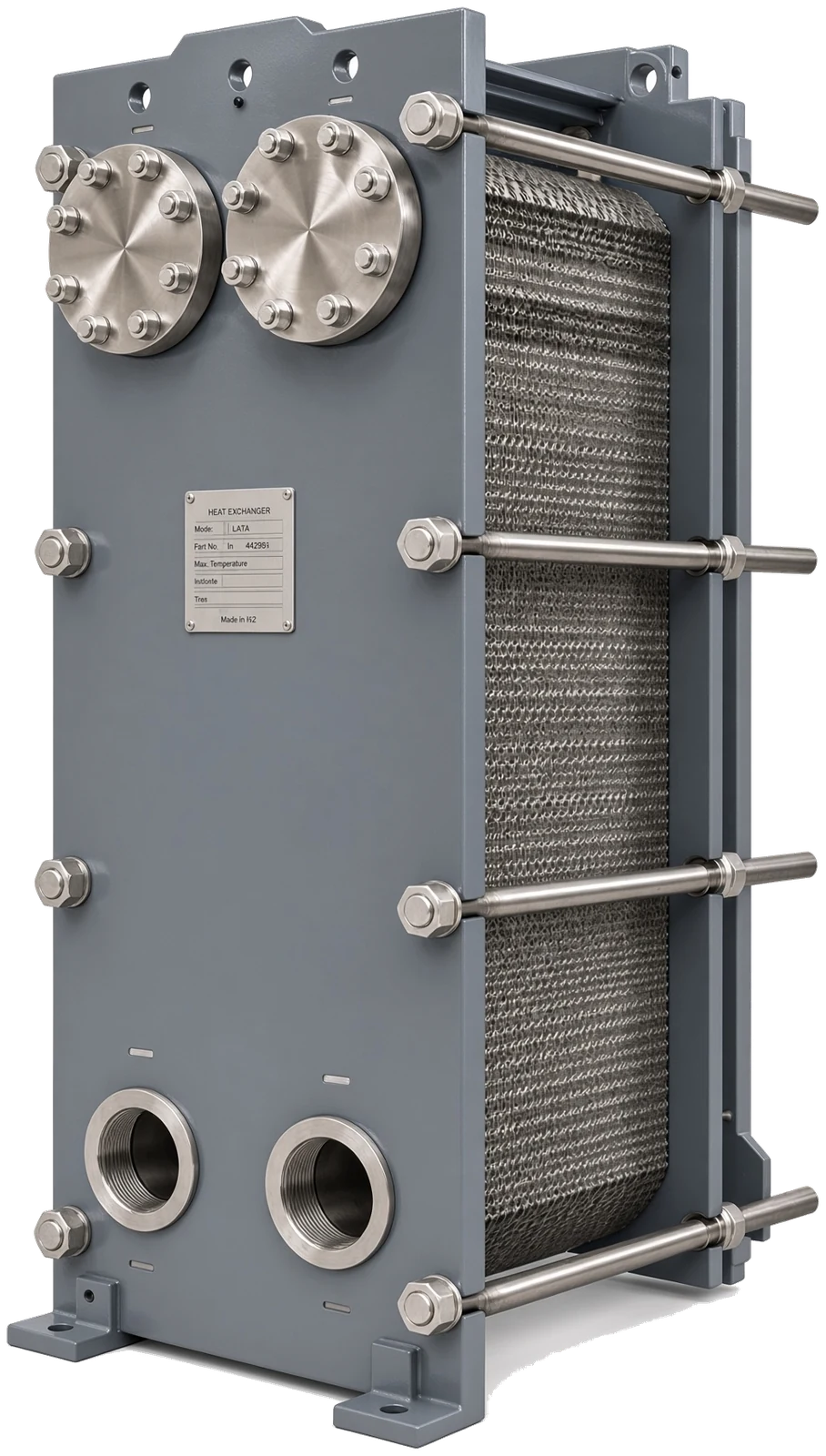
A semi-welded plate heat exchanger for marine duty takes the plates of a gasketed unit and laser-welds them together in pairs. Each pair becomes a cassette with a sealed channel between its two plates and no gasket anywhere inside it. The fluid that runs in that welded channel never touches an elastomer. The cassettes are then hung in the frame and clamped with gaskets between them exactly as a gasketed pack is, and the second fluid runs in those gasketed channels. On a vessel the second fluid is nearly always seawater.
The point of the arrangement is the first fluid. Refrigerant, ammonia, an aggressive process medium or anything at a pressure a gasket should not carry goes in the weld. Seawater goes on the gasket side, where a gasket does the job it does in every titanium plate unit we supply and where a failed gasket leaks water to the drip tray rather than refrigerant to the machinery space. The plates are titanium for seawater duty or stainless steel where the gasketed side is a fresh-water or brine loop.
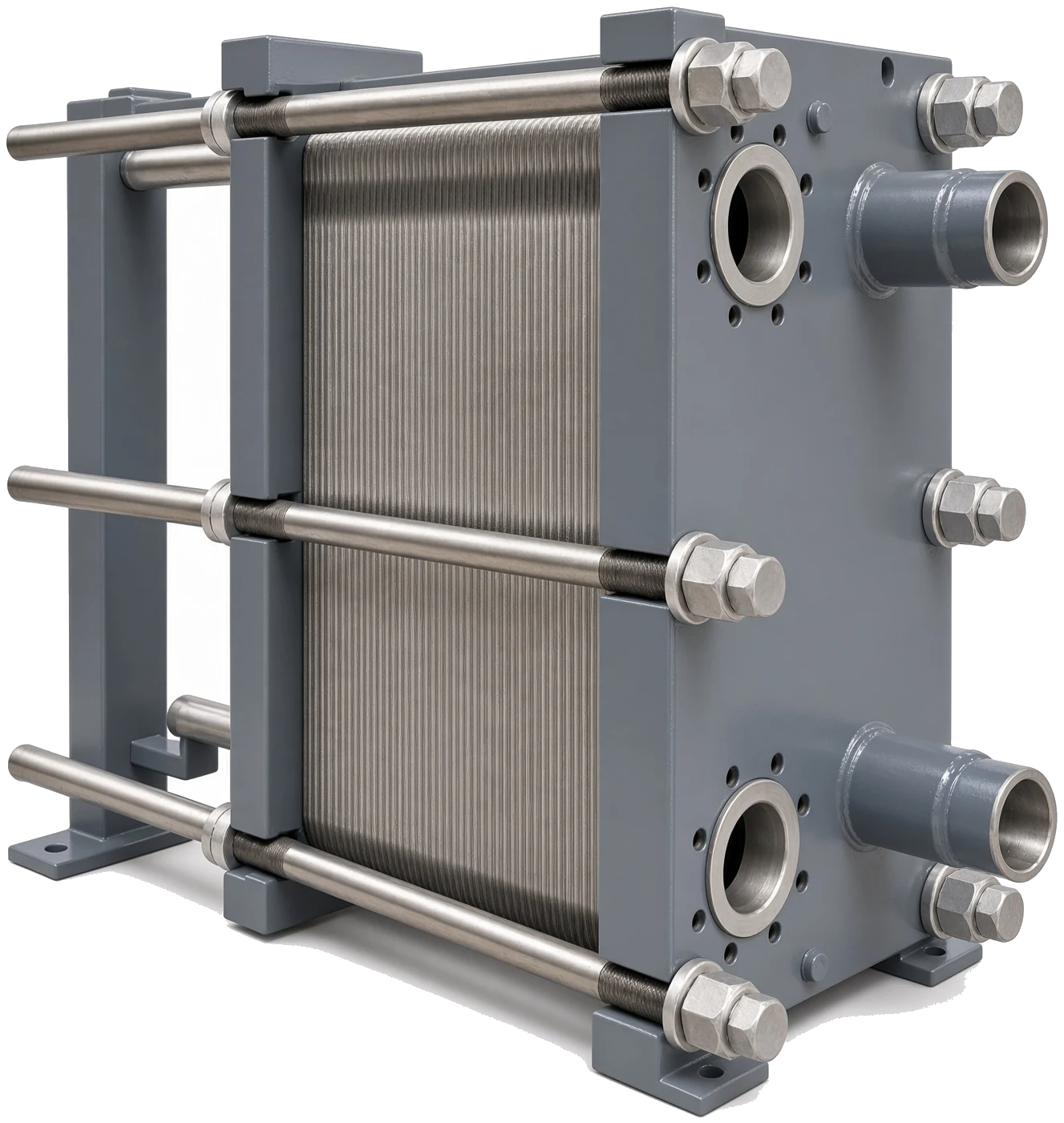
A semi-welded pack carries half the gaskets of a gasketed pack of the same plate count, and every one of them is on the seawater side. Re-gasketing is therefore a seawater-side job, done with the refrigerant charge still sealed inside the cassettes.
Request a Quote



How a Cassette Is Made and Hung
Two pressed plates are laid face to face and laser-welded around the port and the plate perimeter that bound the channel between them. The weld is continuous and there is no filler material to corrode. The cassette that results has two open ports feeding the welded channel and two ports that pass straight through, and it hangs on the carrying bar of the frame like a single thick plate.
Between one cassette and the next sits an ordinary gasket, in a groove pressed into the outer face of each cassette, routing the gasketed fluid through the space between cassettes and sealing it from the outside. The alternation that puts one fluid in every second channel is built into the cassette rather than into the gasket layout, which is why the pack cannot be assembled wrongly with respect to which fluid goes where.
Why Refrigerant Duty Wants a Weld
A gasket in a refrigerant channel is asked to hold a gas at condensing pressure, resist the refrigerant and the oil carried with it, and stay tight across a frame that warms and cools every cycle. Elastomers can be chosen to do that for a while, but a gasket that fails on a refrigerant side loses the charge and, on an ammonia plant, puts ammonia into a space where people work.
The weld removes the question. Refrigerant pressure is held by titanium or stainless plate and a weld, the gasket sees only seawater at seawater pressure, and a gasket failure shows as a water drip at the pack edge with the refrigerant still sealed. That is why semi-welded units are the plate answer for refrigeration condensers and HVAC chiller condensers on seawater.
Servicing the Gasketed Side Only
Because every connection is on the fixed frame end, the pressure plate is drawn back and the cassettes slid apart for cleaning with the pipework untouched. The seawater faces are the outer faces of the cassettes and are hosed and brushed in the open. The welded channels are not opened; they are cleaned in place by circulation if they need it, and on a refrigerant condenser they seldom do.
A gasket set for a semi-welded pack is one gasket per cassette, half the count of a gasketed pack with the same number of plates, and it is fitted to the cassette exterior without disturbing the weld. Plate inspection, gasket selection and when to renew the whole pack are covered on Plate Packs and Gaskets.
Rating and Replacing a Semi-Welded Unit
A new unit is rated from the refrigerant or fluid on the welded side, its condensing or evaporating temperature and the load, the seawater flow and its warmest inlet temperature, and the pressure and test pressure each side must hold. Plate size, cassette count, plate metal and gasket material all come out of that. Ratings are per duty and we do not publish them as a table, so call 1-805-484-2992 with the figures.
For a replacement send a nameplate photo, the number of cassettes in the pack, plate height and width, port center distances, the connection size and position on the fixed end, and the refrigerant in use. If the unit is a gasketed one that has been giving trouble on the refrigerant side, say so; the same frame envelope is often available semi-welded. We confirm the replacement with you before it is built.
Refrigerant Never Meets Rubber
Weld the channel the refrigerant runs in, gasket only the channel the seawater runs in, and the plate unit keeps its footprint while losing the one weakness a condenser cannot afford.
Material questions
In a gasketed unit every channel is sealed by a gasket. In a semi-welded unit the plates are laser-welded in pairs, so one fluid runs in a welded channel with no gasket and only the other fluid sees gaskets. Frame, tie bolts, connections and the way capacity is changed are the same. The welded side is for refrigerant, ammonia, aggressive or high-pressure media.
Yes, and it is the usual reason a marine plant specifies one. Ammonia runs in the welded channel and never contacts a gasket, seawater runs on the gasketed side against titanium plates, and a gasket failure leaks seawater to the outside rather than releasing ammonia. Send the ammonia duty, the seawater flow and the pressures each side must hold and we will rate it.
The gasketed side. The welded channel is reserved for the fluid that must not meet a gasket, which on a vessel is the refrigerant or the high-pressure medium. Seawater on the gasketed side means the seawater faces of the cassettes are the ones exposed when the pack is opened, so cleaning and re-gasketing are done without touching the refrigerant side.
Titanium where the gasketed side carries seawater or brackish water. Stainless steel is acceptable where the gasketed side is a closed fresh-water or brine loop and the welded side is refrigerant, as on a chiller evaporator. Tell us both fluids and their temperatures and the plate metal is set at the rating along with the gasket material.
A nameplate photo, the cassette count, plate height and width, port center distances, the connection size and position on the fixed frame end, the refrigerant in use and, if known, the condensing duty and seawater flow. From that we match the thermal duty and the frame envelope and confirm the replacement with you before it is built. Call 1-805-484-2992 or send it to Sales@HeatX.com.