
1-805-484-2992
Quotes - Engineering - SalesThermal Plates for Holds and Tanks
A marine thermal plate heat exchanger turns the usual arrangement inside out. Instead of pumping the seawater, brine or product through a cooler, the cooler becomes part of the tank. Each plate is two metal sheets laser-welded together in a dimple pattern and then inflated under pressure, so a network of channels forms between the sheets. Refrigerant or chilled coolant runs through those channels and the outside face of the plate, either welded to the tank wall or immersed in the contents, does the heat transfer directly into whatever it touches.
The simplest heat exchangers on the vessel: laser-welded titanium or stainless plates with refrigerant or coolant inside, either welded to the tank as a dimple jacket or hung in it as an immersion plate. No tubes to foul, no bundle to pull, and a surface a deckhand can clean with a brush.
- Two sheets laser-welded in a dimple pattern
- Inflated to form internal channels
- Fish hold and RSW chilling
- Bait and live wells
- Tank or hold dimensions
- Product, quantity and temperature
The cooler becomes part of the tank.
- Two sheets laser-welded in a dimple pattern
- Refrigerant or chilled coolant in the channels
- Fish hold, RSW, bait and live well chilling
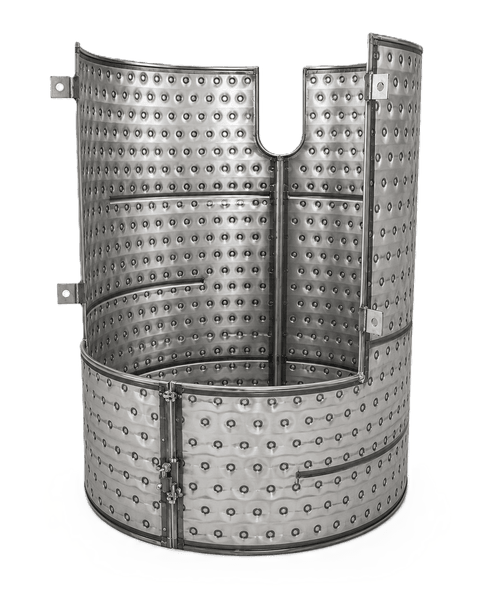
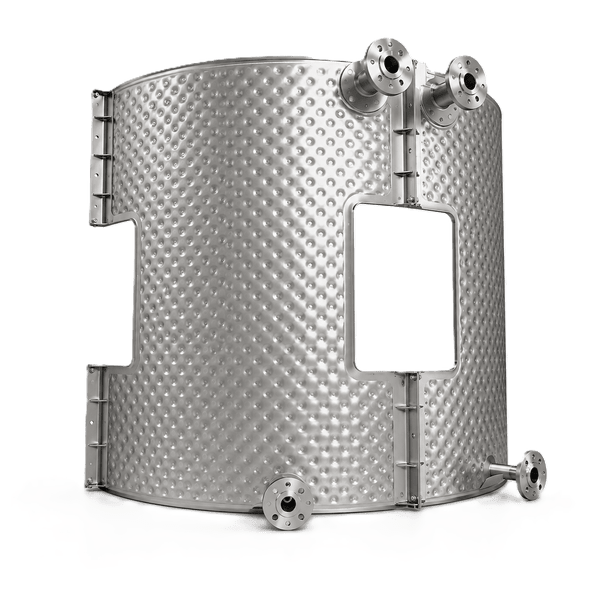
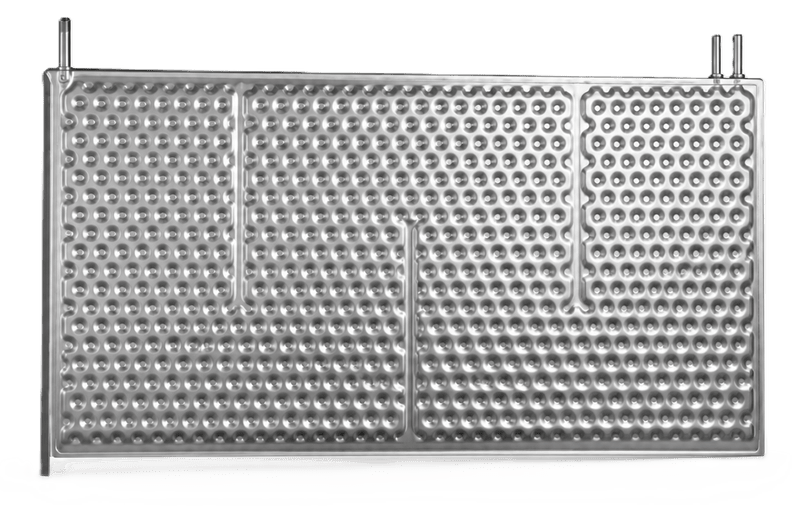






Jacket or Immersion Plate
A dimple jacket is embossed on one side only. The flat side is welded, bonded or clamped to the outside of the tank wall, hold bulkhead or hull plating, and the dimpled side carries the refrigerant or coolant. The tank wall itself becomes the heat transfer surface, nothing sits in the product, and the inside of the hold stays a smooth, washable surface with no plates to work around when loading or unloading.
An immersion plate is embossed on both sides and hangs free in the tank on brackets, so both faces are working surface and the plate can be fitted to an existing hold without hot work on the shell. It gives more surface per plate and is easy to retrofit; the jacket gives a clear tank and no fouling at all. Most holds use one or the other, some use both, and we will say which suits the tank you have.
A hold full of seawater and fish, or a brine tank at well below the freezing point of fresh water, is about as aggressive as marine service gets. The water is cold, salty, oxygen-starved under a load of fish, and loaded with organic matter, and stainless steel in those conditions pits and crevice-corrodes at the welds. Titanium does not. It is immune to chloride attack at every temperature a hold will see and is not eroded by ice or scoured surfaces.
Stainless steel earns its place on fresh water and clean process duty, where the chloride is absent and cost matters. The choice is made per duty, and it is not one to compromise on: a plate that pits through inside a hold puts refrigerant in to the catch. Our Stainless Steel in Seawater notes explain where the line falls.
Thermal Plates Applications

HEAT EXCHANGERS • THERMAL PLATES
Dimple Jacket
Welded-on panels that cool a hold or tank through its own wall
+ Learn More
HEAT EXCHANGERS • THERMAL PLATES
Immersion Plates
Free-hanging titanium plates: construction, mounting and what to send us
+ Learn More
ENGINEERING • MATERIALS
Stainless in Seawater
Where stainless holds up and where it pits at the welds
+ Learn More
