
1-805-484-2992
Quotes - Engineering - SalesKeeping It Running
Service And Maintenance
Rising jacket water temperature is a symptom with at least six causes, and only one of them is a worn out cooler. Scale on the seawater side, air trapped at the top of the shell, a strainer half full of weed, a thermostat bypassing, a tired raw water pump impeller and a genuinely undersized exchanger all read the same on the gauge. Working through them in cost order finds the answer far more often than pulling the unit does, and takes a fraction of the time.
A cooler that is running warm usually has a cheap explanation. These pages set out the cleaning, the rebuild work and the troubleshooting sequence, in the order that finds the cause for the least money and time.
When work is needed it falls into a few well defined jobs. Mechanical cleaning of the tube bores through the removed bonnets deals with mud, shell and marine growth. Chemical descaling handles the hard mineral film that builds on the seawater side over years. Tube bundle replacement is the answer when the tubes have failed and the shell has not. And anode and gasket renewal is routine work that should happen on a schedule rather than after a leak.
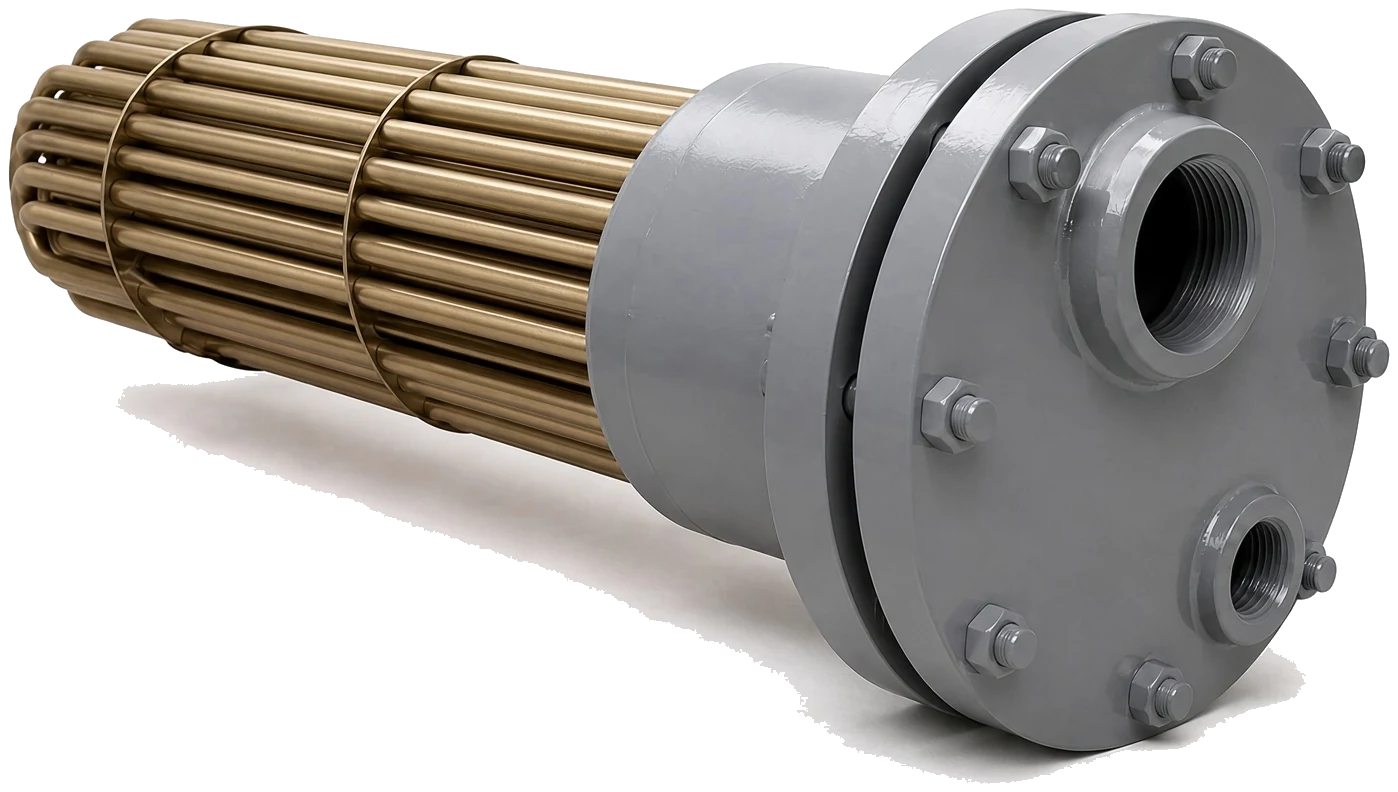
We supply the parts that make this work possible: replacement tube bundles, bonnets, gaskets and zinc anodes for the frames we sell, plus complete coolers where a rebuild no longer makes sense. Send the frame size off the nameplate and we will confirm what fits before you order anything.
Request a Quote


Cleaning The Seawater Side
Fouling on the seawater side is a mixture of soft deposit, marine growth and hard mineral scale, and each needs a different approach. Soft mud and shell come out with a nylon or brass rod pushed through each tube with the bonnets off, which is a couple of hours of work and restores most of the lost performance on a neglected cooler.
Hard scale needs an inhibited acid circulated through the tube side, and the choice of chemical matters because the wrong one will attack copper alloys or strip the protective film you want to keep. The cleaning page covers both routes and the pressure test that should follow any tube work.
Rebuilding Rather Than Replacing
The shell and bonnets on a marine cooler frequently outlive the tubes. If the tube bores show erosion or the unit is leaking between circuits but the shell wall is sound and the flange faces are clean, a replacement bundle puts the cooler back to new condition for a fraction of a complete unit and on a shorter lead time.
Plugging leaking tubes is a legitimate stopgap and costs a little surface each time, so it is fine for one or two tubes and a poor plan for ten. We supply replacement bundles, bonnets and gasket sets for the frames we sell, and can quote a rebuild kit against a nameplate photograph.
Installation That Does Not Shorten Life
Seawater goes on the tube side on every cooler we build. That puts the aggressive fluid inside copper-nickel or titanium where the anodes protect it, keeps the shell dry of salt water, and means you can clean the seawater passages by pulling two bonnets instead of opening the shell. Piped the other way around, the same cooler will fail early and cannot be maintained.
The shell needs a vent at its highest point, taken back to the expansion tank on an engine circuit, or air will sit against the top tubes and quietly remove surface. Support the shell on its brackets rather than through the nozzles, allow room to withdraw the bundle, and fit isolating valves so cleaning does not mean draining the vessel's seawater system.
Reading The Symptoms Correctly
Two temperatures tell you most of what you need. If the seawater outlet is barely warmer than the inlet while the engine is running hot, heat is not crossing the tube wall and the tubes are fouled or the coolant side is air-bound. If the seawater rise is large and the engine is still hot, the water side is short of flow and you should be looking at the pump, the strainer and the seacock.
Water in the oil, oil in the seawater discharge and unexplained coolant loss all point at an internal leak, and all are proven the same way with an isolated pressure test. The troubleshooting page walks the full sequence including rapid anode consumption, which is a corrosion problem rather than a cooling one.
Check Cheap Things First
In the time it takes to unbolt a cooler you could have cleaned the strainer, vented the shell and proved the thermostat, and half the time that is the fault.
Questions engineers ask
Set the interval from evidence rather than a calendar. Log the seawater inlet and outlet temperatures at a known load and clean when the rise accross the cooler drops noticeably at the same duty. Vessels in warm silty water often need annual rodding; a boat in cold clean water can go several years.
Not with anything uninhibited. Plain acids attack copper alloys and strip the protective film that gives copper-nickel its life in seawater. Use an inhibited descaling product intended for copper alloy exchangers, circulate rather than soak, flush thoroughly with fresh water and fit new anodes afterwards.
Yes, as a repair for one or two tubes. Each plugged tube removes a little surface and slightly redistributes flow, which is tolerable at small numbers. Once several tubes in a pass are plugged the cooler is losing real capacity and the honest answer is a replacement bundle rather than more plugs.
On an engine with a seawater-cooled oil cooler, the usual cause is a leaking tube or a failed tube-to-tubesheet joint letting seawater into the oil circuit, which is the higher pressure side only when running. Isolate the cooler, pressure test the shell and tube sides seperately, and confirm before blaming a head gasket.
Where the frame is one we build, yes, and that covers a lot of installed units. Send a nameplate photograph and the shell and connection dimensions. If the original is a discontinued line such as ITT Standard, the practical answer is often a current frame rather than parts, and we will tell you which.

