
1-805-484-2992
Quotes - Engineering - SalesShell and Tube for Marine Duty
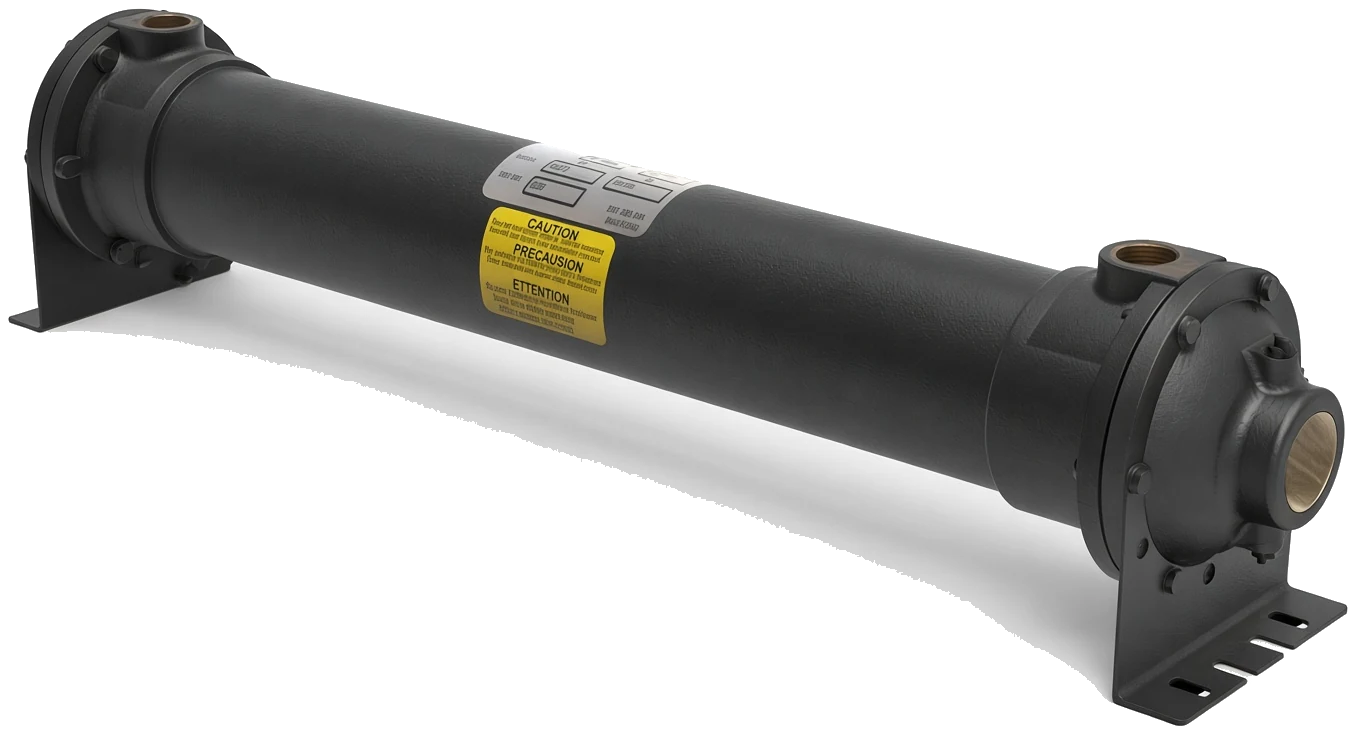
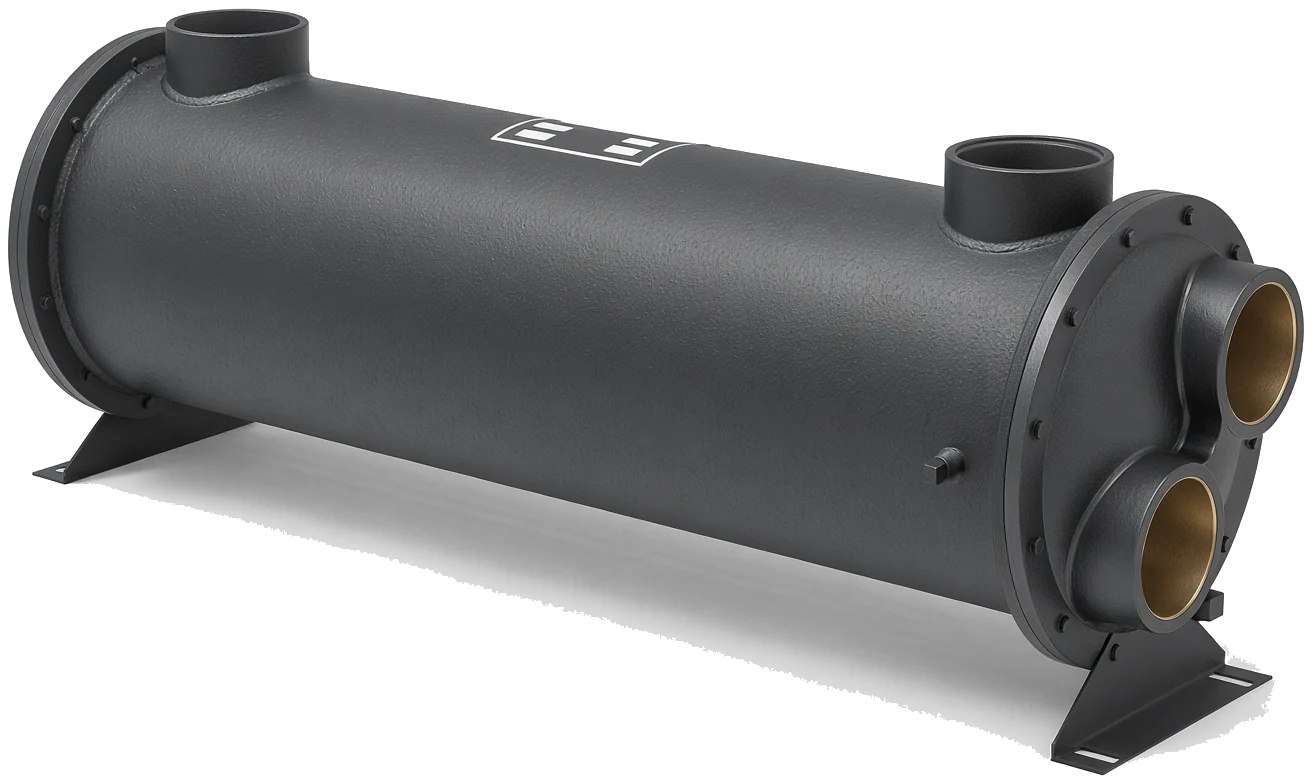
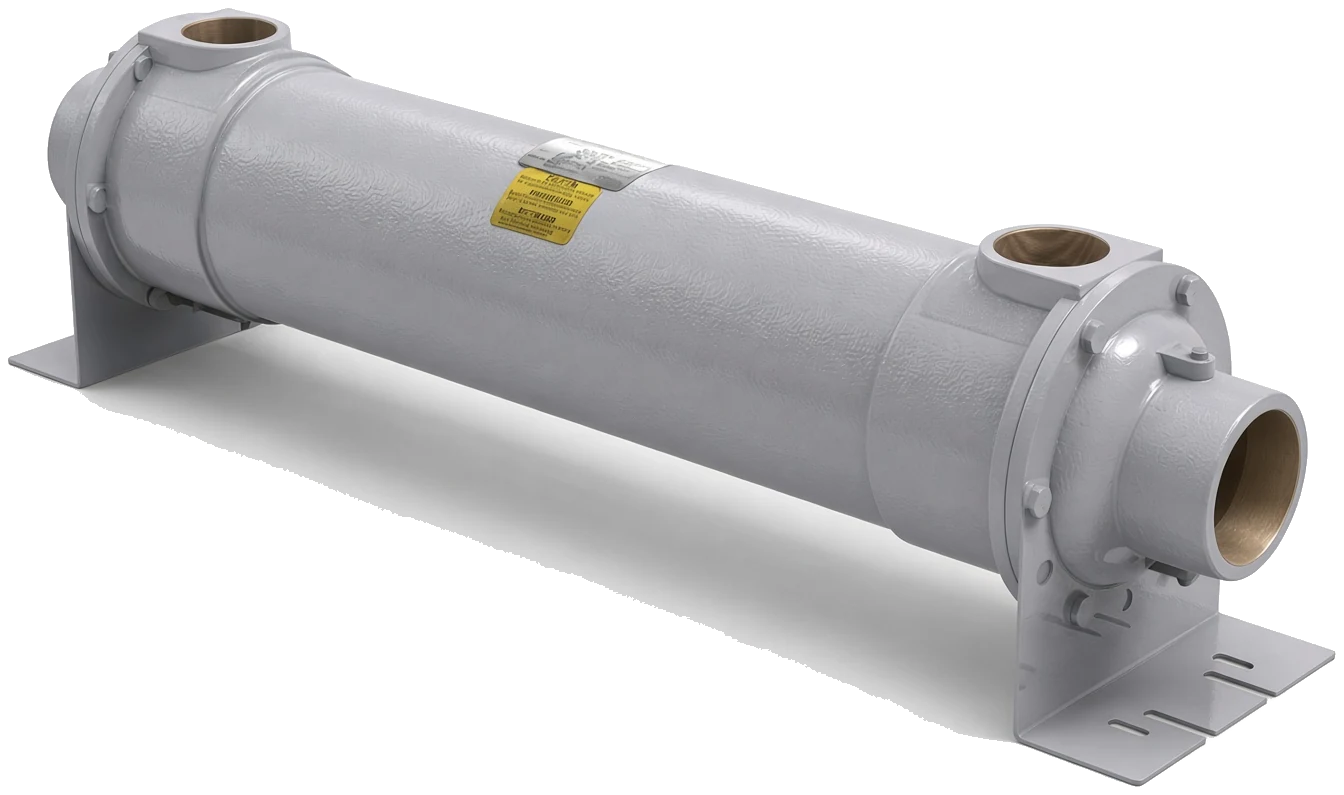
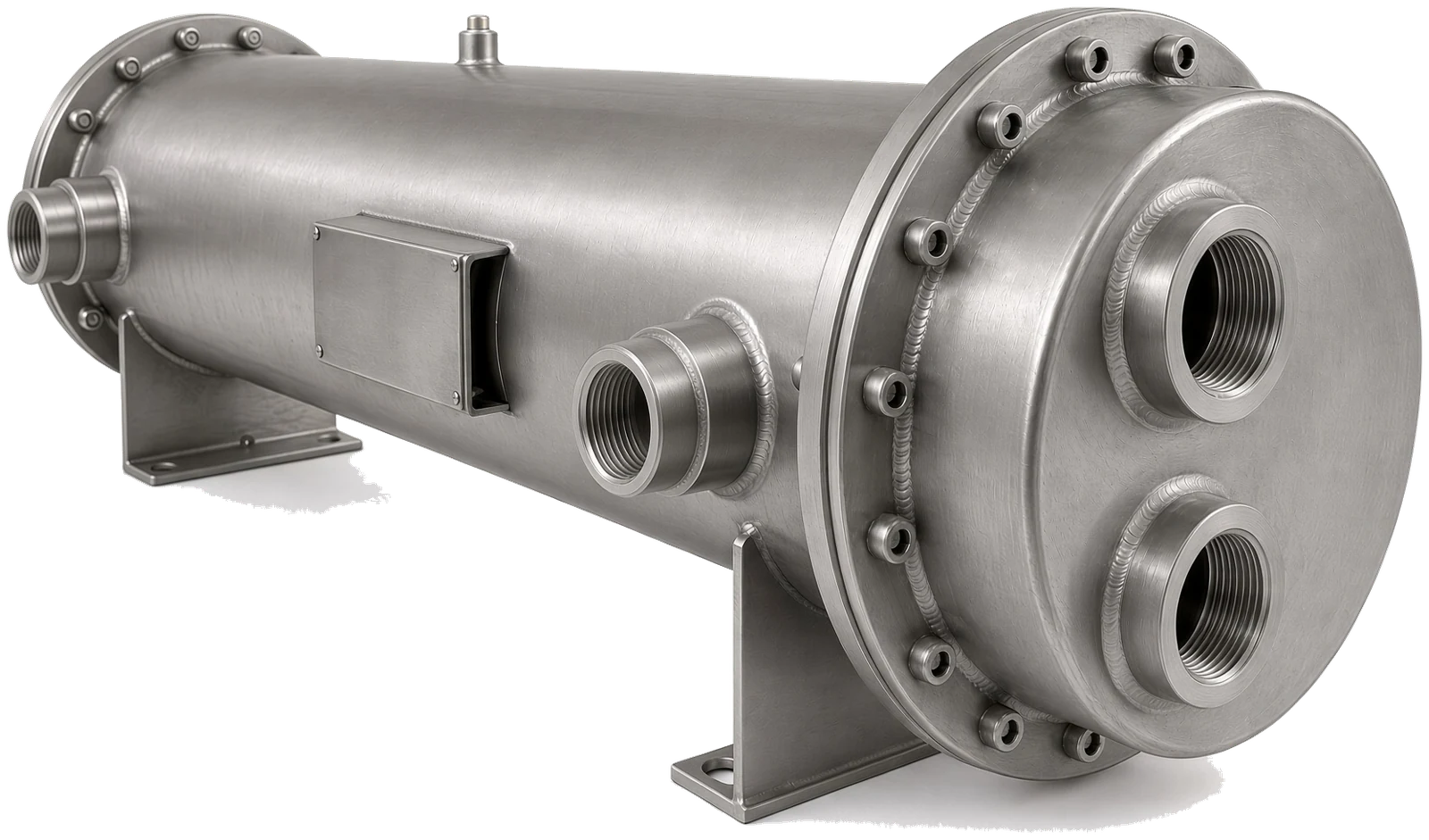
A marine shell and tube heat exchanger is a straight tube bundle in a shell with a bonnet at each end. Seawater runs through the tubes, where it can be rodded and brushed clean and where the zinc anodes in the bonnets protect the wetted metal. Engine coolant or oil runs around the outside of the tubes, guided by baffles, in a closed loop that never sees salt. That arrangement has carried jacket water, lube oil and gear oil duty on working vessels for decades because every part of it can be inspected, cleaned and renewed alongside.
- B Series: 2 to 8 inch shells, 250 PSI
- HC Series: 3.25 to 8.62 inch, 300 PSI
- Tubes: 90/10 copper-nickel, CN
- Tubes: titanium, T option
- Engine jacket water cooling
- Lube, hydraulic and gear oil
Every part of it can be inspected, cleaned and renewed alongside.
- Seawater in the tubes, rodded and brushed clean
- Zinc anodes in the bonnets protect the wetted metal
- Coolant or oil in a closed loop that never sees salt





Why the Construction Suits Salt Water
Seawater is abrasive, corrosive and full of life, and the only way to live with it is to put it where it can be dealt with. On a shell and tube unit that is the tube side. Pull a bonnet and every tube is open from end to end for a rod or a brush. The anodes are in the bonnets, so they can be checked at the same time. The gasket faces are flat and the bolt pattern is standard.
The shell side stays clean because it only ever sees engine coolant or oil. Baffles inside the shell turn that flow across the tubes for a good coefficient without ever collecting silt. When a bundle finally wears out, it slides out of the shell and a new one goes in against the same nozzles, which is why a sound shell on a large frame often outlives two or three bundles.
The B Series is the compact bronze and copper-nickel cooler most small and mid-size marine diesels were built around. Its brass tubesheet and bronze bonnets suit seawater without any special ordering, and the frame sizes from B-401 to B-1608 cover the common engines. The HC Series steps up in shell pressure to 300 PSI and in tube options, adding 316 stainless and titanium, and it's 614 to 1772 frames take jacket water duty to about 1250 HP.
The AB Series is a fixed-tube frame from 2 to 8 inches in single, two and four pass, with ASME construction available, and it is the frame we reach for on lube oil, hydraulic and gear oil duty where surface area and pressure drop govern. All three are sized the same way: jacket water from engine horsepower and the heat rejection on the data sheet, oil from heat load, oil grade and allowable pressure drop. See Sizing by Engine Horsepower.
Shell and Tube Applications

APPLICATIONS • JACKET WATER
Jacket Water Cooling
The B, HC and AB series pages and how each is sized
+ Learn More
HEAT EXCHANGERS • PARTS
Tube Bundles
Renewing the bundle inside a shell that is still sound
+ Learn More
ENGINEERING • MATERIALS
Titanium vs CN
Side by side on cost, velocity, fouling and chloride resistance
+ Learn More
