1-805-484-2992
Quotes - Engineering - SalesTube And Fin Core
The Tube and Fin Core
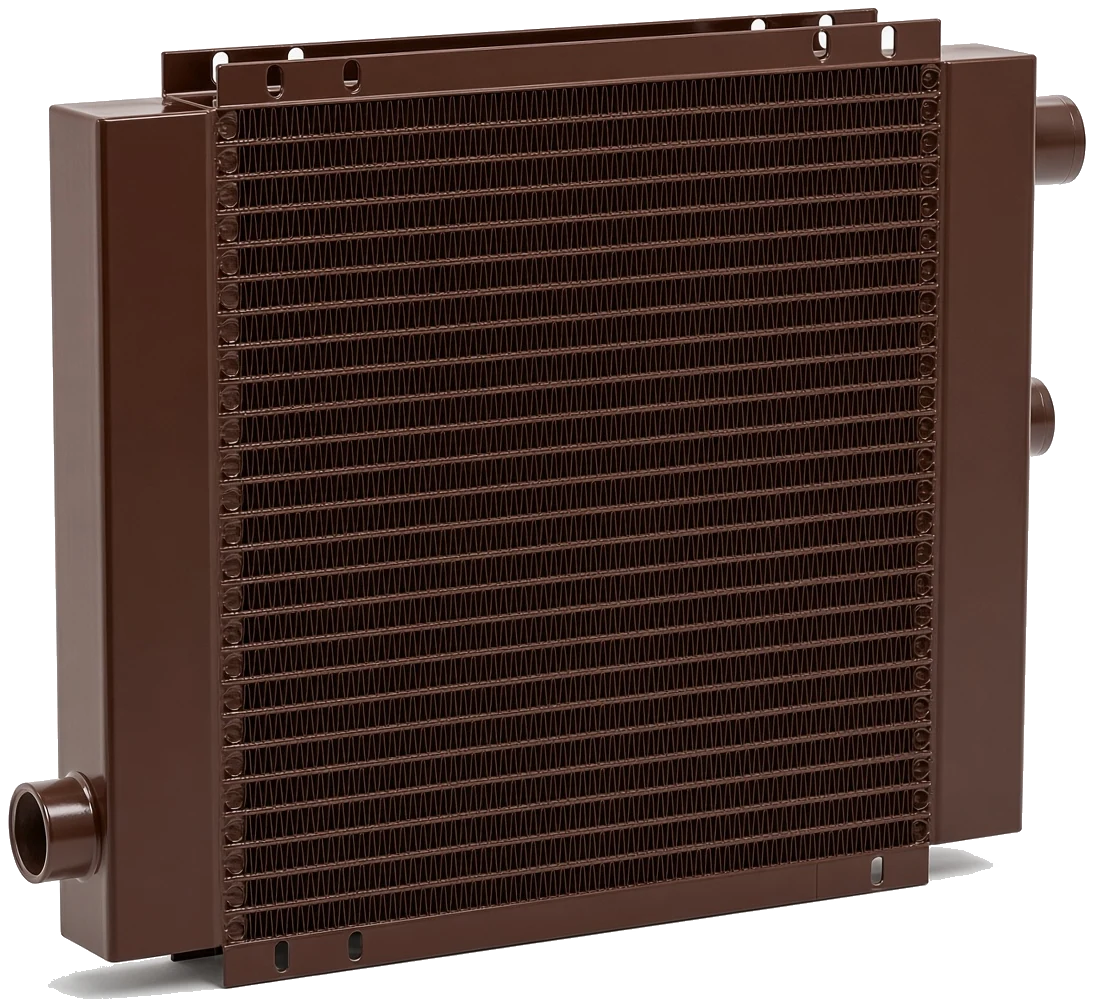
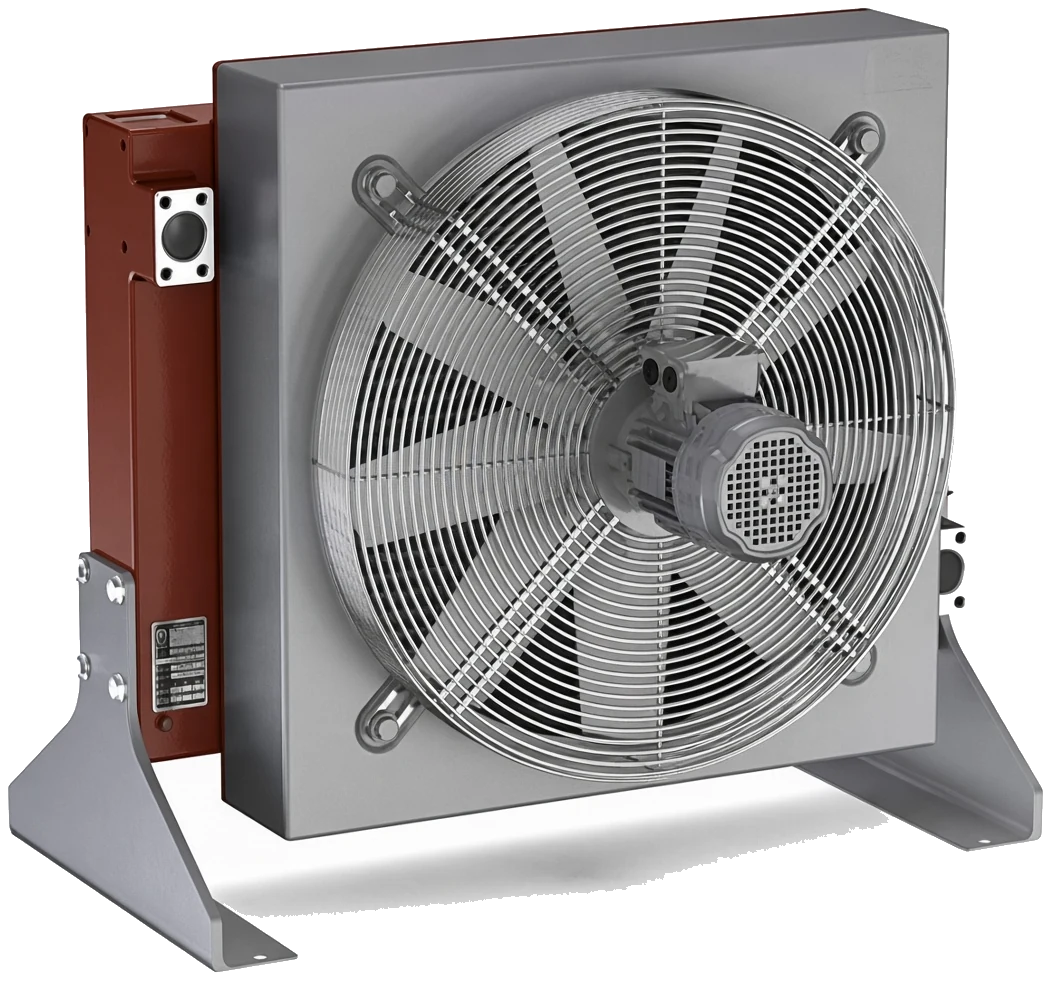
A tube and fin oil cooler for marine service is the radiator most engineers already know: rows of copper or stainless steel tubes carrying the oil, a stack of thin aluminum plate fins pushed over the tubes and mechanically expanded onto them, and a fan pulling ambient air through the fin stack. The oil side is a tube, so the pressure boundary is a drawn tube wall and a brazed or welded header joint. The air side is a large area of fin, bonded to the tube by the interference fit made when the tube was expanded.
Its case is cost and serviceability. A tube and fin core costs less than a brazed bar-and-plate block of the same duty. Bent fins are straightened with a comb, the open fin stack washes through with a hose, a damaged tube can be plugged or replaced, and a header leak can be repaired rather than scrapping the core. For a fin fan cooler on a sheltered mount, where the oil pressure is moderate and the cooler is not shaken all day by the machine it serves, that is the sensible construction.
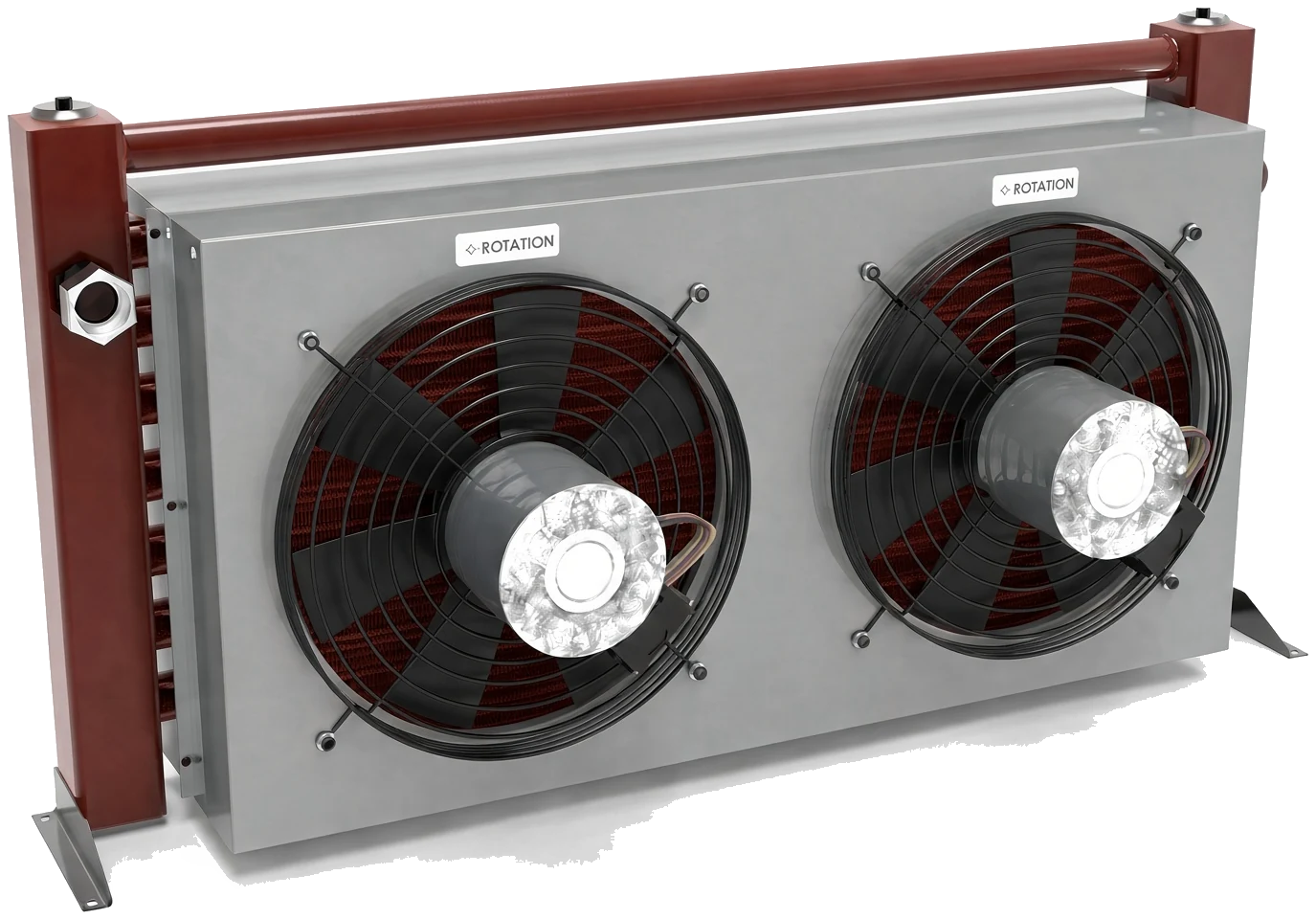
Every tube and fin core we supply for a vessel is Heresite coated, because the same salt that attacks a brazed core attacks a plate fin at its collar, and a loose collar is a broken thermal path. The coating goes on before shipment and does not change the rating we give the unit.
Request a Quote



How a Tube and Fin Core Is Made
The fin stack is punched from aluminum sheet with a collar around every tube hole, and the collars are what set the fin spacing when the plates are stacked. Straight tubes are pushed through the stack, then a mandrel is drawn through each tube to expand it into the collars, which is the mechanical bond that carries heat from tube to fin. Return bends are brazed on to join the tubes into circuits, and the circuits end in headers with the oil connections.
Copper tubes are the standard and give the best heat transfer; stainless tubes are used where the oil or the environment calls for it. The tube wall carries the oil pressure, the bends and header joints carry the rest, and every one of those joints is a place that vibration can work at over a season. That is the whole difference between this core and a brazed block, and it is why the mount, not the duty, usually decides which core a vessel gets.
Where Tube and Fin Belongs on a Vessel
A hydraulic power pack in a deckhouse, a steering gear cooler in a compartment, a small winch pack under cover, a generator room cooler on a workboat: sheltered positions where the oil pressure is moderate, the cooler is bolted to structure rather than to the machine, and the fan draws air from a space that is not directly in the spray. In those positions the tube and fin cooler does the job for less money and is easier to keep clean.
It is not the right core for a crane pedestal, a windlass base or a skid pack that hammers all shift, and it is not the right core at pressures a brazed block is rated for. Those positions are described on Crane and Deck Cooling and belong on Bar and Plate. Where you are unsure, tell us the mount and the pressure and we will say which.
Salt Air, Coating and Cleaning
Salt dries at the fin collar, where the fin grips the tube, and holds moisture against the aluminum in the tightest part of the geometry. The collar corrodes, the interference fit relaxes, the fin loosens on the tube and stops carrying heat. The tube still holds oil, so nothing leaks; the oil simply runs hotter each season. We Heresite coat the fin stack before shipment, and the process and its limits are on Heresite Coating.
The open fin stack is the easiest air cooled core to keep clean. Rinse with fresh water from the discharge face outward so debris leaves the way it came in, use a hose rather than a lance so the fins are not flattened and the coating is not cut, and straighten bent fins with a comb of the right pitch. Inspect the collars once a season for white product. General washing practice is on Cleaning and Descaling.
Fan Drives, Rating and Replacement
The fan on a tube and fin core is driven the same three ways as on a brazed core: an AC electric motor where a switchboard feed exists, a hydraulic motor taking a pilot flow from the machine's own circuit where there is hose and no cable, or a 12 or 24 volt DC motor for small gear on the vessel's battery bus. The drive is chosen from the supply that actually exists at the mount, measured under load, and the fan, shroud and guard are matched to the core as a unit.
For a rating send the heat load or the oil flow with inlet and required outlet temperatures, the oil grade, the pressure the cooler must hold, the allowable pressure drop and the air temperature at the core face. For a replacement send a photo of the existing cooler and its nameplate, the tube material if known, the port type and size, the face dimensions and the fan motor and its supply. Ratings are per duty; call 1-805-484-2992 or write to Sales@HeatX.com and we confirm the unit before it is built.
Cheaper, Cleanable, Repairable
A tube and fin cooler is the one you can put right on board with a fin comb, a hose and a tube plug, which is worth a great deal on a sheltered mount where nothing shakes it apart.
Design questions
A tube and fin cooler carries the oil in copper or stainless tubes with aluminum plate fins mechanically pressed onto them. A bar and plate cooler is one brazed aluminum block with no mechanical joints. Tube and fin costs less and is easier to clean and repair; bar and plate carries higher pressure and stands up to vibration and hose whip on the machine.
Yes, in the right position and coated. The weak point is the fin collar, where salt holds moisture and the fin loosens on the tube. We Heresite coat the fin stack before shipment, which delays that substantially, and a sheltered or deckhouse mount with a fresh-water rinse on the deck gear schedule keeps a coated core working for years.
It depends on the tube material, wall and the header construction, and it is lower than a brazed core, so we rate each unit for its duty rather than quote a range. Tell us the working and relief pressure of the circuit along with the heat load, oil flow and grade, and we return a rating with the tube material set to suit. Call 1-805-484-2992.
Usually. Bent fins straighten with a comb of the right pitch, a leaking tube can be plugged at both headers to keep the cooler in service at slightly reduced capacity, and a header joint can be repaired by a competent brazer. A core with many loose or wasted fins is past that point and is replaced; send a photo and the nameplate and we confirm the match.
AC electric motor where a switchboard feed exists at the mount, a hydraulic motor taking a pilot flow from the machine's own circuit where there is hose and no cable, or a 12 or 24 volt DC motor for small gear on the battery bus. Tell us what supply is actually at the mounting position, measured under load, and the fan and shroud are matched to the core.
Copper is the standard and carries heat into the fins better, so for ordinary mineral hydraulic or lube oil on a sheltered mount it is the tube to specify. Stainless earns it's place where the fluid chemistry is unfriendly to copper, where circuit pressure sits toward the upper end of what a tube and fin core should see, or where the compartment is wet enough that the tube wall needs the extra resistance. Send the oil grade and the mount and we will say which.