
1-805-484-2992
Quotes - Engineering - SalesGetting It Right
Selection Method
Sizing a marine cooler is arithmetic, not judgement, once you have the right four numbers. Heat load, the two inlet temperatures, and the flow available on each side determine the surface required, and surface determines the frame. What makes marine selection awkward is that the numbers are rarely handed to you. The engine data sheet has the heat rejection but only at specific ratings, the seawater temperature depends on where the vessel works, and the raw water flow is whatever the existing pump gives.
Most marine coolers are bought to replace something. These pages show how the sizing is done from engine data, how we identify a cooler with no readable nameplate, and what we can do with a discontinued part number.
For engine cooling we start from horsepower and duty because that is what everybody knows, and use it to bracket a frame quickly. Then we confirm against the published heat rejection at the actual continuous rating before anything ships. The sizing page shows how those two steps fit together and why a marine jacket water cooler selected on horsepower alone can still be wrong on a hard-worked boat in tropical water.
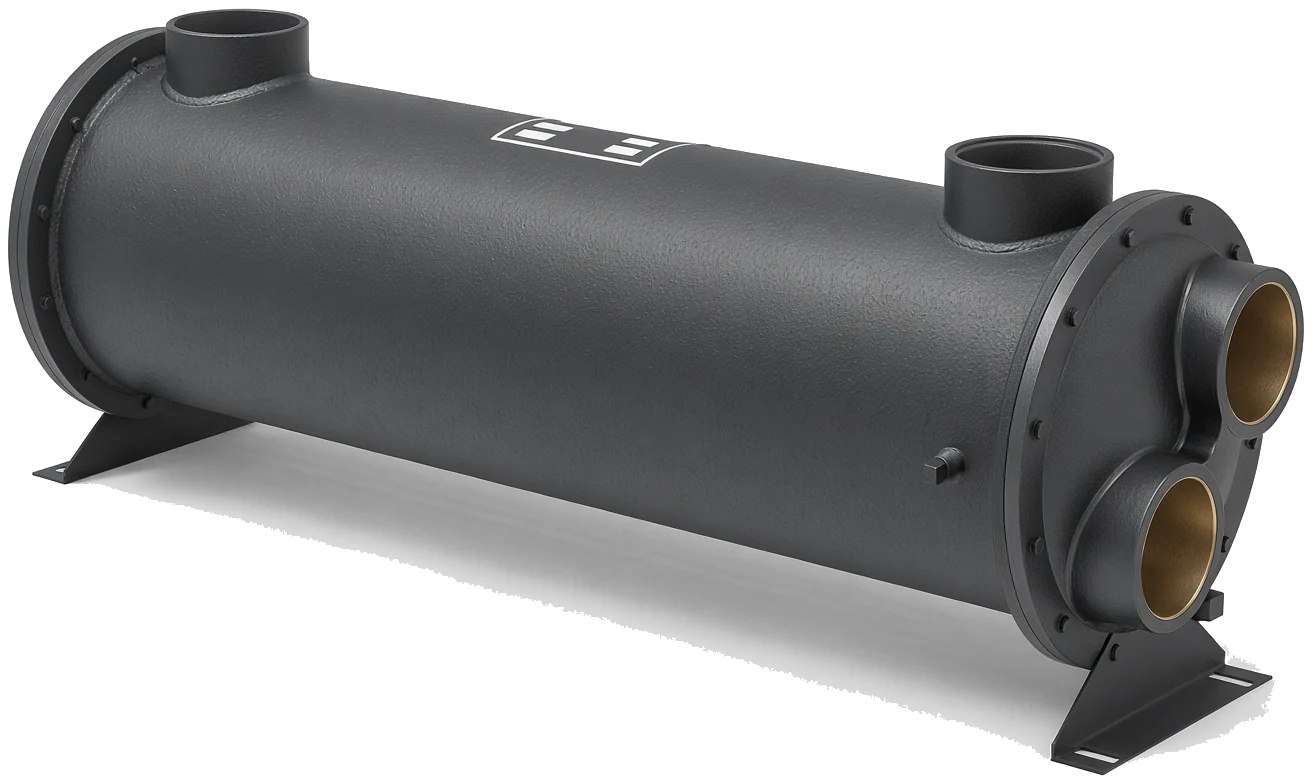
Send us what you have and we will do the selection. Engine model and continuous rating, a nameplate photograph, the old part number, connection sizes and mounting centers cover nearly every case. If you have the engine heat rejection figure and the seawater flow, the selection is confirmed rather than estimated and we can quote the same day.
Request a Quote


Sizing From The Engine Side
Jacket water heat rejection scales with engine output but the ratio is not constant across engine families, duty ratings or aftercooling arrangements. Two engines at the same horsepower can differ meaningfully in what they reject to jacket water, and a continuous duty rating rejects more over a working day than a high-output pleasure rating ever does.
So we use horsepower to bracket. On the HC Series the jacket water selection runs from about 10 HP on a four-pass 614 up to about 1250 HP on a two-pass 1772, which covers most marine propulsion and generator sets. Once the bracket is set, the published rejection figure at your actual rating decides which frame in that bracket ships.
Working Backwards From Hardware
A great many replacements start with a photograph of something crusted to the bulkhead. Shell diameter and tube length between tubesheets fix the surface area closely, the connection sizes tell you the design flows, and the number of nozzles and their positions tell you the pass arrangement. Mounting centers and overall length decide whether a direct swap will physically go in.
We ask for a tape measure across six dimensions and a handful of photographs from set angles. That is normally enough to name a frame with confidence. Where the envelope has changed slightly between generations we say so up front and quote the adaptors, rather than shipping something that will not land on the existing brackets.
Discontinued Lines And Cross-Reference
ITT Standard is a discontinued line, and its BCF series and marine coolers are still installed on a large number of working vessels. We replace them with the B, HC and AB frames, matching duty first and connection envelope second, and we hold the cross-reference work that makes that quick rather than speculative.
The important point for a buyer is that a discontinued original does not mean a custom-built replacement at a custom price. In most cases the equivalent is a cataloged frame in a marine option set, available on normal lead time. The ITT Standard page explains what to send and what comes back.
Flow, Pressure Drop And Pumps
Surface area is only half the selection. The cooler has to pass the required flow within the pressure drop the existing pumps can supply, on both sides. Adding passes raises the film coefficient and shrinks the frame, and it also raises pressure drop roughly with the square of velocity, so the cheap small unit can be the one the raw water pump cannot feed.
On the seawater side there is a second reason to care: velocity that is high enough to erode copper-nickel is also velocity that costs pressure. The two constraints usually point the same direction. The flow and pressure drop page sets out how we balance them against the pumps you already have.
Confirm, Then Ship
A cooler sized on assumptions works perfectly on a cool day at half load, which is precisely when nobody is watching the gauge.
Duty and sizing questions
We can bracket one from horsepower, which is usually enough to give you a budget price and a frame size. Before it ships we want the published heat rejection at your actual continuous rating and the seawater design temperature, because two engines of equal horsepower on different duty ratings need different coolers.
If the shell and bonnets are sound and the leak is in the tubes, a replacement bundle is the cheaper and faster route, and we supply bundles for the frames we sell. If the shell is thin, the bonnet flange faces are pitted, or the unit is undersized anyway, replace the whole cooler.
It has to fit what the pump can deliver at the required flow, which is the only figure that matters on a real installation. Tell us the pump curve or the model, and the flow you need, and we will select a frame and pass arrangement that lives inside it rather than quoting a number in isolation.
Regularly. ITT Standard is a discontinued line and its BCF and marine coolers cross into our B, HC and AB frames. Send the old part number, or a nameplate photograph and the connection and mounting dimensions if the plate is gone, and we will come back with the equivalent frame and price.

