
1-805-484-2992
Quotes - Engineering - SalesDeck Machinery
Cooling Deck Hydraulics
A hydraulic system converts almost all of its lost energy into oil temperature. Pump inefficiency, pressure dropped across a relief valve, flow throttled at a control valve, friction in a hundred feet of hose to a crane tip: none of it does work, all of it heats the oil. A marine hydraulic oil cooler is therefore sized on the heat the system actually generates, which is often far more than a name-plate calculation suggests, particularly on circuits that spend time on relief.
Every inefficiency in a hydraulic system leaves as heat, and deck machinery is full of them. Relief valves, throttled circuits and long hose runs all end up as oil temperature that the cooler has to take away.
The consequence of getting it wrong is seals. Nitrile seals in a deck cylinder start losing life quickly above roughly 180 degrees Fahrenheit, hoses harden, and the oil itself oxidizes and varnishes valve spools. Meanwhile viscosity falls, internal leakage rises, and the system gets slower and hotter in a loop that ends with a pump. Operators usually notice the slowness before the temperature.
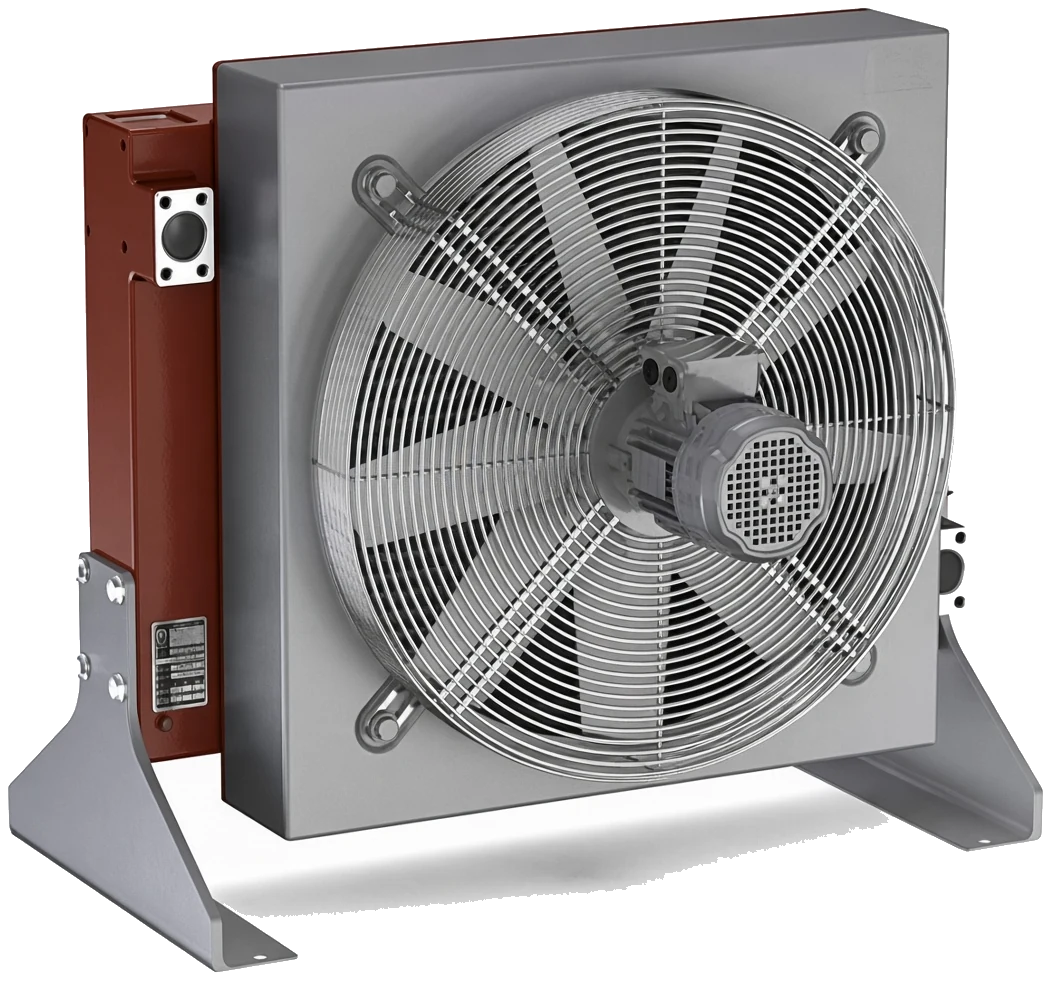
Return line coolers must be sized for the drop they cause when the oil is cold, not only for the heat they remove when it is hot. Tell us the reservoir volume, the pump flow, the working pressure and how much of the cycle sits on relief, and we will size it properly.
Request a Quote
Relief Time Is Heat
A circuit that spends a third of its cycle dumping full flow across a relief valve is generating heat at close to full pump power, and no reservoir will absorb that for long.

Measure the System
Numbers that size the cooler
- Pump flow and working pressure
- Oil temperature against ambient
- Reservoir volume and location

Deck Mounting
Air cooled installation checks
- Clear air path in and out
- Spray exposure at the location
- Fan drive power available
Estimating the Real Heat Load
A defensible first pass is to treat a fixed proportion of installed pump power as heat, then adjust for how the circuit is actually operated. A crane that lifts intermittently rejects far less than a net drum that holds tension against a relief valve for twenty minutes at a time, even though both may run the same pump.
- All hydraulic inefficiency ends up as oil temperature
- Circuits on relief generate heat near full pump power
- Seal life falls quickly above about 180 degrees F
- Cold oil back pressure loads pump case drains
- Seawater coolers suit engine room power packs
- Air cooled units suit deck and crane installations
Return Line Back Pressure
Coolers in a return line add back pressure, and back pressure is not free. It raises case drain pressure on piston pumps and motors, loads shaft seals, and on a cold morning with ISO 46 oil at ten degrees Celsius the drop across a tight cooler can be several times the hot figure.
- Circulation loop coolers avoid working return pressure
- Bar and plate cores rated 250 PSI and 250°F
- AC, hydraulic and DC fan drives all available
- Uncoated aluminum fins fail fast in salt spray
- Oil temperature against ambient tells us the shortfall
Installation and service questions
Start from installed pump power and assume a proportion of it becomes heat, then adjust for duty cycle, particularly time spent on relief. Confirm with a measurement: oil temperature minus ambient or seawater temperature tells you how much cooling exists and how much is missing. Send us both and we will size it.
A return line cooler is simpler and cheaper, and fine on circuits with modest flow and a warm climate. A dedicated circulation loop with its own small pump gives constant cooling irregardless of what the working circuit is doing and avoids adding back pressure on cold mornings. On deck machinery the loop usually wins.
Air cooled, in most cases. Running seawater to a deck machine means another through-hull, more hose, and winterizing work, for no thermal benefit. A Heresite coated bar-and-plate cooler with a hydraulic or electric fan drive puts the cooling where the heat is generated.
Related

VESSELS & ENGINES • BY VESSEL
Fishing Boats
Net drums and deck gear that run hydraulics hardest.
+ Learn More
HEAT EXCHANGERS • AIR COOLED
Bar and Plate
The brazed bar-and-plate core and its AC, hydraulic or DC fan drives.
+ Learn More
ENGINEERING • CORROSION
Salt Air Coatings
What coatings do and do not protect on an exposed core.
+ Learn More
