
1-805-484-2992
Quotes - Engineering - SalesBrackish Water Duty
Coolers for Estuary and Harbor Water
Brackish water is not diluted seawater from a corrosion point of view; it is a different and harsher environment. Estuary, harbor and river-mouth water carries low and variable salinity, a heavy silt load, warm summer temperatures, and in working harbors a share of sewage, industrial run-off and chlorination from nearby intakes. Copper-nickel depends on a stable protective film that forms in clean, oxygenated, steady-salinity seawater. Brackish water gives it none of those conditions, so the film never settles and the tube wall goes on being consumed underneath it.
Estuary, harbor and river-mouth water is the worst thing you can put through a copper-nickel tube. A brackish water heat exchanger is the same shell and tube frame built with titanium tubes and tubesheet, so the cooler stops being the part that fails first.
The result is the familiar pattern on vessels that live on rivers and in harbors: a bundle that should have lasted ten years pitted through in two or three, tube inlets eroded by silt, and green product in the bonnets from sulfide attack. A brackish water heat exchanger is our answer to that. It is one of the shell and tube frames described under Shell and Tube, most often the HC Series with the T option, built with titanium tubes and a titanium tubesheet.
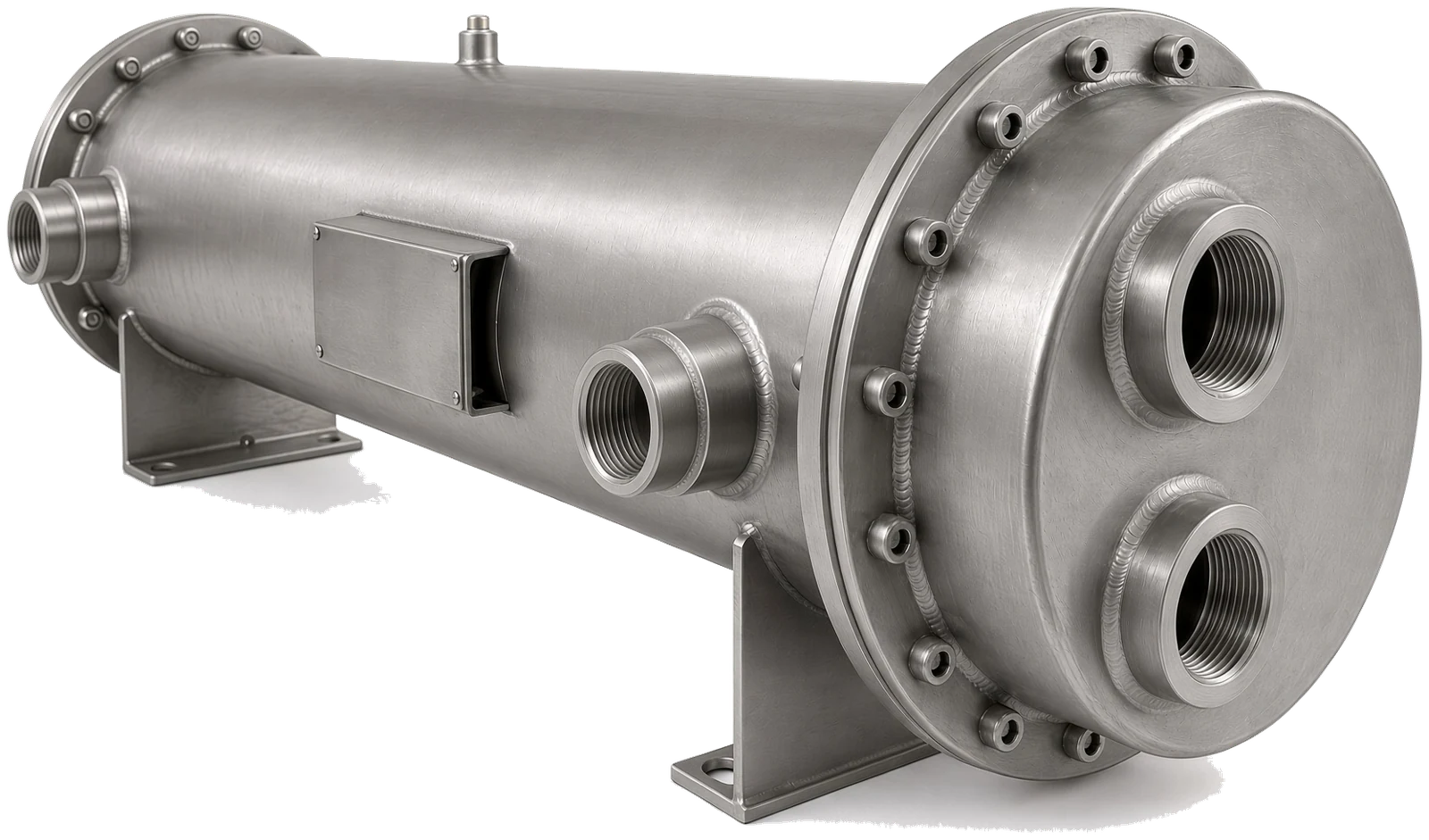
A brackish water unit is the same footprint, connections and mountings as the copper-nickel cooler it replaces. The change is inside: titanium tubes, titanium tubesheet, bonnets in bronze or 316. If the old bundle pitted in a river berth, do not replace it like for like. Change the metal.
Request a QuoteChange the Metal, Not the Interval
A copper-nickel bundle pitted through in a river berth will do it again on the same schedule, and no anode or cleaning interval changes that; titanium does.

Berth Survey
Is the water brackish in practice
- Tidal river or estuary berth
- Silt visible in the strainer
- Sulfide smell or green product

Replacement Order
What confirms the titanium build
- Nameplate photo and part number
- Engine horsepower or heat load
- Connection sizes and bonnet material
Why Brackish Water Defeats Copper-Nickel
Copper-nickel earns its place in open seawater by growing a thin, tight oxide film in the first weeks of service. That film needs clean, oxygenated water at a steady salinity and a moderate velocity to form and to repair itself. A river-mouth berth gives the tube fresh water on the ebb, salt on the flood, silt scouring the inlet ends every tide, and warm, sulfide-rich water in summer. The film forms, breaks, reforms and breaks again, and every cycle takes metal.
- Titanium tubes and titanium tubesheet on a standard shell and tube frame
- HC frame with the T option, or the frame the duty calls for
- Bronze or 316 stainless bonnets to suit the installation
- Zinc anodes retained wherever dissimilar metals remain wetted
- Same shell, connections and mountings as the copper-nickel cooler
- Immune to pitting, crevice attack, sulfide and chlorine in brackish water
What a Brackish Water Unit Is
We do not build a special cooler for brackish water. We build the standard shell and tube frame, usually the HC with the T option or whichever frame the duty calls for, with titanium tubes and a titanium tubesheet in place of copper-nickel and brass. The shell, baffles, connections, pass arrangement and mountings are unchanged, so the unit drops into the same pipework as the cooler it replaces and rates the same way, from engine horsepower or heat load.
- Built for estuary, harbor and river-mouth water
- No practical velocity limit, so silt does not erode the inlets
- Rated from engine horsepower or heat load, per duty
- Replacement confirmed from nameplate, engine data and connections
- Call 1-805-484-2992 with the plate and the berth
What owners ask us
Because brackish water never lets the protective film on copper-nickel settle. Salinity swings with the tide, silt scours the tube inlets, summer water is warm and often carries sulfide from sewage or decaying matter, and chlorine from nearby intakes attacks the film directly. Every cycle takes metal, and the bundle pits through in a fraction of its open-sea life.
No. It is the same frame with titanium tubes and tubesheet in place of copper-nickel and brass, so the shell, connections, pass arrangement and mountings match the unit it replaces. It rates the same way, from engine horsepower or heat load. Send the nameplate and we confirm the frame and the titanium build.
Yes, wherever bronze, brass or steel remains wetted alongside the titanium. Titanium needs no protection itself, but it is noble, so the bonnets and any other metal in the seawater path become more anodic than they were. The zincs stay in the bonnets and the anode arrangement is checked when the tube material changes.
Bronze is the usual choice and suits most pipework and most harbor water. 316 stainless is used where the installation already runs stainless pipework or where a bronze casting would be the odd metal out. Tell us what the connections bolt to and what the existing bonnets are, and we will reccomend one.
Related

HEAT EXCHANGERS • MATERIALS
Tube Materials
Copper, copper-nickel, stainless and titanium, frame by frame
+ Learn More
ENGINEERING • MATERIALS
Titanium vs Copper-Nickel
Cost, life, velocity and chloride resistance side by side
+ Learn More
VESSELS & ENGINES • BY VESSEL
Tugs and Workboats
The vessels that live in harbor water and what they need
+ Learn More
