
1-805-484-2992
Quotes - Engineering - Sales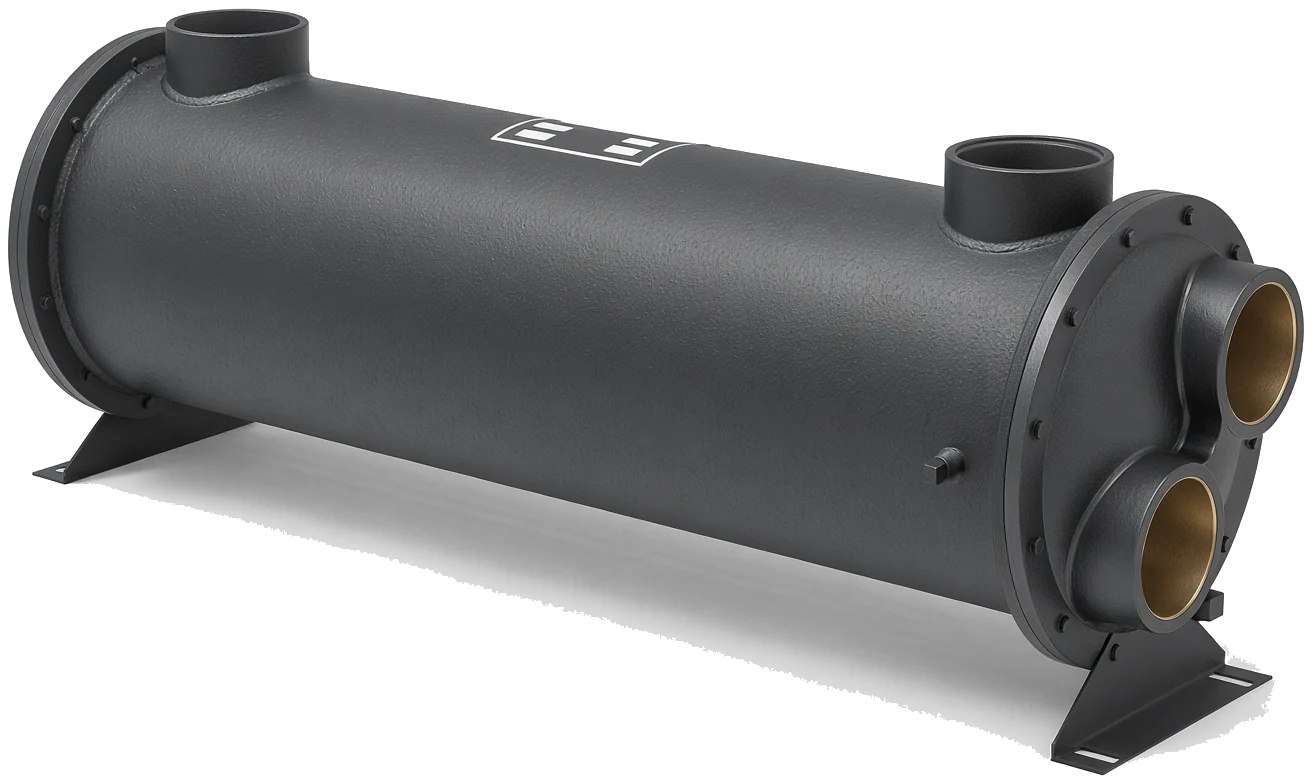
HC Series Heat Exchangers
The wide-band frame for marine jacket water. Fourteen inch to seventy-two inch tube lengths, shells to 8.62 inches, 300 PSI shell side, and selections that run from a small auxiliary up to a main engine near 1250 horsepower.
| PRODUCT | TYPE | STYLE | RATING |
|---|---|---|---|
| Heat Exchanger | Shell & Tube | Multi Pass Marine Frame | 300 PSI / 300°F |
Specifications
Configuration & Size
Shell Diameter:
3.25 in to 8.62 in
Tube Length:
14 in to 72 in
Tubes:
Copper, CN, 316 or titanium
Passes:
2 and 4 pass
Brand:
Thermal Transfer
Materials
- Tubes: 90/10 Copper-Nickel or titanium
- Tubesheet: Steel or 316 stainless
- Bonnets: Bronze, cast iron or 316
- Shell: Steel or 316 stainless
HC Series for Marine Duty
From ten horsepower to twelve fifty
The HC Series is the frame that carries the range from small auxiliaries to main propulsion. Frame sizes run from 614 through 1772, shells from 3.25 inches to 8.62 inches, and tube lengths from 14 inches to 72 inches. On jacket water duty the published selection spread runs from roughly 10 horsepower on a four pass 614 up to about 1250 horsepower on a two pass 1772, which covers most of what a working fleet actually runs.
Two things separate it from the smaller frames. The shell is rated to 300 PSI, which matters on installations where the closed loop is pressurized or where a header tank sits well above the engine. And the tube material list is longer: copper, copper-nickel, 316 stainless or titanium, with tubesheet and shell available in steel or 316. The marine option set is CN tubes with bronze bonnets and zincs, and T substitutes titanium tubes where the water demands it.
Connections are NPT or SAE depending on the frame and arrangement, and bonnets are cast iron, bronze or 316. On any raw seawater side the bonnet is bronze or 316, never cast iron. Maximum temperature is 300°F and the tube side is limited to 150 PSI, which is generous against normal raw water pump pressure but worth checking on systems with a high-head seawater circuit.

For an HC selection send the engine model and rated horsepower, the jacket water heat rejection from the data sheet, seawater inlet temperature and both flows. If you are replacing an HC, the frame number and pass count on the plate are usually enough on their own.
Request a QuoteHC Series Applications





Two pass and four pass arrangements
On a two pass HC the seawater enters one bonnet, runs the full tube length, turns in the far bonnet and returns, leaving at the same end it entered. A partition plate cast into the near bonnet keeps the outbound and return halves apart. A four pass unit adds partitions at both ends, so the water crosses the bundle four times and leaves at the opposite end from the inlet.
Doubling the passes halves the amount of tubes carrying flow at any moment, so velocity roughly doubles for the same gallons per minute. That lifts the tube-side film coefficient and shrinks the frame needed, at the cost of higher seawater pressure drop and more erosion risk in copper-nickel. Four pass suits low flows on small engines, two pass suits the high flows on the large frames.
Specifying the HC Series
The jacket water band across the range runs from about 10 horsepower on a four pass 614 to about 1250 horsepower on a two pass 1772. Where a particular engine lands depends on its heat rejection at your rating, seawater temperature and the flows available, so treat the band as a guide and let the duty numbers pick the frame.
Specify titanium where the seawater is chlorinated, warm, silty or polluted, where velocity has to run high to fit a smaller frame, or where a copper-nickel unit has already eroded on this vessel. Titanium carries no practical velocity ceiling in seawater and does not thin at the tube inlets, which is where copper alloy tubes usually fail first.
It follows the seawater flow, not preference. Low flows need four passes to reach a velocity that keeps tubes clean and the coefficient up. High flows on the larger frames need two passes or the pressure drop becomes unreasonable. It also changes which end the connections sit on, so match the existing arrangement when replacing.
Yes. The shell side is rated to 300 PSI and 300°F, which comfortably covers a pressurized jacket water system with a header tank above the engine. The tube side limit is 150 PSI, so the number to check is raw water pump head plus any static head, not the coolant circuit.
The common marine frames in the copper-nickel and bronze option set are held and ship quickly. Titanium tube builds, 316 construction and the largest frames are made to order. Call 1-805-484-2992 with the frame and option set and we will tell you which category yours falls into before you plan the outage.
An HC number opens with the frame size, HC-614 through HC-1772, then carries the pass arrangement, connection style and the material options: CN for copper-nickel tubes, T for titanium, BR for bronze bonnets and Z for zinc anodes. The frame digits encode shell diameter and tube length together, so a longer unit in the same shell reads as a different frame entirely. The complete cataloged list, every frame with its dimensions and connection tables, is on file with our sales desk. Call us with the number on the nameplate and we will confirm the frame, the pass count and the option set before anything ships.

