1-805-484-2992
Quotes - Engineering - SalesBar And Plate Core
The Bar and Plate Core
A bar and plate oil cooler for marine service is built as one block: flat aluminum plates, corrugated fins between them for the oil and the air, and solid aluminum bars closing the edges of every oil layer, all vacuum-brazed together in one operation. There is no tube, no fin collar and no mechanical joint anywhere in the core. The pressure boundary is brazed metal throughout, which is what lets the core carry 250 PSI at 250°F with SAE or NPT ports and shrug off the treatment deck machinery hands out.
That treatment is the reason the construction was chosen. A crane pedestal, a winch base or a portable power pack vibrates continuously while it works, and every hose whip when a valve shifts puts a shock load into the cooler ports. A tube and fin core takes those loads at the fin collars and the tube-to-header joints and loosens there over time. A brazed block has no such joints to loosen; the fins are structural, the bars carry the port loads, and the core stays as tight as the day it was brazed.
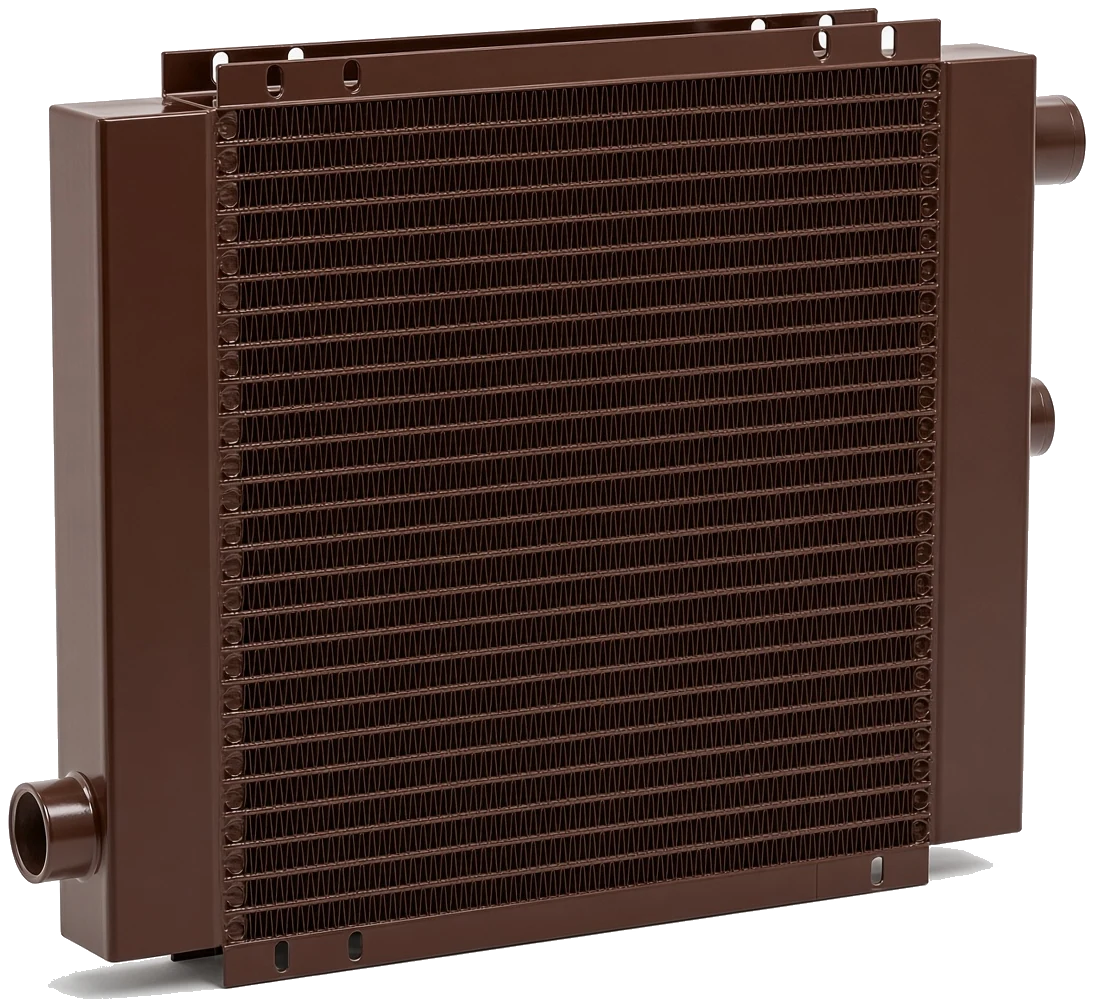
The core is the same construction across the whole marine range: brazed aluminum bar-and-plate, 250 PSI, 250 degrees, SAE or NPT ports, Heresite coated. Sizing is on heat load, oil flow, oil grade and the air temperature at the core, and the fan drive is picked last, from the supply at the mount.
Request a Quote



How the Core Is Built
The core is stacked as alternating layers. An oil layer is a corrugated aluminum fin sandwiched between two flat plates, with a solid bar closing each of its two long edges so the only way in or out is through the port at the end. An air layer is a taller, more open fin between the same plates, open on both faces to the fan. The stack is capped, fitted with port blocks, and brazed in a vacuum furnace so every fin crest, every bar and every plate fuse into one piece.
Oil enters a port block, spreads along the oil layers through the turbulating fins and leaves at the opposite block. Air is pushed or pulled through the air layers by the fan. The oil-side fins do most of the thermal work, because oil at working viscosity is the resistant side, and the bars carry the mechanical load from the hose ends into the body of the block rather than into a tube joint.
Bar and Plate Against Tube and Fin
A tube and fin cooler runs the oil through copper or stainless tubes with aluminum plate fins pressed onto them. It costs less, its fins straighten with a comb and a damaged tube can be repaired, and it is the sensible choice on a sheltered mount at moderate pressure where the cooler is not shaken all day. Its limits are the mechanical fin bond and the tube-to-header joints, which set a lower pressure rating and a lower tolerance for vibration.
Bar and plate is the choice where the cooler lives on the machine: crane pedestals, winch and windlass bases, hydraulic packs on skids, anything at 250 PSI or exposed to hose whip. The brazed block takes the punishment and the higher rating comes with it. The cost is a core that is harder to clean deep in the fins and is replaced rather than repaired if it is holed, which is why the coating and a clear air path matter more on a brazed core.
Choosing the Fan Drive
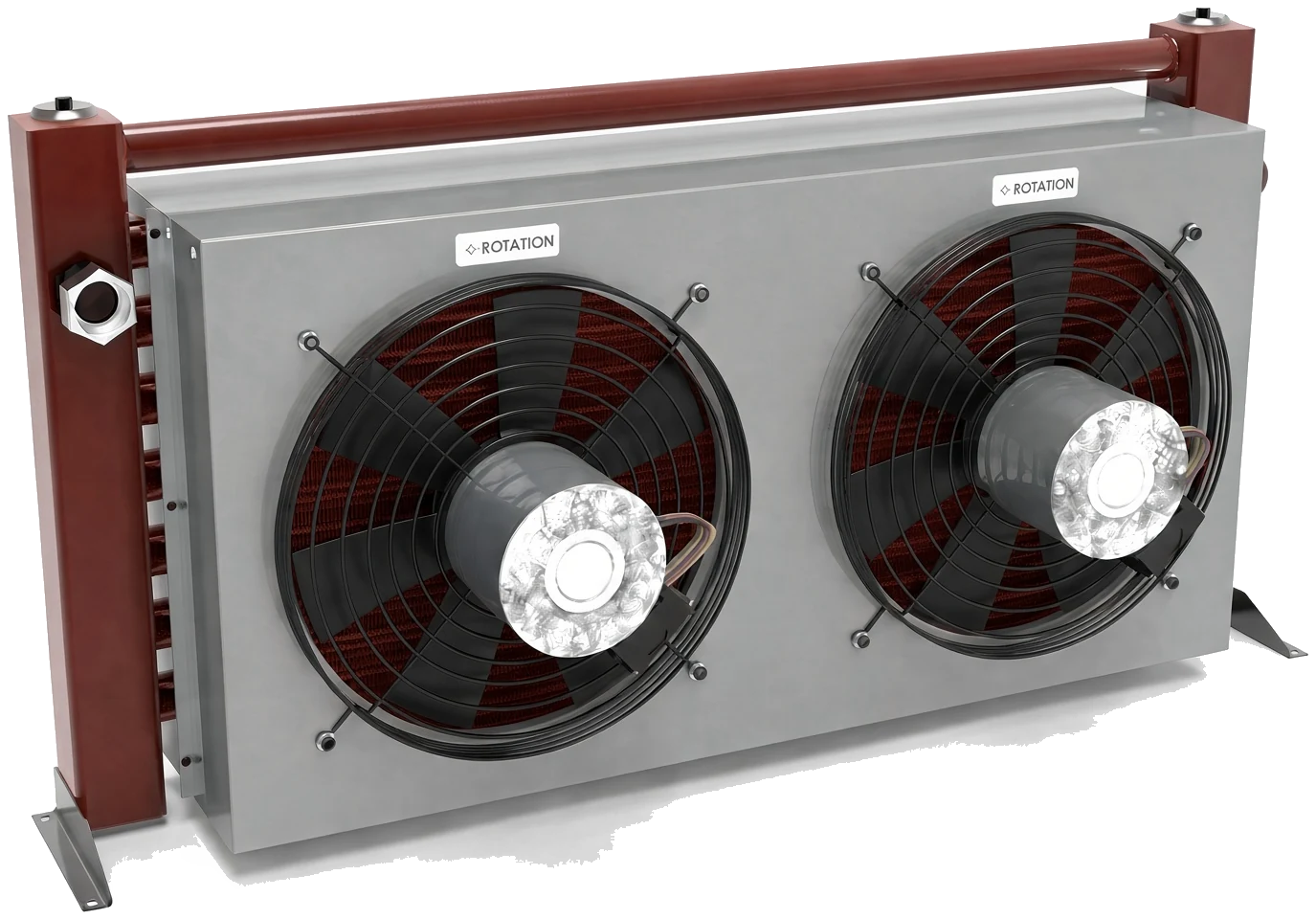
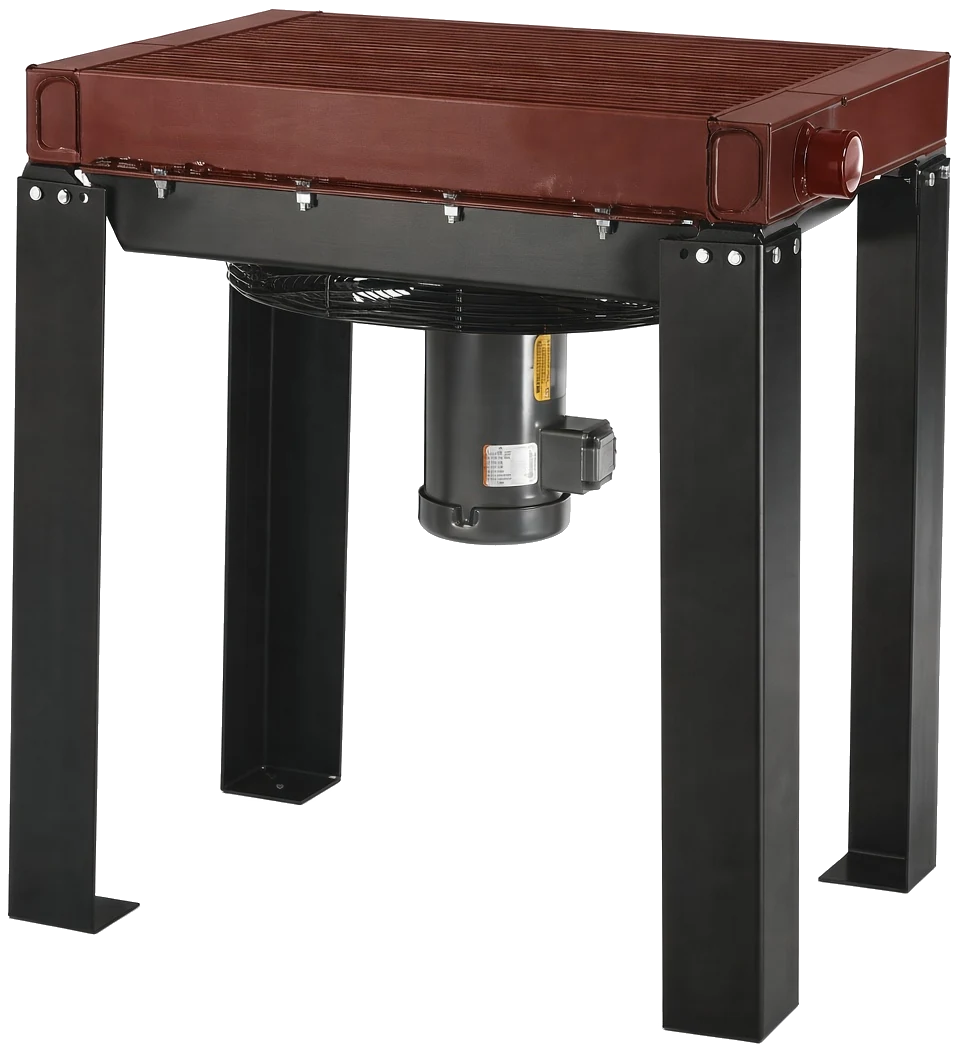
The A Series carries an AC electric motor, sizes A5 through A275, and needs a switchboard feed of the right voltage and phase, a starter and a breaker. It suits sheltered mounts and continuous running. The H Series carries a hydraulic motor, H10 through H500, fed by a pilot flow from the machine's own circuit with a return and its own relief, so the fan turns whenever the machine works and needs no cable at all.
The DCS Series carries a 12 or 24 volt DC motor, DCS10 through DCS60, for small gear on the vessel's battery bus. The ranges stop where the drive stops: a DC motor cannot spin a large fan for long, a hydraulic motor can be as large as the circuit will feed. Pick the drive on what exists at the mount, measured under load, not on preference; a cooler waiting on a cable run or a pilot line is not cooling anything.
Rating a Core and Confirming a Replacement
A new selection needs the heat load or the oil flow with inlet and required outlet temperature, the oil grade, the pressure drop the pump can afford, and the air temperature actually entering the core, which on sunlit plating beside an exhaust is well above the shade figure. Add the supply at the mount and whether the machine runs continuously or in bursts. We size the core and name the series and size, and we say if a duty near the top of one range would sit better in another.
For a replacement send a photo of the existing cooler and its nameplate, the port type and size, the face dimensions, the fan motor and its supply, and the oil flow and grade if known. Most existing coated cores carry a series and size on the plate, and the match is direct. Where the old unit is a tube and fin cooler that has loosened, we confirm the bar-and-plate equivalent and the mounting changes before it is built. Call 1-805-484-2992 or send it to Sales@HeatX.com.
Brazed Tight, Coated Before Shipment
A core with no mechanical joints does not loosen under vibration, and a core coated before it leaves us does not lose its fins to salt in its second season on deck.
Before you request a quote
It is an air cooled core built from flat aluminum plates, corrugated fins and edge bars vacuum-brazed into one block, with the oil in closed layers and the air in open ones. It is used on deck machinery because the brazed block has no fin collars or tube joints to loosen under vibration and hose whip, and because it carries 250 PSI and 250 degrees Fahrenheit.
On the machine, yes: a crane, winch or skid-mounted pack shakes and shocks the cooler and the brazed core takes that where a tube and fin core loosens. On a sheltered mount at moderate pressure a tube and fin cooler costs less and is easier to clean and repair. Tell us where it will sit and the pressure and we reccomend one or the other.
The one that runs on what is already at the mounting point. A switchboard feed and continuous running points to an AC motor and the A Series. Hydraulic hose and no electrics, which describes most crane and winch bases, points to the H Series. A small load on the vessel's 12 or 24 volt system points to the DCS Series. Measure the supply under load before ordering.
No. The core stays at 250 PSI and 250 degrees Fahrenheit with the coating applied, and the small thermal penalty of the film sits inside normal selection margin. What the coating buys is fins that stay bonded in salt air instead of wasting at the roots, which on an uncoated deck core is the failure that shows as rising oil temperature with no leak.