
1-805-484-2992
Quotes - Engineering - SalesTowing Duty
Full Power, No Speed
A tug at full bollard pull is an engine at rated load with a hull that is not going anywhere. Every other vessel type gets some help from water moving past the hull and air moving through the engine room; a tug on a hawser or pushing on a barge gets neither. If the cooling depends in any part on forward speed, this is the duty that finds out. It is also why keel-cooled boats in this trade are sized carefully and why exchanger-cooled boats need a raw water pump that genuinely delivers at working RPM.
A tug makes its rating standing still. Full power at zero forward speed removes every cooling advantage a moving hull enjoys, and it is the condition that separates a cooling system that works from one that only looked right on paper.
The second defining load is the gear. Ship handling means dozens of clutch engagements in an hour, and every engagement puts slip energy into the clutch plates and then into the oil. Gear oil temperature on a working tug commonly peaks in the middle of a job and falls on the run home, which is the opposite of what a propulsion engine does. That pattern is why gear oil coolers are the most frequently replaced item we ship to this fleet.
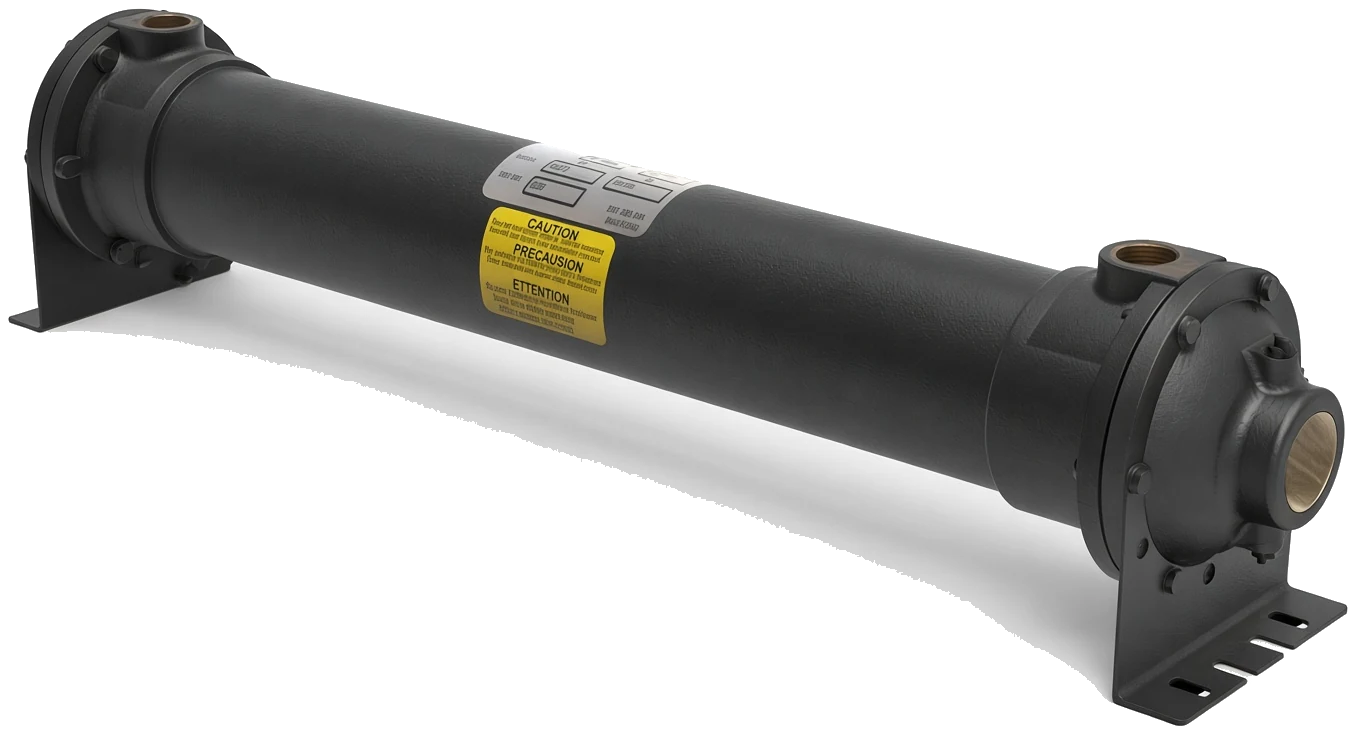
Brackish water is a genuine material question, not a technicality. Varying salinity, low velocity in port and sulfides in river mud together produce attack patterns you do not see in clean seawater. Tell us where the boat works and we will pick the tube material accordingly.
Request a QuoteZero Speed Is Rated Load
Cooling on a tug has to be adequate at full power with the hull stationary, because that is not an edge case in this trade, it is the job.

Prove the Pump
Flow at working RPM
- Measure raw water flow, not assume it
- Check impeller and wear plate
- Inspect suction hose for collapse

Log the Gear
Temperatures through a job
- Sump temperature during ship assist
- Temperature on the run home
- Engagement count in the job
Cooling at Bollard Pull
At zero forward speed a keel cooler loses the water flow it depends on, engine room ventilation loses ram effect, and the raw water intake sees only whatever the pump can pull rather than any assistance from hull motion. Sizing has to assume all three. That is the single most common reason a repowered tug runs hot after a job that the old engine handled.
- Full rated load with the hull standing still
- No ram effect for intakes or engine room air
- Gear oil peaks during a job, not on passage
- Brackish water varies in salinity with the tide
- River mud carries sulfides that attack copper
- Grit scours tube inlets and wears impellers
The Gear Is the Weak Point
Ship assist work means ahead, astern, ahead again, sometimes twenty times while a ship comes alongside. Each engagement dumps slip energy into the clutch and the oil charge is small. Gear oil temperature can climb thirty or forty degrees during a job and settle again on the run back to the berth, which is exactly the pattern that wears a marginal cooler out.
- Size gear coolers for engagement peaks
- Verify raw water flow rather than assuming it
- Repowers need a new frame, not a bigger pump alone
- Accessible anode plugs matter on a working boat
- Titanium considered where tube ends keep failing
Design questions
Because pushing is full rated load at zero forward speed. There is no water flowing past a keel cooler, no ram air through the engine room, and no help at the intake. If the cooling was sized on a transit condition it will be short exactly when the boat is working.
Clutch heat. Ship handling means dozens of engagements per job, and each one puts slip energy into the clutch plates and then the oil. The peak happens during the job and dissipates afterward, so a cooler sized for steady towing is undersized for the work the boat actually does.
In some ways yes. Salinity varies, velocity falls to zero alongside, and river mud carries sulfides that attack copper alloys in stagnant conditions. Grit also scours tube inlets. Copper-nickel with maintained anodes handles most of it, but the anode discipline matters more than in clean seawater.
Heat rejection went up with the rating and the cooling did not. On an exchanger cooled boat the fix is usually a larger frame in the same piping, plus a check that the existing raw water pump delivers the flow the new selection needs. Send both engine data sheets and we will size it.
It depends on the hull and the water. Keel cooling suits low speed steel boats in silty water because it deletes the raw water system entirely. Exchanger cooling wins where load is applied at zero speed, where grounding risk is real, and where capacity may need to change after a repower.
Related

APPLICATIONS • ENGINE COOLING
Jacket Water Cooling
Raw water coolers for engine jacket water, sized by rating.
+ Learn More
ENGINES • CATERPILLAR
CAT 3512
A common tug propulsion engine and its cooler selections.
+ Learn More
ENGINEERING • MATERIALS
Copper-Nickel
Why 90/10 remains the standard marine tube material.
+ Learn More
