
1-805-484-2992
Quotes - Engineering - SalesAir Cooled Heat Exchangers for Marine Service
An air cooled cooler needs no seawater, no sea chest and no strainer, and that is the whole argument for it. Deck cranes, winches, capstans, self-contained hydraulic packs and any equipment mounted well away from the machinery space are far easier to cool with ambient air and a fan than with a raw water branch running across a working deck. The trade is that the core lives in the weather, and on a boat the weather means salt.
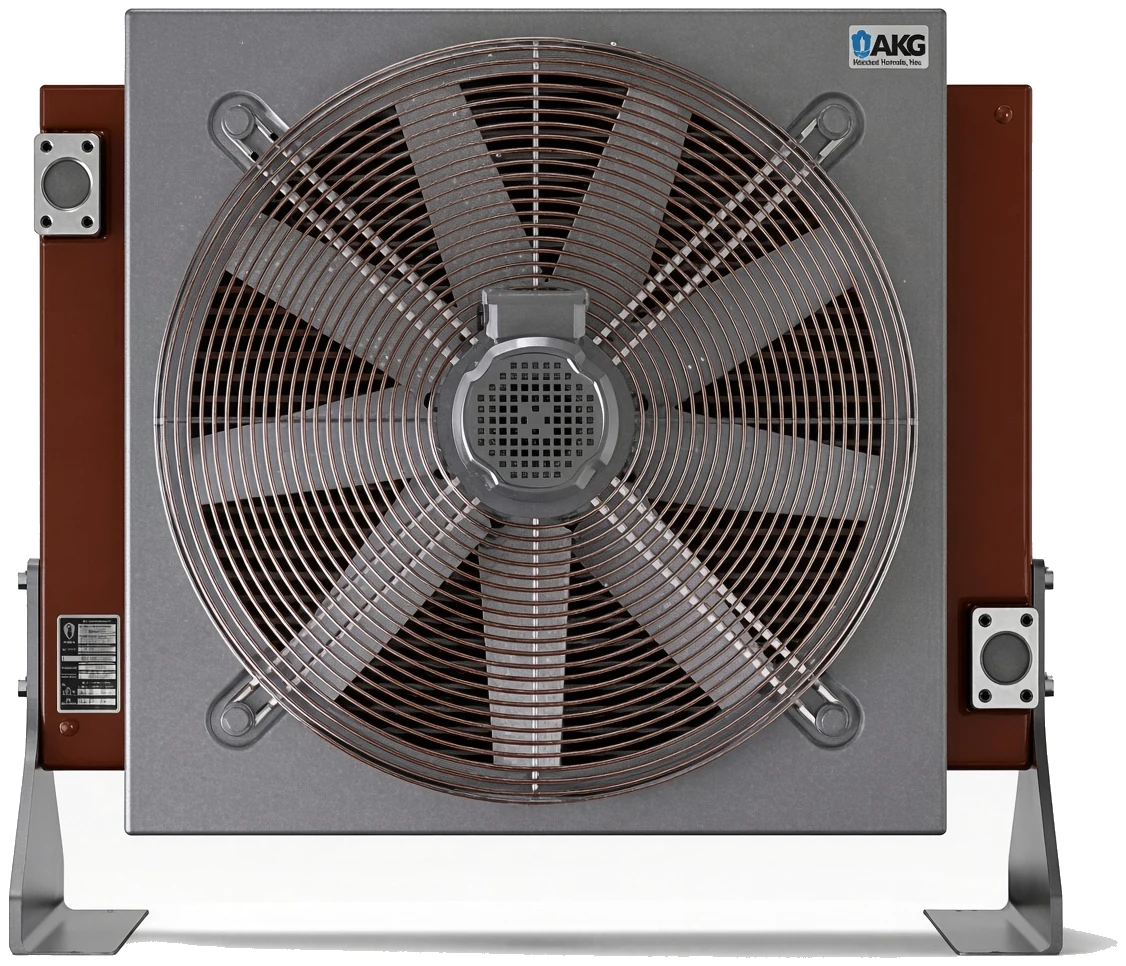
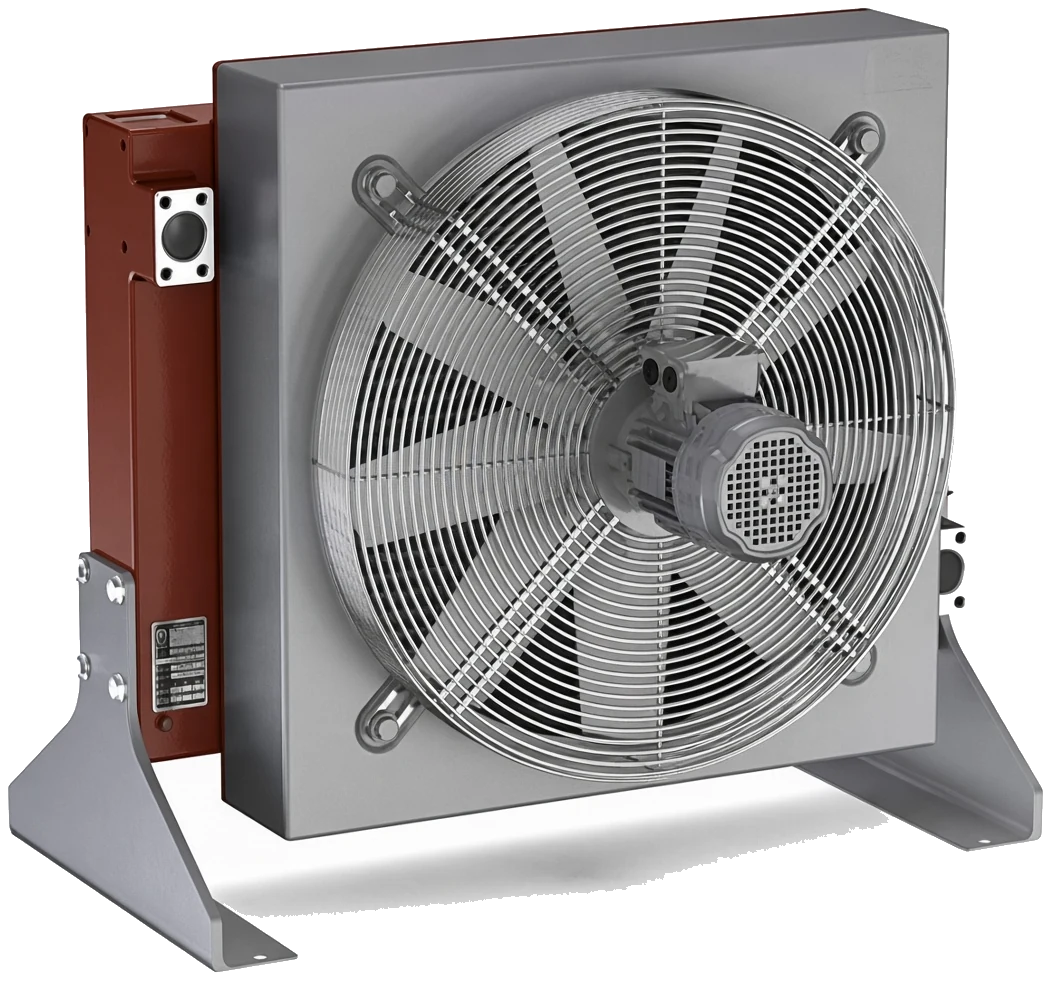
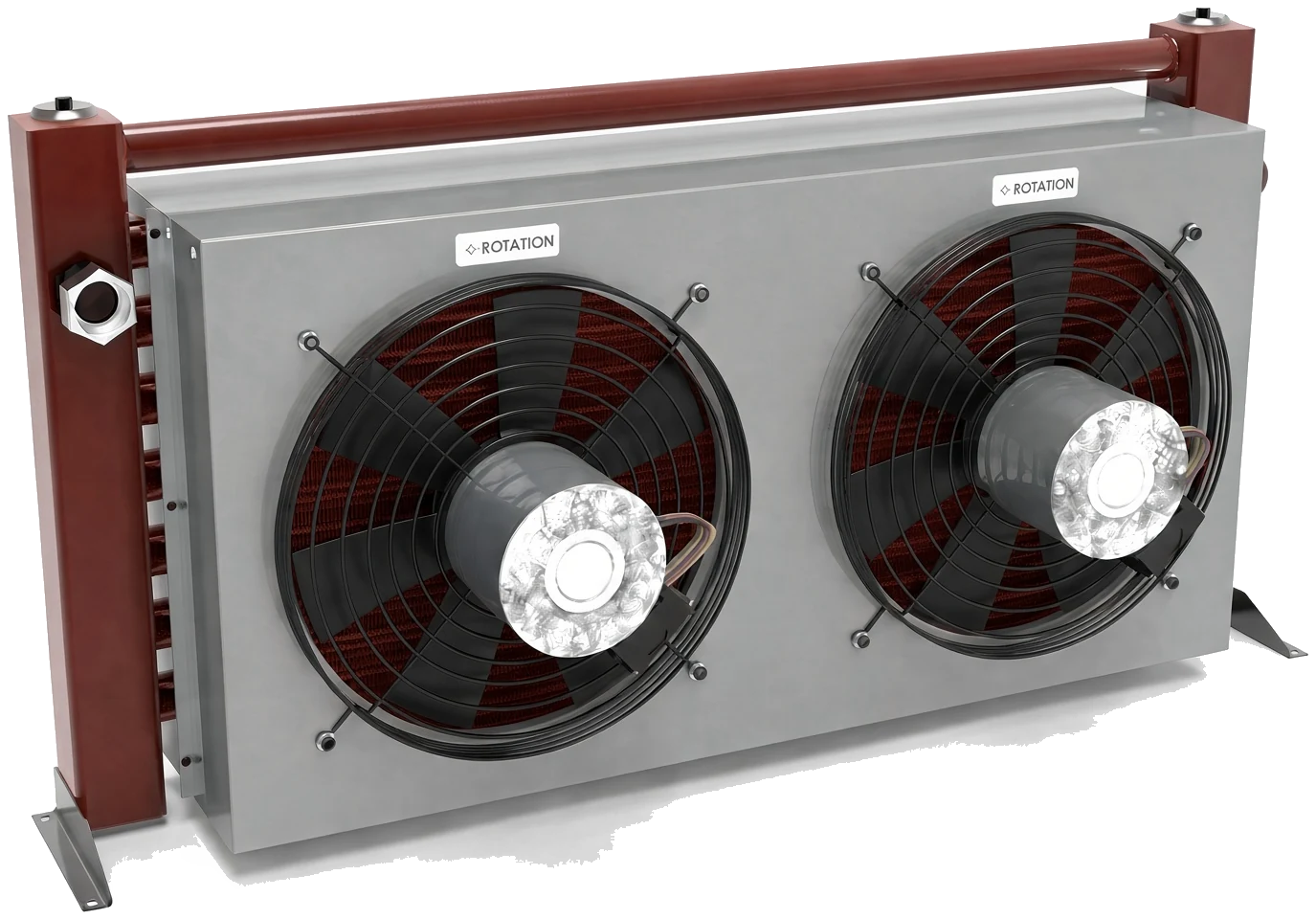
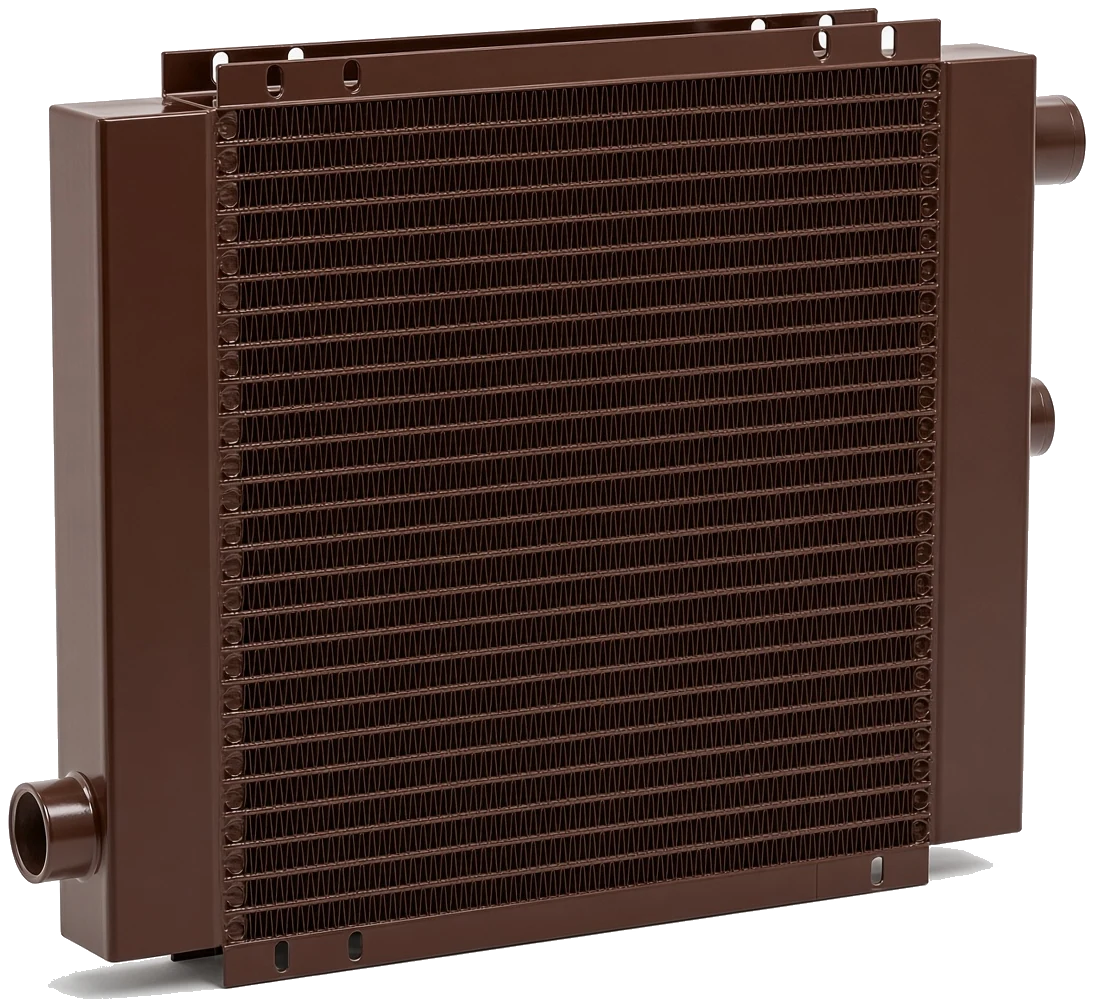
Air cooled oil coolers for equipment with no seawater loop to work with. Two core types, tube and fin and brazed bar and plate, both coated here with Heresite before they ship, with AC, hydraulic or DC fan drives to suit the mount.
- A Series AC motor, A5 to A275
- H Series hydraulic, H10 to H500
- Tube and fin: copper or stainless tubes
- Aluminum plate fins, mechanically bonded
- Heat load to be rejected
- Oil flow and grade
No seawater, no sea chest, no strainer.
- Deck cranes, winches, capstans and hydraulic packs
- Copper or stainless tubes, bonded aluminum fins
- A Series AC motor drive, H Series hydraulic drive
APPLICATIONS

Choosing the Core and the Drive
The core type comes out of where the cooler sits. Bolted to structure in a deckhouse or a compartment, at moderate oil pressure, a tube and fin core does the job for less and is cleaned with a hose and mended with a comb and a tube plug. Bolted to the machine, on a crane pedestal, a winch base or a skid pack at 250 PSI, the brazed bar-and-plate block is the only one that stays tight. The comparison is set out on Bar and Plate.
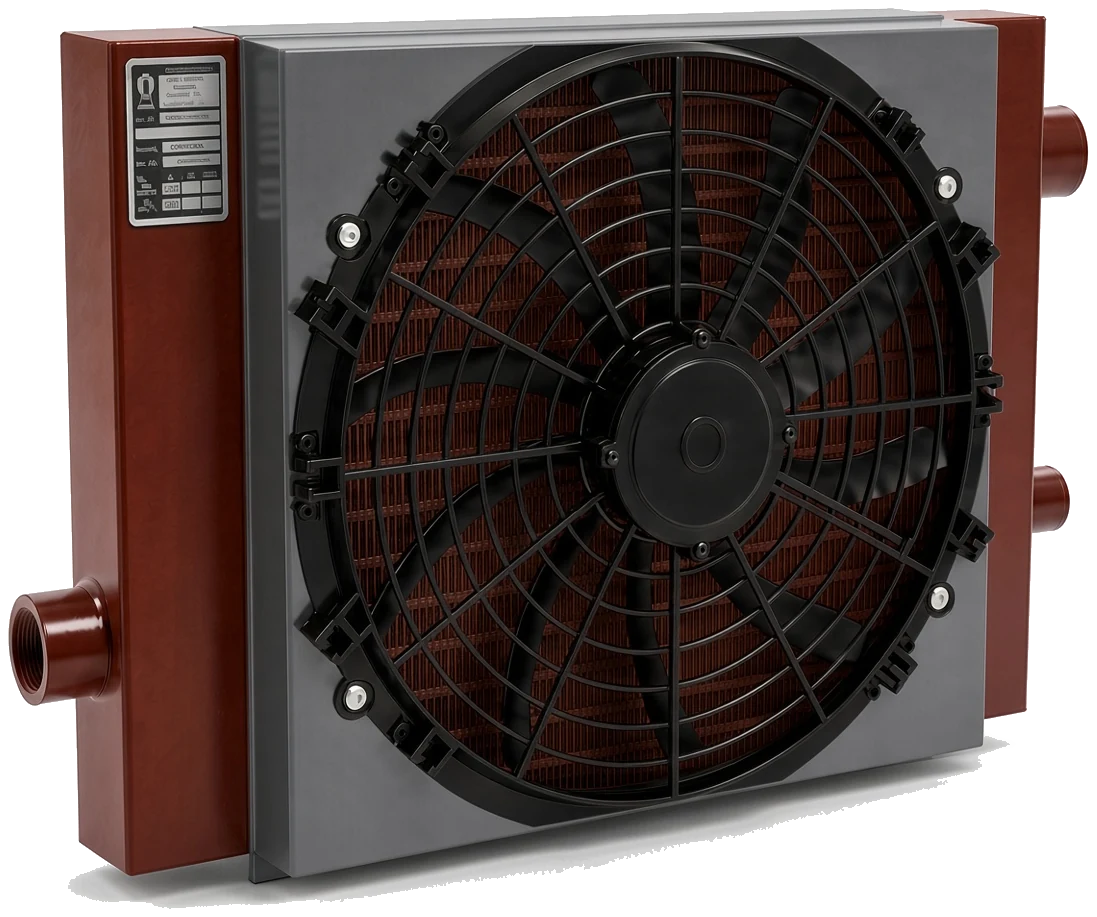
The drive comes out of what is available at the mount. A switchboard feed and continuous running points to an AC motor and the A Series, with sizes to A275. Hydraulic hose and no electrical supply, which describes most crane and winch positions, points to the H Series taking pilot flow from the machine's own circuit, so the fan turns whenever the machine works. Where the only supply is the vessel's 12 or 24 volt system, the DCS Series covers small loads.
An air cooled selection lives or dies on the air-side temperature difference, which is much smaller than anything available with seawater. The design ambient has to be the air actually entering the core, which on a sunlit steel deck beside a hot exhaust can be well above the shade temperature anyone would quote from a weather table.
That makes siting part of the selection. Allow clear space on both faces so discharge air can not recirculate into the inlet, keep the core away from engine exhaust and hot plating, and point the discharge somewhere nobody stands. A core with a good rating in a bad position performs like a much smaller core.
Air Cooled Applications

HEAT EXCHANGERS • AIR COOLED
Tube and Fin
The lower cost, repairable core for sheltered mounts at moderate pressure
+ Learn More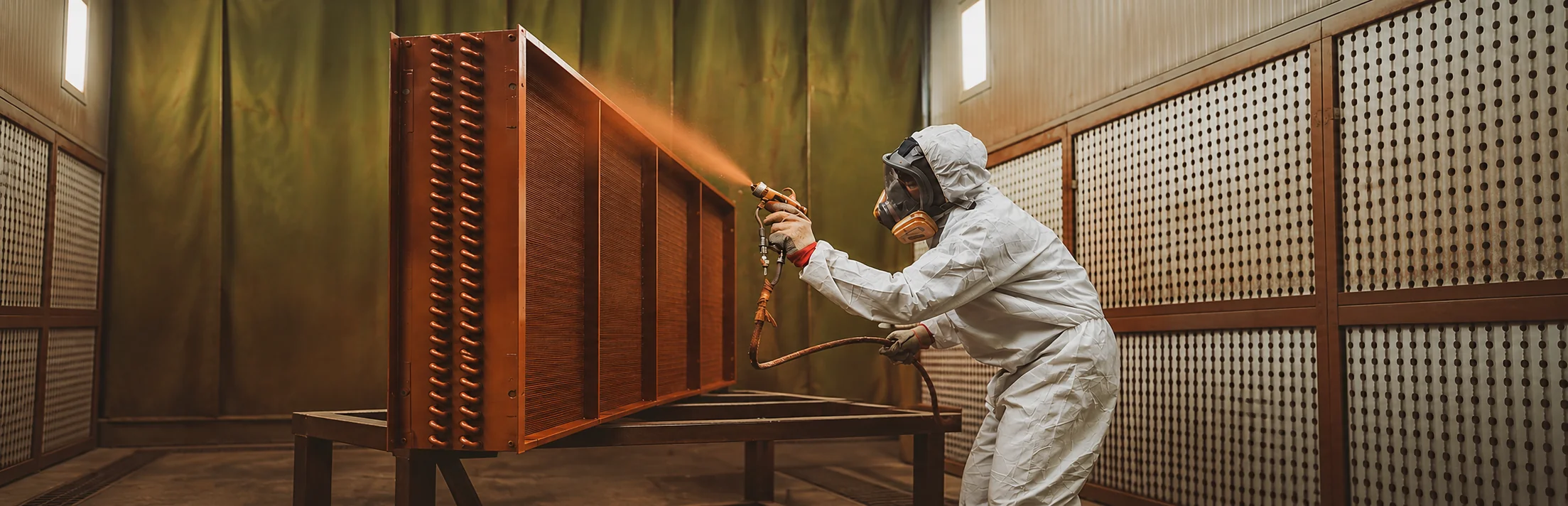
HEAT EXCHANGERS • COATING
Heresite Coating
The baked phenolic process and what it does and does not do
+ Learn More
ENGINEERING • CORROSION
Salt Air Coatings
How coatings are specified for exposed marine equipment
+ Learn More
