
1-805-484-2992
Quotes - Engineering - SalesPowerTech Cooling Replacements
4045, 6068, 6090 and 6135
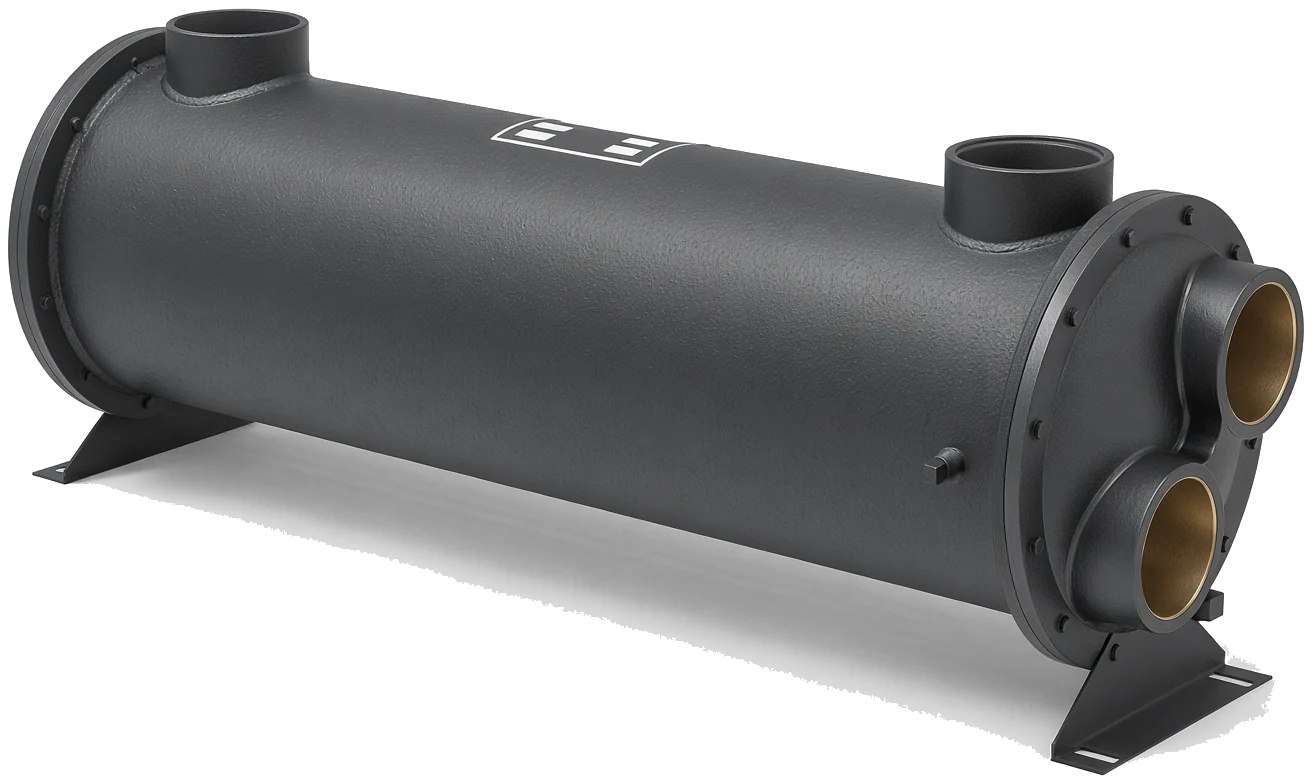
A John Deere marine heat exchanger has a narrower job than a big two-stroke cooler, and a less forgiving one. These are compact installations where the shell has to fit an existing bracket and an existing run of hose. We supply replacement jacket water coolers, lube oil coolers and gear coolers sized on the heat rejection published for your rating, built with bronze bonnets, copper-nickel tubes and zinc anodes in the raw water end.
John Deere marine engines earn their keep in fishing boats, small ferries and generator sets. When the jacket water cooler on a 4045 or 6068 gives up, we build the replacement to the heat rejection on that rating rather than a generic size.
The PowerTech families cover a wide spread of output from one displacement. A 4.5 liter 4045 runs from modest auxiliary ratings up to around two hundred horsepower, and the 6.8 liter 6068 spans roughly a hundred and fifty to well over three hundred. Aftercooling arrangement matters as much as the horsepower number, because a charge air circuit changes what the raw water side has to carry.
Each model family below has its own page with horsepower ranges, the series we normally select and a list of what we need from you. If your engine is a generator set variant, or the cooler came as part of a marinizing package rather than from the engine builder, send photographs and connection sizes and call 1-805-484-2992.
| MODEL / RATING | HORSEPOWER | DUTY | TYPICAL SELECTION |
| John Deere 4045 | About 60 to 200 hp | Jacket water, small genset | B Series or small HC Series |
| John Deere 6068 | About 150 to 330 hp | Jacket water and lube oil | HC Series with CN tubes |
| John Deere 6090 and 6135 | About 250 to 750 hp | Jacket water, oil, gear | HC Series plus lube oil cooler |
Engines
- 4045 at 4.5 liters
- 6068 at 6.8 liters
- 6090 at 9.0 liters
- 6135 at 13.5 liters
- Propulsion and auxiliary ratings
Circuits
- Jacket water to seawater
- Lube oil to seawater
- Marine gear oil
- Charge air circuit water
- Genset auxiliary loops
Build
- Tubes: copper-nickel or titanium
- Bonnets: bronze
- Tubesheet: brass
- Anodes: zinc, replaceable
- Connections: NPT or SAE
Fit Before Everything
A cooler that satisfies the duty but not the engine bay costs a day of hose work, so we confirm the envelope before we confirm the price.
Reading the Rating Plate
Model code before horsepower
The engine model code tells us more than the horsepower alone. It carries the displacement, the aspiration and often the marinizing arrangement, and those decide how the jacket water and charge air circuits are split. Photograph the plate rather than transcribing it, because a single transposed character sends the selection to a different heat rejection column on the data sheet.
Where the plate has corroded past reading, the block casting numbers and the injection pump arrangement usually settle the family, and the old cooler dimensions settle the frame. Send what you have. We would rather work from three photographs and a tape measure than from a model number somebody remembered.
Seawater Side Realities
Silt, sand and berth conditions
Deere powered boats often work shallow: estuaries, river bars and harbor berths where the raw water carries sand and organic load. That drives two decisions. Velocity has to stay high enough to keep silt moving through the tubes but below the erosion limit for copper-nickel, which is what the pass arrangement is for, and the strainer has to be maintained rather than admired.
Where the water is persistently dirty or warm, titanium tubes are worth pricing against a second copper-nickel replacement. Titanium is an option code on the shell and tube frames we select from and it changes the maintenance conversation on boats that would otherwise be re-tubing every few seasons.
Duty and sizing questions
For most 6068 ratings an HC Series frame with copper-nickel tubes, bronze bonnets and zincs covers the jacket water duty, with the pass arrangement chosen to hold seawater velocity in range. The exact frame depends on the rated horsepower and speed, so send the rating plate and we confirm it.
Often yes. Constant speed auxiliary ratings sit in a different column on the engine data sheet, and the heat rejection can differ enough to move the frame size. Give us the set rating in kilowatts as well as the engine model and we work from the right column rather than assuming.
That is the goal on every Deere replacement. Send shell diameter, length between bonnet faces, connection sizes and orientation, and mounting centers. Where a like for like frame exists we select it; where the duty has outgrown the old unit we will say so rather than sell you an undersized fit.
Inspect at every scheduled service and replace when about half wasted. Boats in warm water or with stray current issues eat anodes faster. The anodes are consumable protection for the tubesheet and bonnet, so a pencil that has vanished means the corrosion has already moved somewhere more expensive.
Yes, and it is usually the right time to order one. Gear oil coolers are sized on heat load, oil grade and allowable pressure drop rather than engine horsepower. Send the gear model, the oil grade and the flow if you have it, or call 1-805-484-2992 and we will work through it.
Related

APPLICATIONS • ENGINE COOLING
Genset Cooling
Constant speed sets and why the duty column differs
+ Learn More
APPLICATIONS • JACKET WATER
B Series
Compact shells from two to eight inches for tight engine bays
+ Learn More
ENGINEERING • MATERIALS
Titanium Choice
When titanium tubes beat a second copper-nickel bundle
+ Learn More
