
1-805-484-2992
Quotes - Engineering - SalesEngine Coolant
Holding the Coolant Band
A marine jacket water cooler exists to do two things at once: reject the engine's heat and keep the sea out of the engine. Treated coolant with its inhibitor package circulates on the shell side, driven by the engine's own pump. Raw seawater passes through copper-nickel tubes on the tube side, driven by the raw water pump, and leaves through the exhaust elbow or overboard. The two never mix unless something has already gone badly wrong, and when they do the engine usually tells you within a day.
The jacket water cooler is the one exchanger the engine cannot run without. It holds the coolant band, keeps treated coolant away from raw seawater, and quietly loses capacity to scale and spent zincs until one hot afternoon it does not.
The temperature band matters more than most operators expect. Run the coolant too cold and the engine never reaches its designed film temperatures, fuel washes past the rings and the crankcase collects water. Run it too hot and you lose margin against detonation, liners distort, and head gaskets start to weep. The thermostat sets the low end; the cooler sets whether the high end is achievable on the hottest day of the year in the water you actually work in.
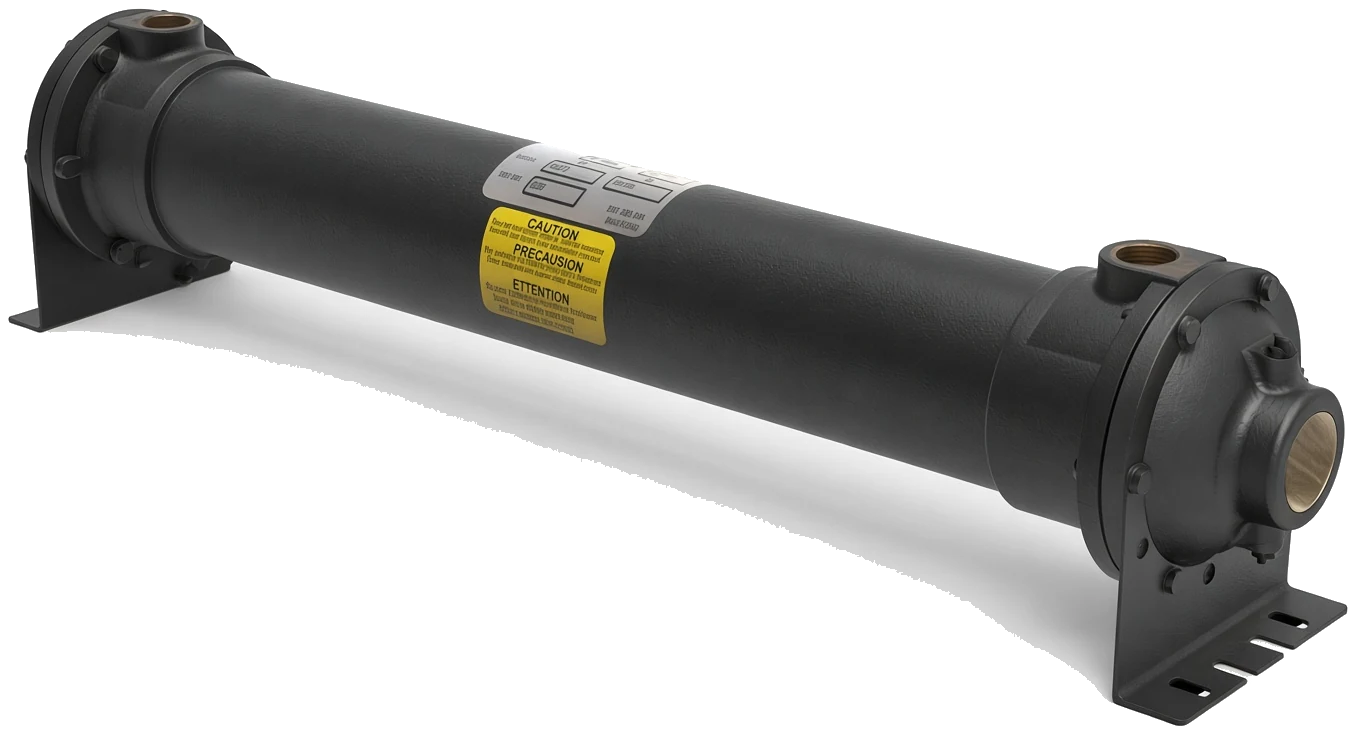
Nine out of ten jacket water coolers we replace did not fail thermally. They lost their zincs, scaled up on the tube side, or took a hit from stray current in a marina. Send a nameplate photo and the engine model and we will size the replacement and tell you what killed the old one.
Request a Quote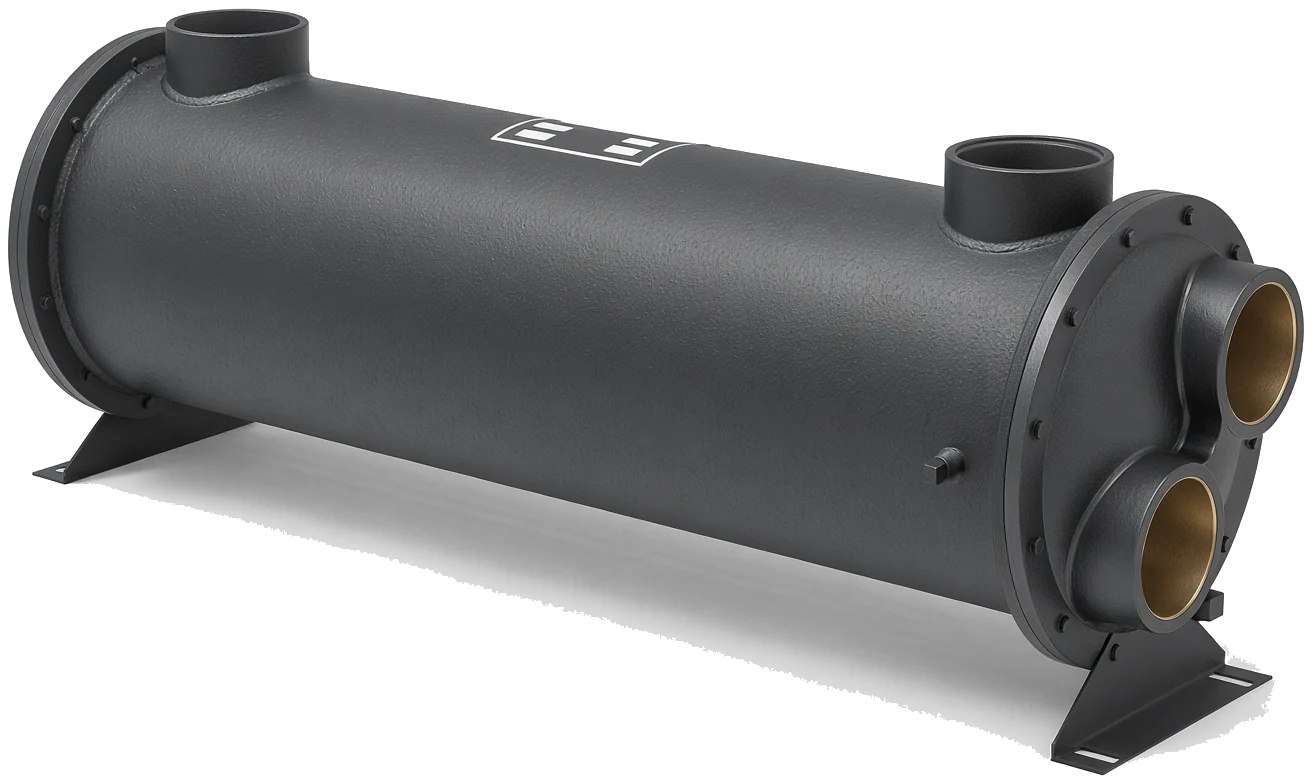
Approach Sets the Limit
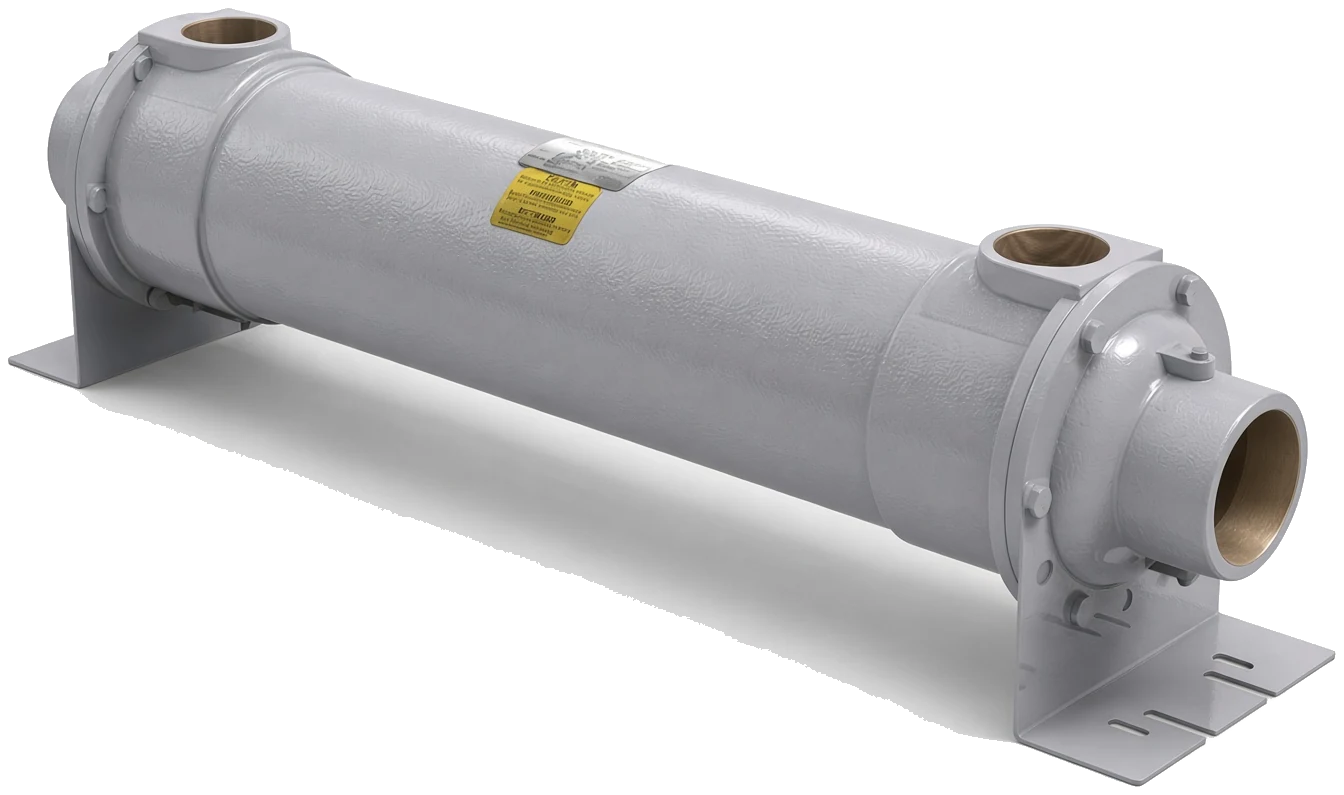
You cannot hold coolant below the seawater temperature plus the exchanger's approach, so sizing on August water is the difference between margin and a derated engine.

Measure This
Dimensions that decide the fit
- Overall length and shell diameter
- Connection size and thread type
- Mounting foot centers

Annual Check
Keeping the capacity you paid for
- Pull and inspect both anode sets
- Rod or descale the tube side
- Renew bonnet gaskets on reassembly
What the Data Sheet Gives You
Engine manufacturers publish heat rejection to jacket water separately from heat rejection to charge air and to lube oil, and the three are not interchangeable. Take the jacket figure at your continuous rating, not at the peak rating the marketing sheet leads with, and confirm which coolant circuit it covers on engines with split high and low temperature loops.
- Coolant on the shell, raw seawater in the tubes
- Sized on heat rejection, jacket flow and sea temperature
- Copper-nickel tubes with brass or steel tubesheet
- Bronze bonnets carry the zinc anode ports
- Two or four pass depending on pump capacity
- Frames matched to the envelope the old unit left
Choosing Between Two and Four Pass
A four-pass tube arrangement routes seawater through the bundle four times, giving more surface and higher velocity in a shorter shell. That helps in a tight engine room and keeps tubes swept clean, but it costs pressure drop, and a tired raw water pump may not deliver the flow the selection assumed.
- Scale costs capacity long before it causes a leak
- Pinholes at tube ends point to missing zincs
- Oil in the expansion tank means an oil cooler leak
- Salt weep at the bonnet joint means a tired gasket
- Summer creep is the first honest warning sign
What to know before sizing
It is a shell and tube exchanger that transfers heat from the engine's treated coolant into raw seawater. Coolant circulates on the shell side from the engine pump; seawater passes through copper-nickel tubes and goes overboard. It replaces the radiator a land engine would have, using the sea as the ultimate heat sink.
Once a year is a reasonable baseline for most vessels, more often in warm silty water or where the boat sits at a dock and grows things. If you track jacket temperature against seawater temperature, you will see the approach widen as scale builds and can clean on evidence rather then a calendar.
Usually not. For ordinary raw seawater duty copper-nickel is the economical and proven choice. Titanium earns its price where the water is chlorinated, unusually warm, sulfide bearing, or where stray current has already destroyed one cooler. We will tell you honestly which case you are in.
Possibly, but check the raw water side first: strainer, impeller, hose collapse and the exhaust elbow. A cooler that has lost capacity to scale shows exactly that pattern, fine at idle and short of margin at full load, so compare jacket temperature against seawater temperature before ordering.
Related

HEAT EXCHANGERS • SHELL AND TUBE
Shell and Tube
Copper-nickel and titanium tube coolers across the B, HC and AB frames.
+ Learn More
ENGINES • DETROIT DIESEL
Detroit Coolers
Replacement coolers for 71, 92 and 149 series two-strokes.
+ Learn More
ENGINEERING • CORROSION
Zinc Anodes
Inspection intervals and why anodes decide cooler life.
+ Learn More
