1-805-484-2992
Quotes - Engineering - SalesTank Cooling Duties
Cooling Duties Inside the Tank
The tanks on a fishing or work vessel that have to be held cold share one problem: what is in them is dirty, salty and alive. A fish hold is seawater, ice, fish and everything that comes off fish. A bait well is circulating seawater with a load of live animals in it. A brine tank is salt water below the freezing point of fresh. Circulating any of that through a conventional cooler in the machinery space means a pump, a strainer, and a bundle that fouls with slime and scale and has to be rodded out.
Every tank on a working boat that has to be held cold, from the fish hold to the bait well to the brine tank, is a duty an immersion plate can carry from inside the tank. This page goes duty by duty and says when a chiller loop is still the better choice.
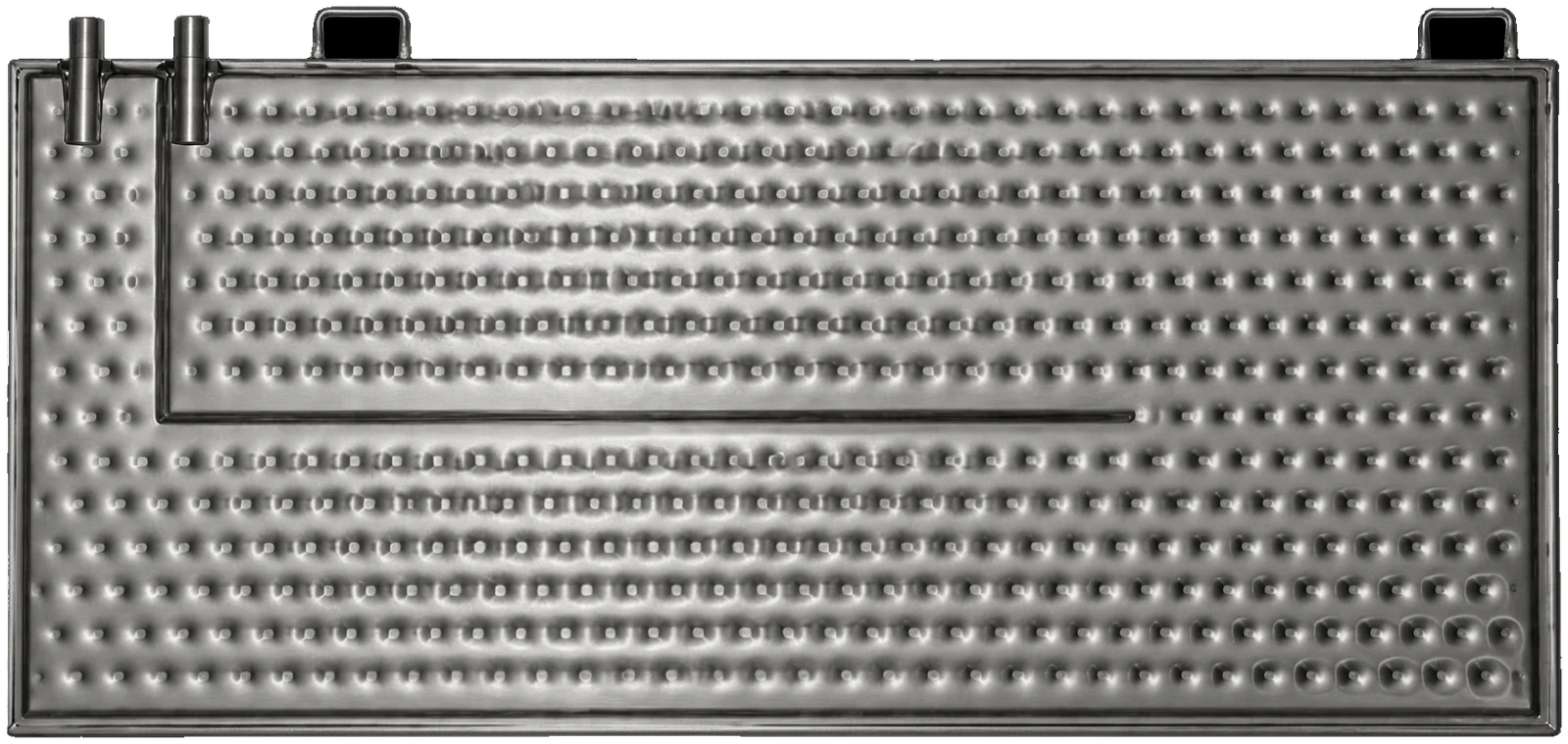
Immersion plates put the heat transfer surface in the tank instead. Titanium pillow plates on the hold wall, in the bait well or in the brine tank chill the contents directly, with refrigerant or chilled coolant inside the plate and nothing but a flat metal face in contact with the product. There is no hold-water pump to run or strain, no tubes to foul, and the plates are brushed clean when the tank is washed down. Sizes and plate counts are worked per duty; call 1-805-484-2992 for a rating.
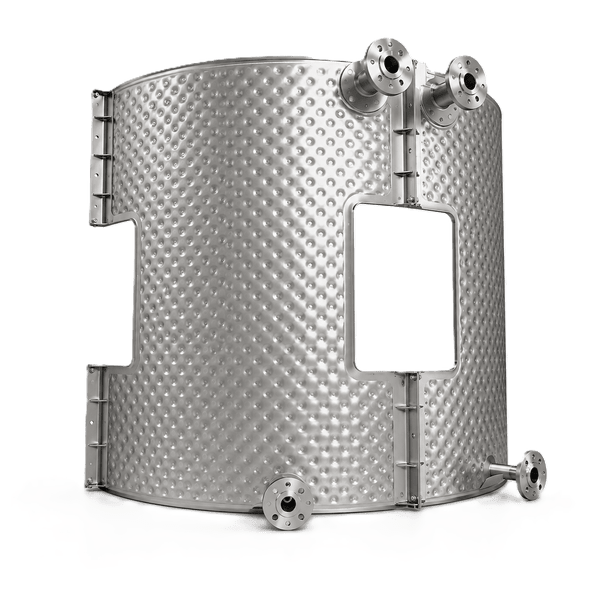
Rating a hold or tank duty starts with the tank dimensions and what goes in it, the temperature it must hold and how quickly it has to get there from ambient, and the refrigeration or coolant capacity on board. From those we set plate size, count and material, and confirm with you before the plates are built.
Request a Quote


Fish Hold and RSW Chilling
A refrigerated seawater hold takes the catch straight into chilled seawater, and the quality of the landing depends on how fast the water comes down and how steadily it holds. Titanium plates on the hold walls chill the water directly, and the hold's own circulation, whether a small pump or the movement of the vessel, sweeps water across the plate faces. The refrigerant or glycol runs to the plates from the plant and never meets a fish. See Commercial Fishing for the vessel side.
Sizing starts with the hold volume, the weight of catch and the rate it is loaded, the seawater temperature it comes aboard at and the temperature the hold must reach, and the time allowed to get there. From those we set plate area and count and confirm against the refrigeration capacity on board. A hold that is loaded fast in warm water needs more plate than one filled slowly in cold water, and the plant has to keep up with the plates.
Bait Wells, Live Wells and Brine Tanks
A bait or live well is circulating seawater with live animals in it, and the water carries scales, waste and ammonia that would foul a tube bundle in days. A single titanium plate in the well, chilled by glycol or refrigerant, holds the water at temperature with nothing for the bait to be drawn into and nothing to rod out. The plate is cleaned when the well is drained. Chilling has to be gentle and even, so plate placement in the circulation matters more than plate area.
A brine tank runs concentrated salt water well below the freezing point of fresh, and it is one of the hardest environments on the boat for any metal. Titanium plates with refrigerant inside chill the brine directly and are indifferent to the salt concentration and the cold. A shell and tube brine chiller is possible but has to be titanium throughout and still fouls with salt; plates in the tank are simpler and there is less of them to go wrong.
Ballast, Process Tanks and Ice Slurry
Ballast and process tanks are the one duty where the plate material changes with the water. A fresh-water tank, a clean process tank or a glycol reservoir gets stainless plates; anything with seawater or salt in it gets titanium. The duty is usually steady rather than a fast pull-down, so plate area is modest and the plates can be positioned wherever the tank has room and the fluid moves. Where the tank is remote from the plant a chilled loop may reach it more easily than refrigerant lines.
Ice slurry is seawater chilled until it turns to slush, pumpable ice that packs a catch faster and gentler than block ice. The plate faces are where the freezing happens, and that is exactly the reason a tube bundle is the wrong tool for the job: ice forming inside tubes blocks them, whereas ice forming on the outside of a plate is swept off by the agitation in the tank. Titanium plates, refrigerant inside, sized for the slurry rate you need.
Immersion Plates or a Chiller Loop
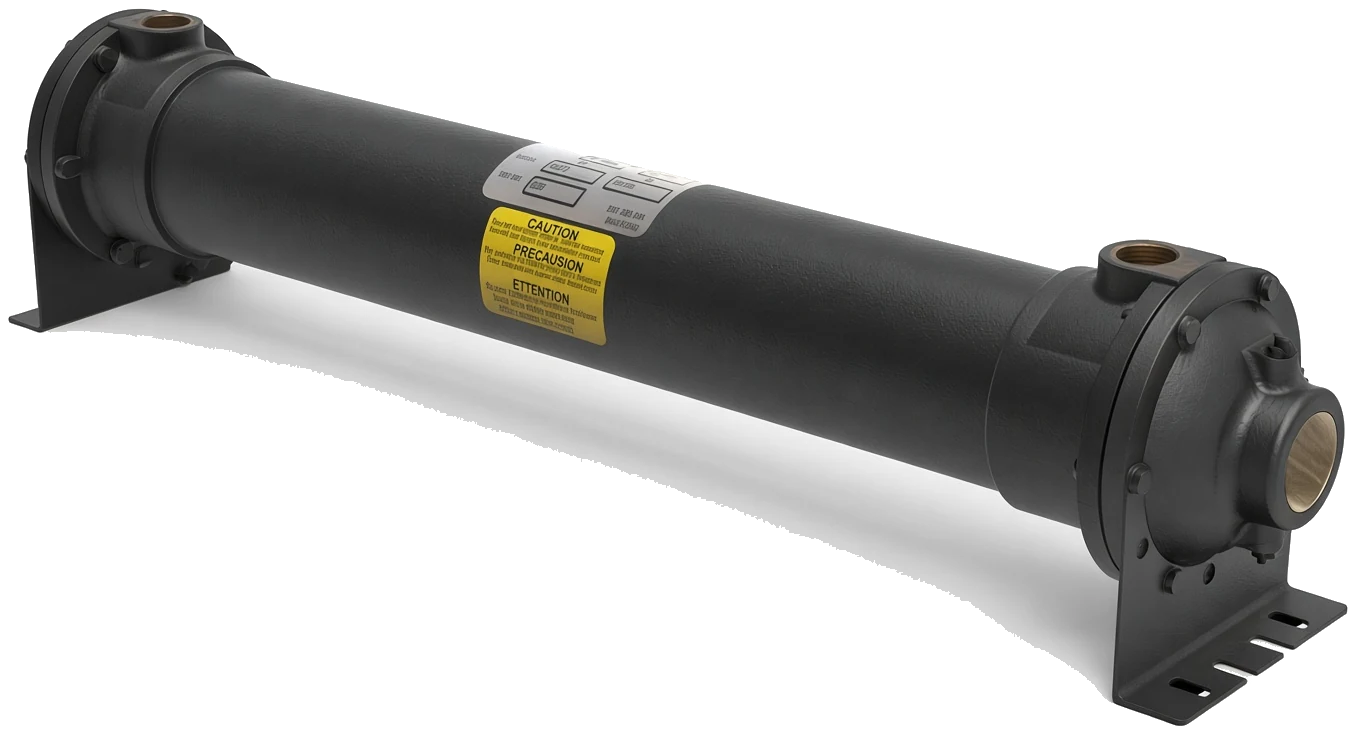
A chiller loop is a cooler in the machinery space, a pump, a strainer and pipework circulating hold or tank water through it. A shell and tube chiller with titanium tubes or a titanium plate and frame unit does that duty well, and on a very large hold or a central chilled-water system one cooler and one pump serving several tanks is cleaner than plates and refrigerant lines in each. The cost is a pump to run and a cooler that fouls and must be opened and cleaned.
Immersion plates remove the hold-water pump, the strainer and the fouling cooler, and put a flat face in the tank that cleans at wash-down. They win on most fishing vessels, on bait wells, brine and slurry, and wherever the tank contents are dirty enough to foul a bundle. They lose where the plate area needed will not fit the tank, where refrigerant lines cannot be run to a remote tank, or where the product must not touch metal. Tell us the duty and we will say which.
Chill the Tank, Not the Pipework
When the product is seawater and fish, the fewer times it passes through a pump, a strainer and a tube bundle, the fewer things there are to foul, freeze or fail.
Duty and sizing questions
From the hold volume, the weight of catch and how fast it is loaded, the seawater temperature it comes aboard at, the hold temperature required and the time allowed to reach it, all set against the refrigeration capacity on board. Send those and the hold dimensions and we return a plate size, count and layout for confirmation.
Yes, and it is the best way to do it. A single titanium plate in the well, chilled by glycol or refrigerant, holds the water at temperature without a pump drawing bait, scales and waste through a bundle. Placement in the circulation matters so the chilling is even and gentle, and the plate cleans when the well is drained.
You can, and on a very large hold or a central chilled water system it is often the better arrangement. The cost is a hold-water pump, a strainer and a cooler that fouls with slime and scale and has to be opened and rodded. On most fishing vessels plates in the hold are simpler and there is less to maintain.
Only if there is salt in the water. Seawater ballast gets titanium. Fresh-water tanks, clean process fluids and glycol reservoirs are served by stainless plates at lower cost. Tell us what is in the tank and whether it ever sees seawater, and the material follows from that rather than from the duty name.
Yes. Seawater is chilled on the plate faces until it turns to pumpable slush, and the agitation in the tank sweeps the ice off the plates as it forms. That is precisely why a tube bundle is wrong for slurry: ice inside tubes blocks them. Titanium plates with refrigerant inside, sized for the slurry rate you need.
A small one usually earns its keep. Water moving across the plate faces keeps the whole hold at one temperature and stops ice building on the plates while the far corner stays warm; vessel motion does some of that at sea but not alongside while the hold is being loaded. The pump is a fraction of the size of the one a remote chiller would need, because it only stirs the hold rather then pushing water through a strainer and a bundle.