
1-805-484-2992
Quotes - Engineering - SalesDeck Machinery
Cooling Deck Machinery
A marine crane hydraulic oil cooler almost always ends up mounted at the machine rather than in the engine room. A crane pedestal, a trawl winch or an anchor capstan is a long way from the machinery space, and running a raw water branch out to it means more hull penetrations, more valves to freeze or seize, and a length of seawater pipe crossing a working deck. So the core goes at the power pack, a fan pulls ambient air through it, and the vessel gets a cooling system that moves with the machine.
Deck machinery is cooled where it stands. Cranes, winches, capstans and trawl gear sit in spray and sun with no seawater loop nearby, so the answer is an air cooled core coated for salt service and a fan drive that suits the power at the pedestal.
That decision buys simplicity and costs exposure. The core sits in salt spray, in sunlight, and in whatever the deck crew hoses around it. An uncoated aluminum core in that environment fails from the fins inward: salt holds moisture at the fin roots, the aluminum corrodes, the fins lose contact with the tubes and the thermal path disappears. The unit still holds pressure, so nothing leaks and nobody notices until oil temperature is high and the crane is slow.
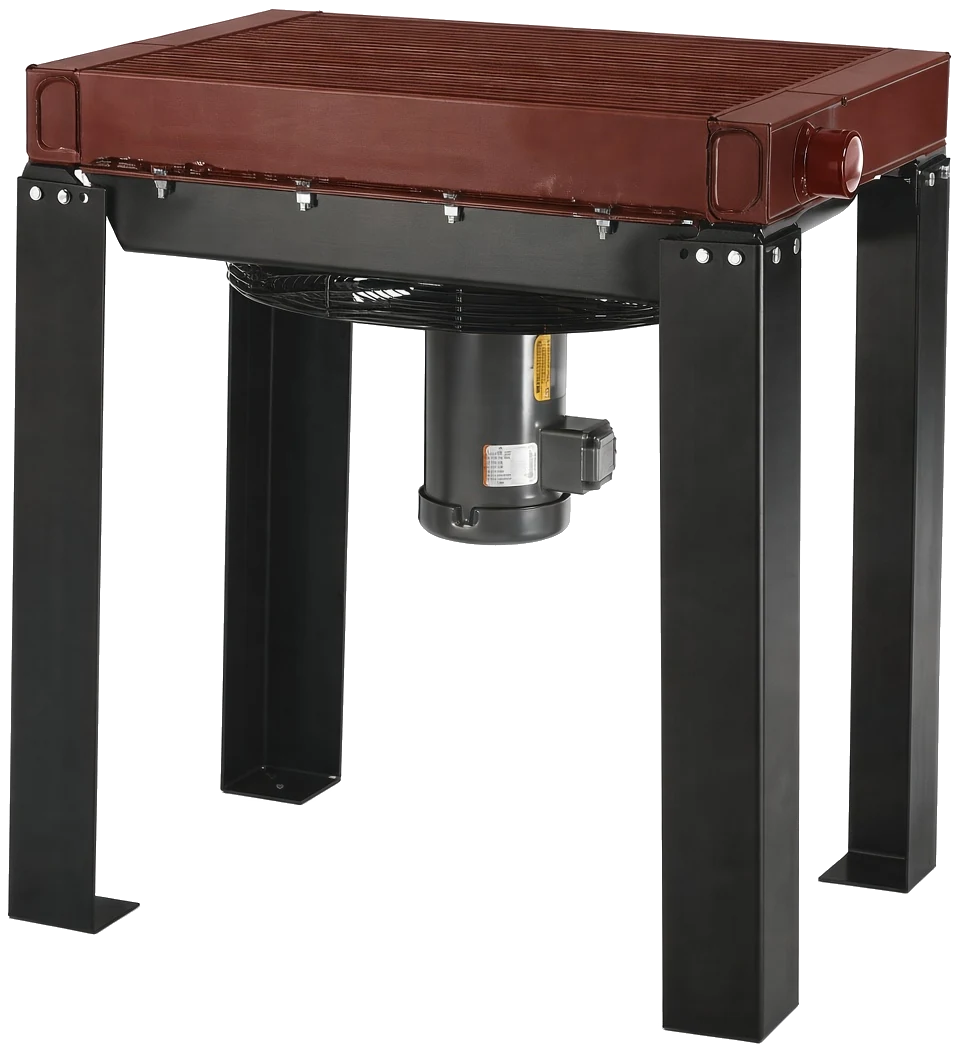
For a deck machinery oil cooler we need the hydraulic circuit data, the fan power available at that location, and how the core is mounted and exposed. Send a nameplate photo of the existing unit, the pump flow and pressure, and the connection sizes, and we confirm the replacement.
Request a QuoteFins Fail First
A deck cooler almost never fails by leaking; it fails by losing the fins that connect its tubes to the air, which is a slow loss nobody sees on a gauge.

Site Survey
Before choosing a drive
- Electrical supply at the location
- Hydraulic pilot flow available
- Clear air path both faces

Wash Routine
Deck maintenance that works
- Fresh water rinse of the core
- Fan guard clear of line and net
- Fin roots inspected for wastage
Choosing the Fan Drive for the Deck
The thermal size of a deck cooler comes from the hydraulic circuit, but the drive comes from what is available where the cooler will sit. A crane base fed only with hydraulic hose gets an H Series core, taking pilot flow from the machine's own circuit so the fan runs whenever the crane runs. That self-regulating behavior is genuinely useful on intermittent gear.
- Cooling mounted at the crane, winch or capstan power pack
- Bar-and-plate aluminum cores rated 250 PSI and 250 degrees
- Heresite coating applied by us before the unit ships
- AC electric, hydraulic motor or DC fan drive to suit the deck
- Cores sized on the peak of the machine duty cycle
- SAE or NPT connections to match existing hose ends
Air Path and Recirculation
An air cooled core needs somewhere to take air from and somewhere to send it. Mounted tight against a bulkhead or inside a crane pedestal enclosure, the discharge air finds its way back to the inlet and the core is then cooling itself with its own exhaust. The guage shows the symptom as a cooler that performs well on the bench and badly on the boat.
- Coating does not change pressure or temperture ratings
- Hydraulic drive fans run whenever the machine runs
- Air path clearance checked at the layout stage
- Shell and tube alternative where a pack sits inside
- Replacement cores confirmed from a nameplate photo
Replacement questions
Because the fins corroded away from the tubes. Salt holds moisture at the fin roots, the aluminum wastes, and the fins lose thermal contact long before the pressure boundary is affected. The core still holds oil and shows no leak, but it is no longer transferring much heat. That is the standard failure for an uncoated core in salt air.
Usually a hydraulic motor from the H Series, because a crane pedestal has hydraulic hose and often no electrical supply. It also means the fan turns whenever the crane is working, which suits intermittent duty. Where a switchboard feed exists and the machine runs continuously, an A Series core on an AC motor is simpler and quieter.
The coating is thin and the effect on thermal performance is small enough to sit inside normal selection margin. It does not change the pressure or temperature ratings of the core at all: still 250 PSI and 250 degrees Fahrenheit. The trade is a small thermal cost against a large gain in service life on deck.
Enough on both faces that discharge air cannot find its way back to the inlet. Inside a tight pedestal enclosure a core will recirculate its own hot air and perform far below its rating. Point the discharge away from the inlet, away from people, and remember that sunlit deck steel raises local air temperature.
A photo of the nameplate and of the unit installed, the pump flow and working pressure, the oil grade, the connection sizes and thread type, and what fan supply exists at the mount: AC voltage, hydraulic pilot flow or 12 or 24 volt DC. Call 1-805-484-2992 or send it to Sales@HeatX.com and we confirm the replacement series and size.
Related

APPLICATIONS • HYDRAULIC
Hydraulic Cooling
How the return line duty and pressure budget are established
+ Learn More
HEAT EXCHANGERS • COATING
Heresite Coating
What the baked phenolic process is and where it is applied
+ Learn More
VESSELS & ENGINES • BY VESSEL
Offshore Vessels
Deck crane and winch cooling on offshore and government boats
+ Learn More
