
1-805-484-2992
Quotes - Engineering - SalesVessels And Engines
By the Boat or by the Engine
A replacement cooler is found from two directions, and this section carries both. The Vessels pages start from the boat: a commercial fishing vessel, a tug or workboat, a ferry, a yacht or an offshore craft each carries a recognizable set of coolers and works its seawater in a recognizable way, and the operating profile changes the selection more than horsepower does. A tug that pushes at zero speed and a sportfisher that runs at 30 knots want different tube velocities and different materials from the same rated engine.
Two ways into the same answer. Start from the boat, and the duties that kind of vessel carries, or start from the engine nameplate and work forward to the cooler that fits its rating. Either way the page tells you what to send us.
The Engines pages start from the nameplate. Caterpillar, Cummins, Detroit Diesel, John Deere and the other marine makes are listed by model, with the horsepower bands published for marine ratings, the jacket water and oil cooling duties each model carries, and the shell and tube series that normally answers them. Heat rejection is never guessed: it comes from the engine data sheet at the rating installed, and the page tells you where to find it.
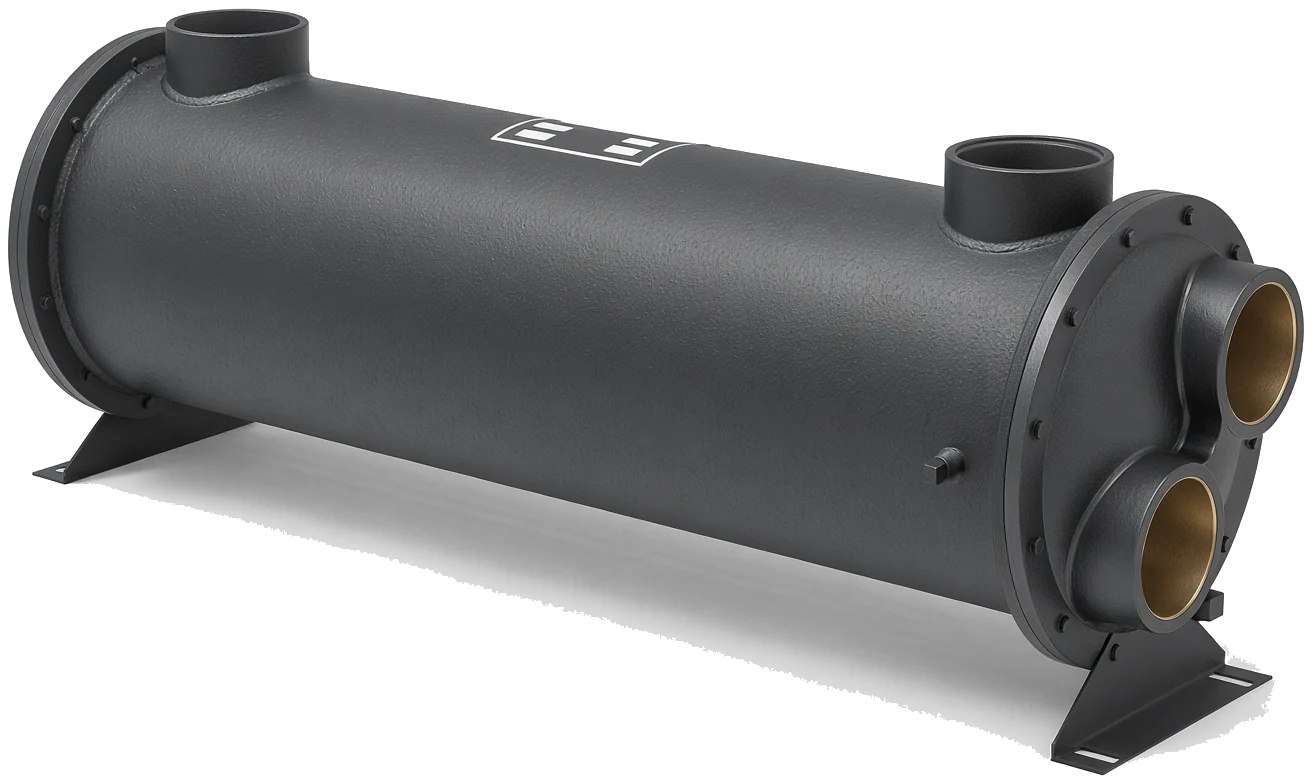
Most inquiries arrive as a photograph and a model number. The vessel pages tell you which coolers that kind of boat carries and what usually fails first; the engine pages tell you what cooler answers each rating. We confirm every replacement against the old unit before it is built.
Request a QuoteBy Vessel Type


VESSELS & ENGINES • BY VESSEL
Tugs and Workboats
Bollard Pull, Clutch Heat and Dirty Water
+ Learn More
VESSELS & ENGINES • BY VESSEL
Passenger Vessels and Ferries
Engagement Counts and Overnight Windows
+ Learn More
Why the Vessel Changes the Answer
Two boats with the same engine can want different coolers. A tug spends its working life at full torque and low speed, so the raw water pump turns slowly while the engine rejects its full rated heat, and the cooler has to carry that heat on less flow. A sportfisher runs the same rating at high speed with the pump at full delivery, then idles in a marina for a week. The first wants surface and tube velocity kept inside the copper-nickel limit; the second wants zincs and a material that tolerates warm, still harbor water.
The vessel pages carry that reasoning so you do not have to reconstruct it. Each one lists the coolers that kind of boat carries, from jacket water and gear oil to hydraulics, refrigeration condensers and hold chilling, and says which usually fails first and why. Read the vessel page for the profile, then the engine page for the rating, and the selection is nearly done.
Why the Engine Sets the Size
Horsepower sets the jacket water heat rejection, and heat rejection is what sizes the cooler. The engine pages give the marine horsepower bands for each model, describe the jacket water and oil duties it carries, and name the series that normally answers each duty at each rating. Where a model has been marinized by several packagers, the page says what to look for on the nameplate so the right rating is used.
The one number never taken from a website is the heat rejection figure itself. It comes from the engine data sheet at the installed rating, and the page tells you where to find it. If the data sheet is gone, the old cooler's dimensions and the engine rating are enough for us to work the duty back and confirm a frame.
Sizing questions
Whichever you know best. If the engine model is on the nameplate, start there and read the vessel page for the operating profile. If you only know the boat and the cooler that failed, start from the vessel page; it will point you at the duty and the engine page that sizes it.
Yes. The pages cover the most common marine makes and models, but the selection is made from the rating and heat rejection, not the name. Send the nameplate, the rating and a photograph of the old cooler and we will work it the same way.
Often. A tug at zero speed and a sportfisher at 30 knots run the same engine rating with very different raw water flow, tube velocity and idle time. Those change the surface, the material and wether zincs or titanium tubes are the right call.
That is most of what we do. Send its overall length, shell diameter, connection sizes, bonnet orientation and a nameplate photograph, plus the engine rating, and we will match a current frame to the same envelope and confirm it with you before it is built.

