1-805-484-2992
Quotes - Engineering - SalesFresh Water Generation
Evaporators in Titanium
An evaporator is the hardest seawater duty on a vessel. Seawater is heated to boiling, part of it leaves as vapor, and what remains is brine at a higher chloride concentration than the sea it came from. That brine then sits against the tube surface at elevated temperature, which is precisely the combination that defeats stainless steels by chloride pitting and thins copper alloys steadily. Titanium is unaffected by it, and that is why marine evaporator tubes are titanium.
Evaporator duty puts boiling seawater and concentrated brine against a tube wall for the life of the vessel. Titanium is the only material that treats that as routine, and every unit is rated against your own process conditions.
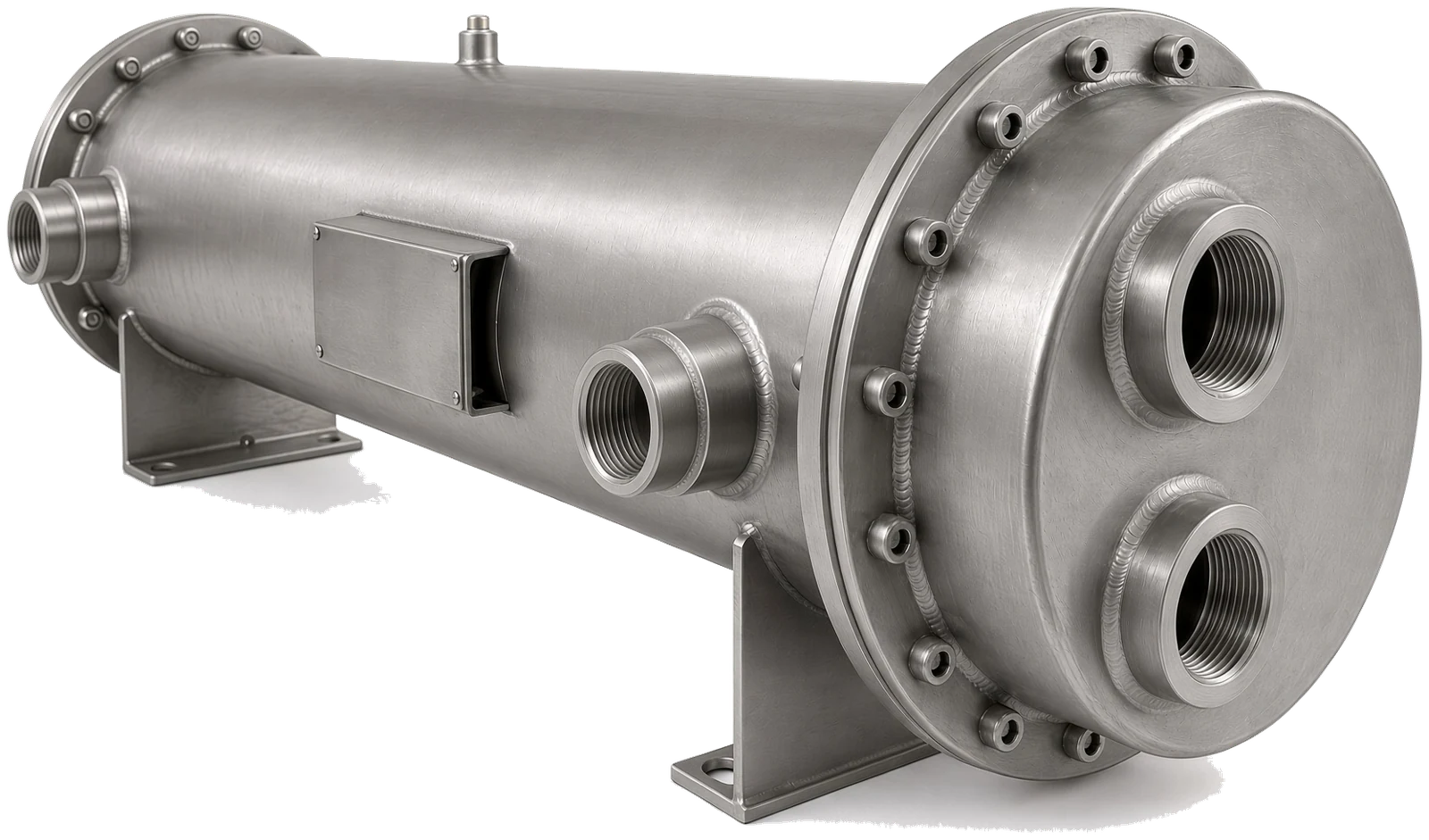
The heat source varies. Some units run on steam, some on engine jacket water as a waste-heat freshwater generator, and some on an electric element in a brine heater. The titanium tube bundle is the constant. On a jacket water driven unit the arrangement is elegant: heat that would otherwise go over the side through the seawater cooler makes fresh water instead, which on a long passage is a meaningful gain.
The numbers we need are the heat source and its temperature, the fresh water output in gallons or liters per day, the operating vacuum or pressure, and the seawater feed temperature and flow. From those we can size the bundle and quote a rating.
Request a Quote


Why Titanium and Nothing Else
Chloride attack on stainless steels becomes far more aggressive as both concentration and temperature rise, and an evaporator raises both at once by design. A 316 tube bundle in concentrated hot brine is living in the conditions the alloy is least suited to, and pitting or stress corrosion cracking follows. Copper alloys survive longer but thin steadily and contaminate the distillate as they go.
Titanium is indifferent to chloride concentration at these temperatures because its oxide film does not depend on chromium chemistry to stay intact. It also does not contribute metal ions to the distillate, which matters where the product water is used for drinking or for boiler feed. That combination of durability and inertness is why the material became standard for this duty.
Scale, Not Corrosion, Sets the Interval
The maintenance question on a titanium evaporator is scale rather than metal loss. As seawater concentrates, calcium carbonate and calcium sulfate reach their solubility limits and deposit on the hottest surface, which is the tube wall. Scale is an insulator, so output falls and the heat source has to work harder for the same distillate.
The controls are brine density, feed ratio and operating temperature, plus periodic acid cleaning. Titanium tolerates the cleaning chemistry that copper alloys do not, which is a practical benefit in itself. Our Cleaning and Descaling notes cover the sequence.
Waste Heat Freshwater Generators
Running an evaporator on engine jacket water turns a cooling problem into a water supply. Heat that the jacket water cooler would otherwise dump into the sea evaporates seawater instead, and the only cost is the pumping and the vacuum system. On a vessel on passage with an engine at steady load, output is predictable and effectively free.
The constraint is jacket water temperature, which is modest, so the unit must operate under vacuum to boil seawater at that temperature. That in turn means the shell has to hold vacuum and the vacuum system needs maintaining. It also links the evaporator to the engine cooling circuit, so the jacket water side has to be sized with both duties in mind.
Specifying a Replacement Bundle
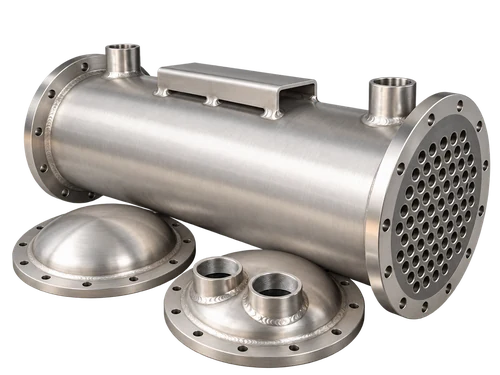
Where an existing evaporator has reached the end of it's life, a titanium bundle in the existing shell is often the economical route. We need the shell dimensions, the tubesheet arrangement and bolt pattern, the tube count, diameter and length, and the pass arrangement, together with the duty the unit is expected to deliver.
Send photographs of the tubesheet face and the shell nozzle arrangement. If the original bundle was 316 or copper alloy and failed by pitting, a like-for-like renewal repeats the outcome, and moving to titanium at bundle renewal is the moment when the change costs least.
Brine Is Not Seawater
Concentrating seawater raises its chloride content and its scaling tendency at the same time, which is why an evaporator is specified on brine conditions rather than sea conditions.
What owners ask us
Because an evaporator raises chloride concentration and temperature at the same time, which is exactly the condition in which stainless steels pit and crack. Titanium is unaffected by chloride concentration at these temperatures and adds nothing to the distillate. It also tolerates the acid cleaning that scale removal requires.
Yes, and it is common. Jacket water is a modest temperature source, so the unit runs under vacuum to boil seawater at that temperature. Output is steady while the engine is on load, and the heat is otherwise going over the side anyway. The jacket water circuit then has to be sized with both duties in mind.
Most likely it is scaling. As brine concentrates, carbonate and sulfate deposit on the hottest surface, which is the tube wall, and scale insulates. Check brine density, feed ratio and vacuum before suspecting the tubes. Titanium does not thin, so falling output is almost always a deposit or a vacuum problem.
Frequently yes, and it is the cheapest moment to upgrade the material. We need the shell dimensions, tubesheet pattern and bolt circle, tube count, diameter and length, and the pass arrangement, plus photographs of the tubesheet face. If the old bundle pitted, changing material at renewal is the sensible move.