
1-805-484-2992
Quotes - Engineering - SalesRefrigeration Plant
Condensing Against the Sea
A condenser's job is to turn hot high pressure refrigerant vapor back into liquid, and how well it does that sets the whole plant's efficiency. Condensing temperature is seawater temperature plus the approach the condenser achieves. Every degree the condenser fails to achieve raises condensing pressure, which raises the compression ratio, which costs the compressor work and therefore fuel. Capacity falls at the same time, so the plant runs longer to do the same job and the compressor accumulates hours it did not need to.
A refrigeration condenser never announces its decline. It just runs the compressor longer at higher head pressure, burns more fuel and takes longer to pull the hold down, until one warm week it cannot keep up at all.
Fouling is what steals that approach, and it does so silently. There is no alarm for a marine refrigeration condenser losing surface. The evidence is indirect: head pressure creeping up over a season at the same seawater temperature, longer run times, higher fuel burn, and a hold that takes noticeably more time to pull down after loading. Operators usually notice on the first genuinely warm week, which on a fishing boat is the worst possible time to find out.
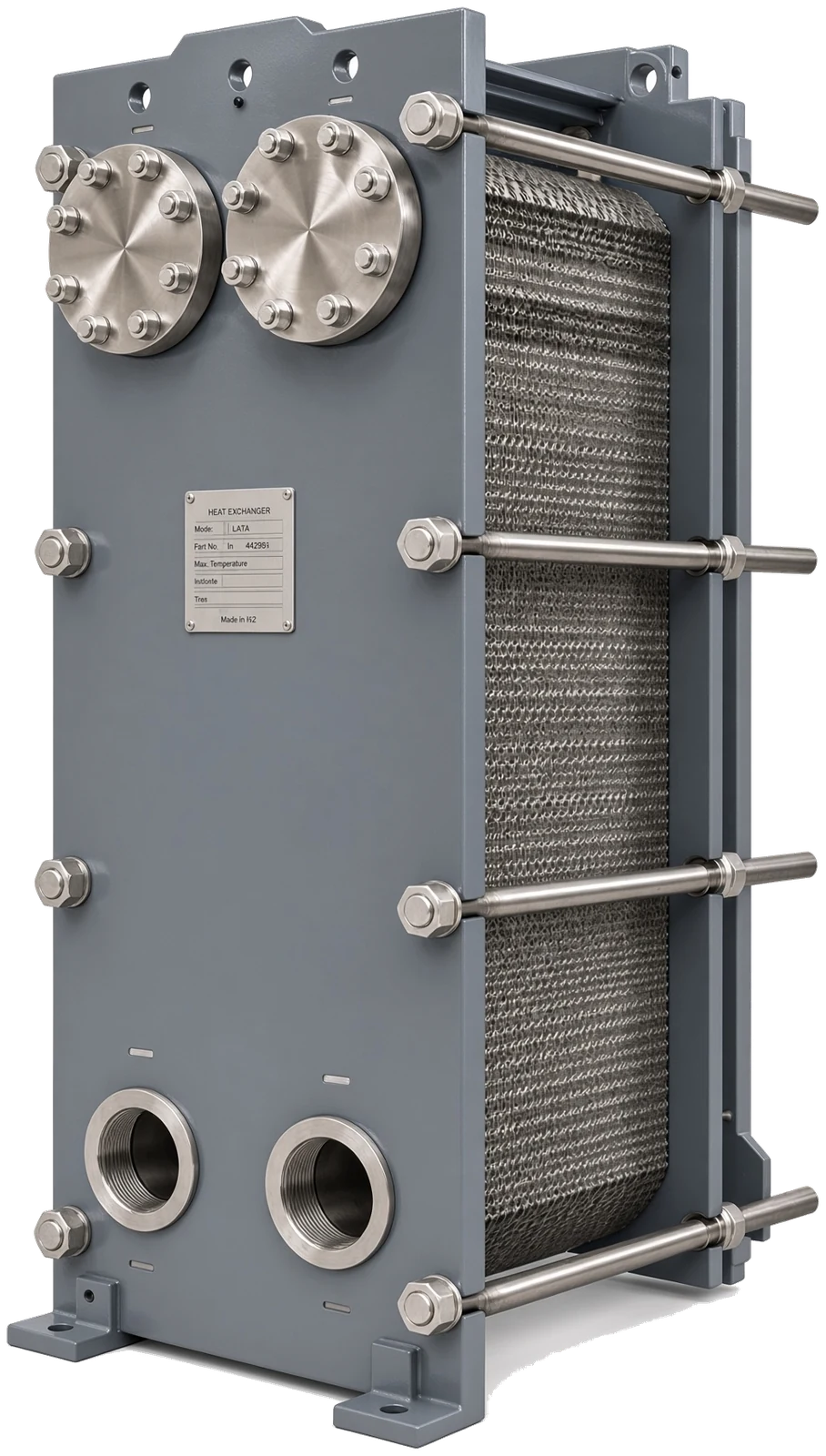
The single most useful diagnostic is condensing pressure measured against seawater temperature, logged over time. A widening gap is a fouling condenser. It costs nothing to record and it tells you months in advance that the plant needs attention.
Request a QuoteApproach Costs Fuel
Every degree of approach a fouled condenser adds raises compression ratio and fuel burn, so a dirty condenser is an operating cost long before it is a failure.

Log the Approach
The trend is the diagnosis
- Condensing pressure at steady load
- Seawater inlet temperature
- Compressor run hours per day

Before Replacing
Rule these out first
- Clean and rod the water side
- Purge air from the system
- Verify seawater flow to the condenser
Reading the Plant Honestly
Convert condensing pressure to saturation temperature for your refrigerant and subtract seawater inlet temperature. That difference is the condenser's approach, and it is the only number that describes its condition without taking it apart. Log it monthly at a consistent load and the trend tells you everything.
- Condensing temperature is seawater plus the approach
- Every degree of approach costs compressor work and fuel
- Fouling gives no alarm, only an indirect trend
- Condensers run higher tube velocity than jacket coolers
- Carbonate deposits on the hottest tube surfaces
- Titanium removes the velocity and warmth constraints
What Fouls a Condenser
Seawater condensers foul in three ways. Sediment settles where velocity is low, marine organisms settle and grow where the water is warm and slow, and carbonate scale deposits on the hottest tube surfaces, which in a condenser are the ones facing the incoming vapor. All three reduce transfer, and the last two also create crevices where corrosion begins.
- Log condensing pressure against seawater temperature
- Air in the system mimics a fouled condenser
- Slow hold pull-down is an early operational symptom
- Small cold water plants do not need titanium
- Titanium condenser ratings are quoted per duty
Questions we answer every week
Convert condensing pressure to saturation temperature and subtract seawater inlet temperature. That approach figure, logged over time at consistent load, is the diagnosis. A widening approach means fouling or air in the system; stable approach with high pressures means the water is simply warm.
Often yes on continuously running plant in warm or chlorinated harbor water, because condenser duty combines high tube velocity with a warm plant side, and titanium removes the erosion and film concerns entirely. Small provision plants in cold water, cleaned annually, do fine on copper-nickel.
Clean and rod the condenser water side, purge air from the system, and confirm seawater flow actually reaches the condenser. Those three cover most cases. If the approach is still wide with clean tubes and correct flow, the condenser has lost surface and needs replacing.
Plant capacity in tons of refrigeration, the refrigerant, design condensing temperature, seawater flow and warmest supply temperature, allowable water side pressure drop, and the physical data including nameplate photo, length, shell diameter and connection sizes. Titanium ratings are confirmed per duty.
Related

APPLICATIONS • SEAWATER
Chiller Condensers
The same duty applied to air conditioning plant on board.
+ Learn More
VESSELS & ENGINES • BY VESSEL
Fishing Boats
RSW and freezer plant duty on a working fishing vessel.
+ Learn More
ENGINEERING • MATERIALS
Copper-Nickel
What 90/10 does well and where its limits actually sit.
+ Learn More
