
1-805-484-2992
Quotes - Engineering - SalesPlate and Frame for Seawater Duty
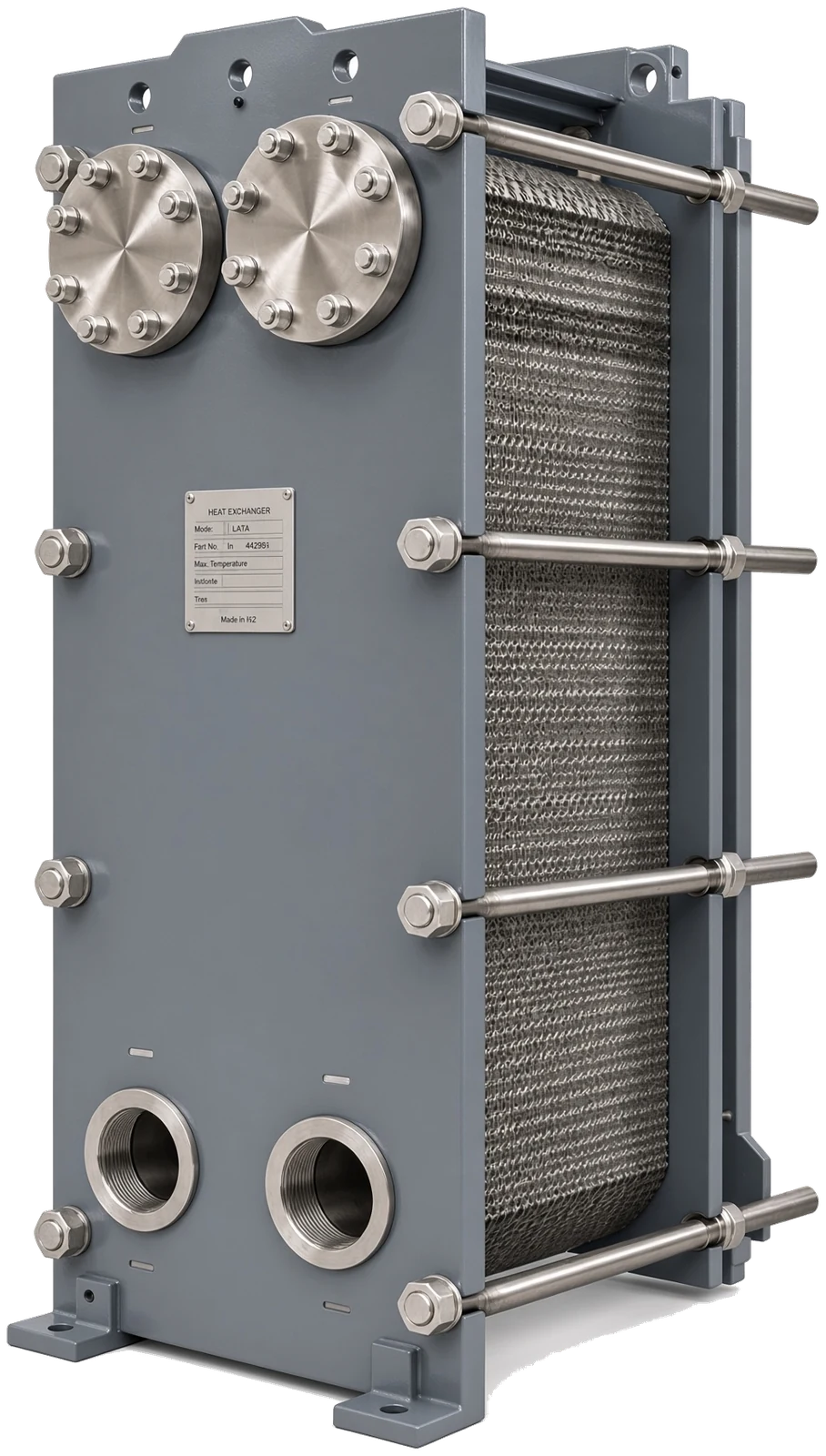
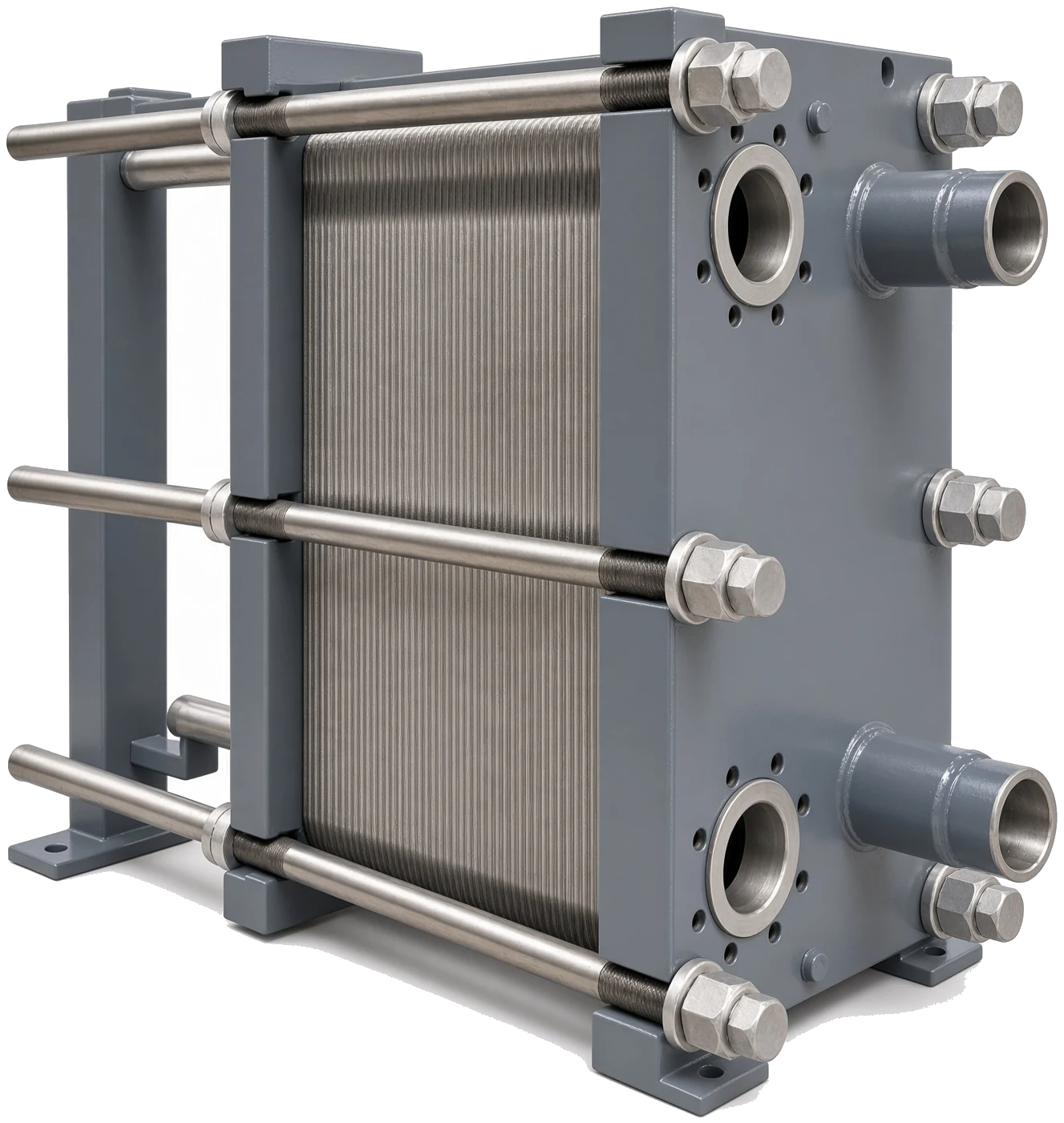
A marine plate and frame heat exchanger is a stack of thin pressed plates clamped in a steel frame, with a gasket around each plate deciding which fluid flows in which gap. Seawater passes through every second channel and the fluid being cooled through the channels between, so each plate has hot fluid on one face and cold on the other. The corrugations pressed into the plates stiffen the pack, hold the plates apart, and drive the flow turbulent at low velocity, which is where the high heat transfer rate of a plate unit comes from.
Plate and frame units with pressed titanium plates for seawater service, gasketed or semi-welded. A compact answer to central cooling, chiller and refrigeration condensing on larger vessels, with a plate pack that opens for cleaning without touching the pipework.
- Pressed titanium plates
- Gasketed or semi-welded cassettes
- Central fresh-water cooling
- HVAC chiller condensing
- Heat load in BTU per hour
- Both fluids and their flows
Turbulent flow at low velocity is where the plate rate comes from.
- Pressed titanium plates, gasketed or semi-welded
- Seawater in every second channel, product between
- Central fresh-water cooling and HVAC condensing
APPLICATIONS

What a Gasketed Plate Unit Is
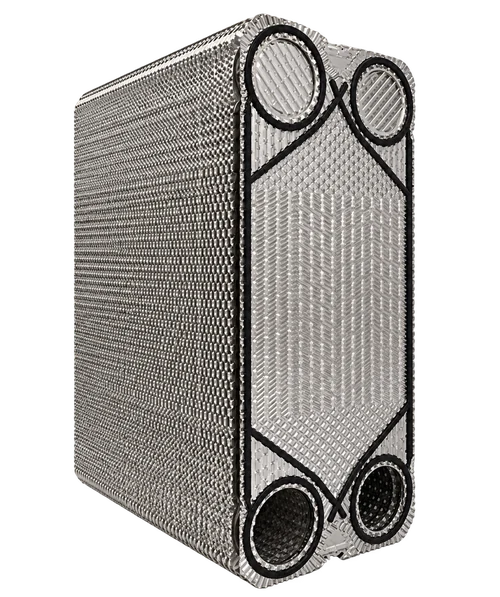
Each plate in the pack is pressed with a chevron or washboard pattern and carries a gasket in a groove around its edge and around two of its four corner ports. The gasket layout alternates from plate to plate, so seawater enters one pair of ports and can only flow through every second channel, while the fluid being cooled uses the other pair and the remaining channels. The whole stack is compressed between a fixed frame plate and a moving pressure plate by tie bolts.
The result is a great deal of heat transfer surface in a small box. The plates are thin, the channels are narrow, and the corrugations turn the flow turbulent at velocities a tube bundle would consider laminar. That is why a plate unit can be rated with the two fluids leaving only a few degrees apart, a closeness a shell and tube needs far more surface to match.
A plate is a fraction of the thickness of a tube wall and has no corrosion allowance to spend. Any pitting is a hole. Stainless steel in warm, stagnant or silted seawater pits and crevice-corrodes under the gaskets, and copper alloys are not pressed into plates for this duty. Titanium is immune to seawater pitting and crevice attack at the temperatures a cooler sees, and it shrugs off the turbulent, sand-laden flow that a plate pack is designed to run.
That immunity moves the life of the unit onto its gaskets, which is a manageable problem. Gaskets are a scheduled consumable, replaced when the pack is opened, with the choice between NBR and EPDM set by the temperture and the fluid on the other side. The plates themselves are cleaned and put back. Where the fluid on the other side is a refrigerant, ammonia or a high-pressure medium, the Semi-Welded unit takes it in a welded channel with no gasket in contact. More on the elastomers is on the Plate Packs and Gaskets page.
Plate and Frame Applications
HEAT EXCHANGERS • PLATE
Gasketed Plate
Construction, expandability and what to send us for a replacement
+ Learn More
HEAT EXCHANGERS • SHELL AND TUBE
Shell and Tube
The B, HC and AB ranges for jacket water and oil duty
+ Learn More
ENGINEERING • MATERIALS
Titanium or Copper-Nickel
Where each metal belongs in a seawater circuit
+ Learn More
