1-805-484-2992
Quotes - Engineering - SalesRaw Water Duty
Coolers for Raw Seawater Duty
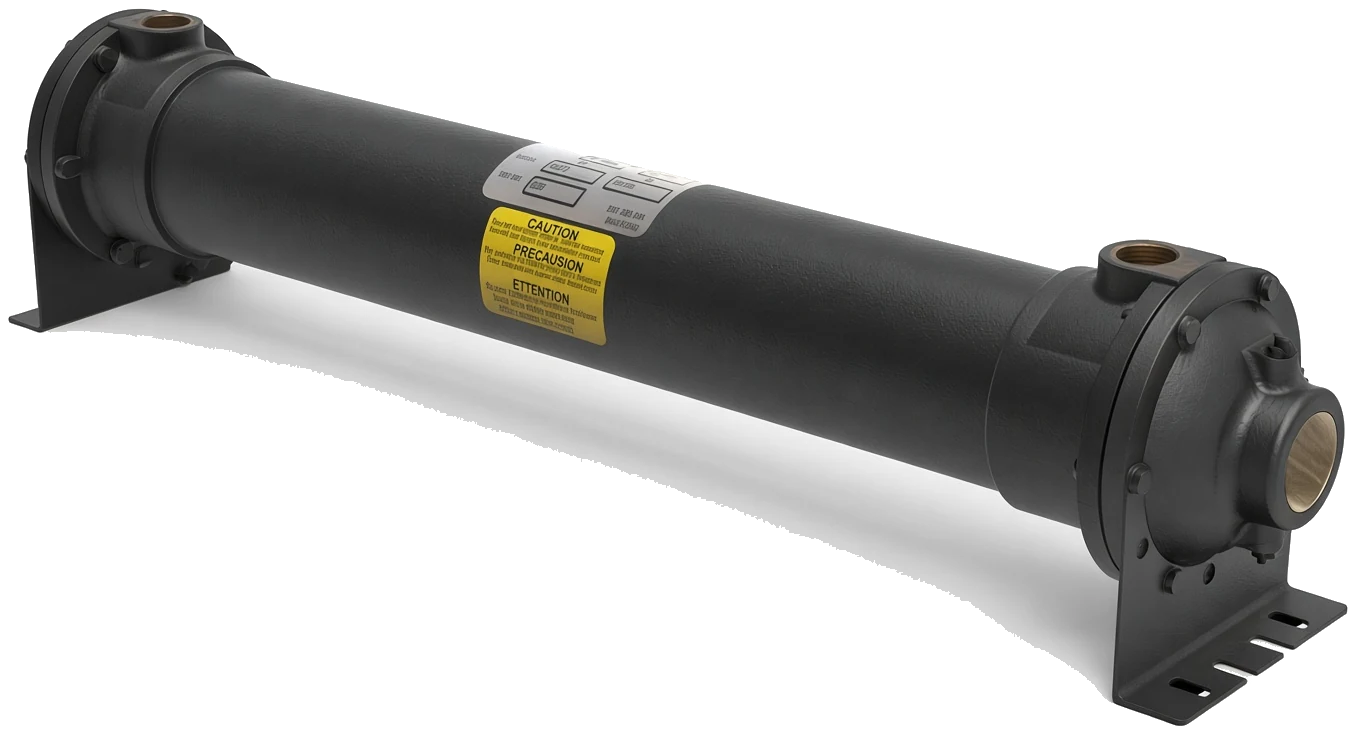
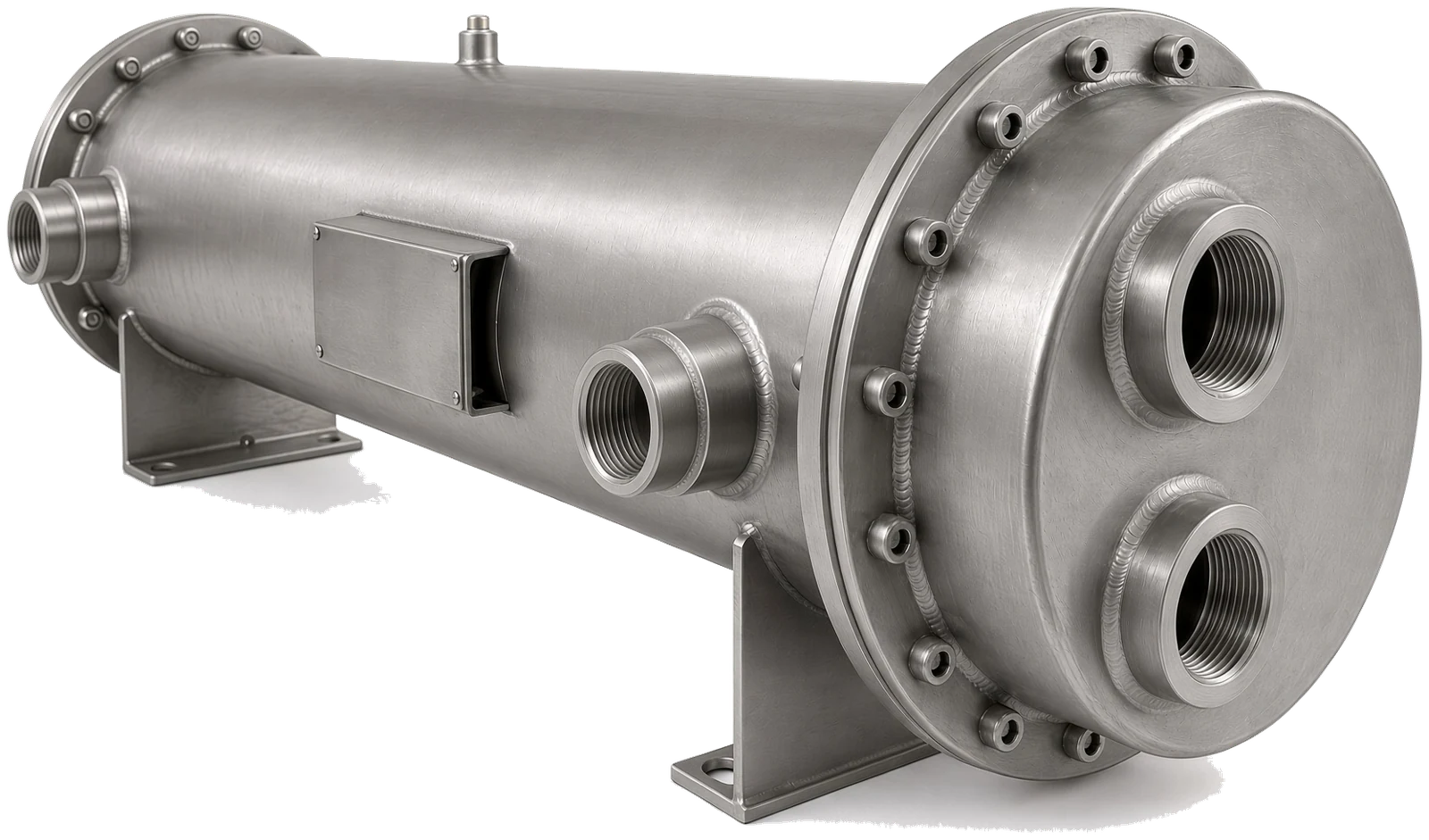
A marine seawater cooler is any shell and tube unit that has raw water in its tubes. On most vessels that means three duties: the jacket water cooler on each main engine and generator, the lube oil cooler beside it, and on larger boats a central fresh-water cooler that takes the whole closed loop and puts it against the sea in one place. The construction is the same in each case, seawater through the tubes, the fluid being cooled around them, zinc anodes in the bonnets, and the B, HC and AB frames cover all three.
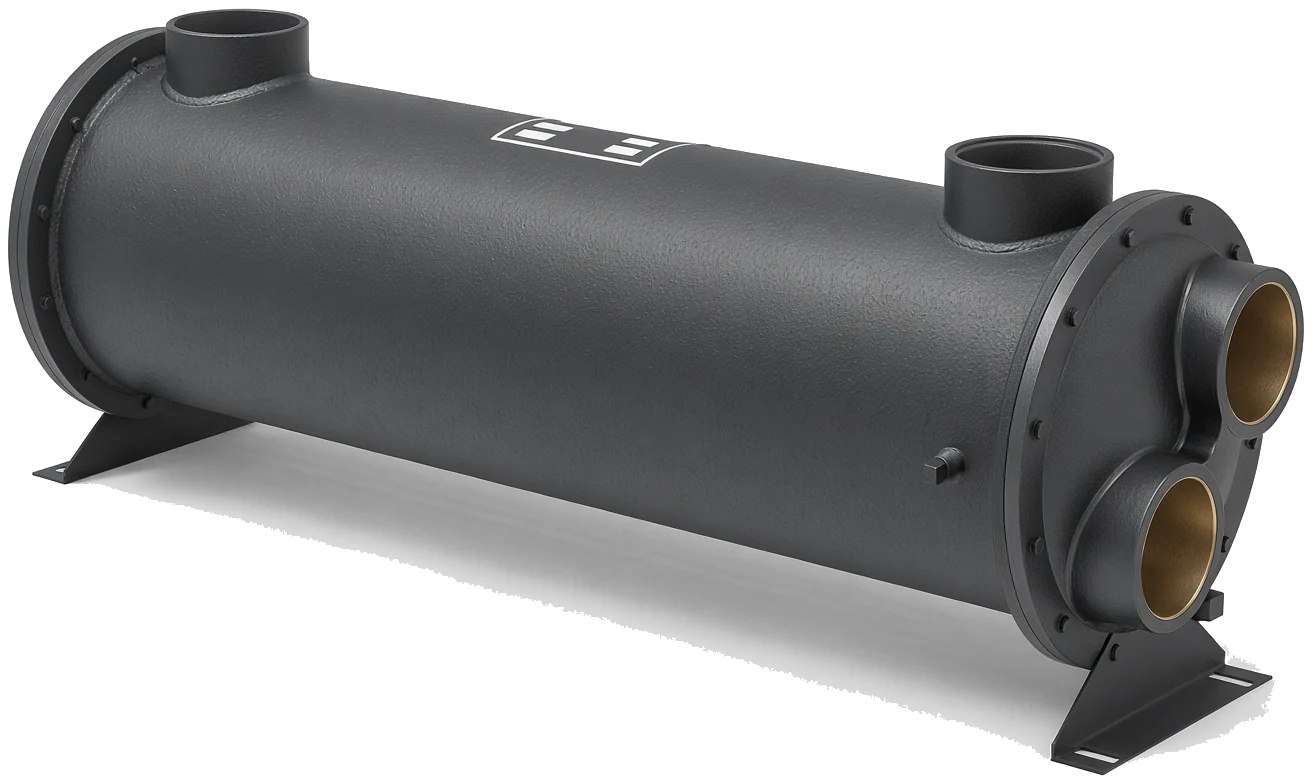
What changes from berth to berth is the water. Clean, open, moderately cool seawater at sensible velocity is what copper-nickel was made for, and a CN bundle in bronze bonnets is the standard marine build we hold on the shelf. Harbors with industrial discharge or persistent sulfide, warm water year round, chlorination dosing in a shore-supplied or central system, and duties that push tube velocity high to fit a small space all shorten a copper-nickel life, and those are the conditions for titanium.
Tell us what the previous bundle looked like when it came out. Pitting away from the tube ends, thinning at the inlets, or general wastage each point somewhere different, and only one of those is solved by changing tube material. Add the nameplate photograph and the engine data and we confirm the replacement.
Request a Quote


Central Coolers, Jacket Water and Oil
A jacket water cooler takes the engine's closed coolant loop on the shell side and is sized from horsepower and the heat rejection figure on the engine data sheet. A lube oil cooler takes oil on the shell side and needs more surface for the same heat because oil films poorly, so it is sized from heat load, oil grade and allowable pressure drop. Both usually live on or beside the engine on B, HC or AB frames.
A central cooler puts the whole vessel's fresh-water loop against seawater in one large unit, so the engines, gearboxes and auxiliaries all run on clean treated water and only one heat exchanger ever sees the sea. That one unit carries the whole raw water risk, which is why central coolers are the most common place we are asked for titanium tubes on a vessel that runs copper-nickel everywhere else.
Reading the Old Bundle First
Before quoting titanium we want to know how the last bundle failed, because two of the four common patterns are not material problems at all. Even general wastage across the whole tube length usually means the anodes were absent or exhausted, and a titanium bundle in that circuit will accelerate attack on whatever else is in the seawater path.
Heavy scale with sound tube walls means flow was too low or temperatures too high, and titanium scales exactly the same way. Pitting away from the tube ends and thinning at the inlets, by contrast, are genuine material and velocity stories, and those are the cases where moving from copper-nickel to titanium changes the outcome decisively.
Velocity as a Design Freedom
Copper-nickel design is bounded above by erosion and below by silting, which is a narrow window on some duties. Titanium removes the upper bound, so a selection can run higher tube velocity, get a better film coefficient and fit into a smaller frame. On installations tight for space that is often the reason to specify it rather than corrosion at all.
Higher velocity also keeps tubes cleaner, since silt and debris are swept through rather than settling. The cost is pressure drop, which rises with the square of velocity, so the raw water pump has to have the head available. See Flow and Pressure Drop for how that balance is struck.
Anodes and the Rest of the Circuit
Every seawater cooler needs its zincs, whatever the tubes are made of. With copper-nickel tubes and bronze bonnets the anode arrangement in the standard marine build is already matched to the assembly, and the only discipline is pulling and checking them on a schedule rather than when the unit runs hot.
Titanium is noble, so introducing it into a mixed-metal seawater circuit shifts the galvanic burden onto everything else: bronze bonnets, a steel shell, cast iron pump housings and any brass valve in the loop. Anodes are resized for the new relationship and the bonnet material is chosen with the change in mind. When you convert a raw water cooler to titanium, tell us what the rest of the seawater path is made from. See Galvanic Corrosion.
Same Frame, Right Tubes
Changing tube material does not change the envelope, so a cooler in copper-nickel or titanium fits the same bracket and hoses the old unit left behind.
Common FAQs
Any heat exchanger with seawater running through its tubes. On most vessels that is the jacket water cooler on each engine, the lube oil cooler beside it, and on larger boats a central fresh-water cooler that takes the whole closed loop against the sea. Seawater goes through the tubes so they can be rodded and the zincs sit in the bonnets.
Copper-nickel for clean, open, moderately cool water at sensible velocity, which covers most engine cooling and is what we stock. Titanium for warm water year round, chlorinated systems, silty or polluted harbors, high tube velocity, and vessels that sit idle with seawater in the tubes. If a copper-nickel bundle has already pitted in this berth, change material rather than repeat it.
By reading the old bundle. Pitting away from the tube ends and thinning at the inlets are material and velocity failures that titanium solves. Even general wastage means the anodes were neglected, and heavy scale on sound tubes means flow was too low. Titanium does not help with those last two, and we will say so.