1-805-484-2992
Quotes - Engineering - SalesEnd Castings
Bonnets and Sealing
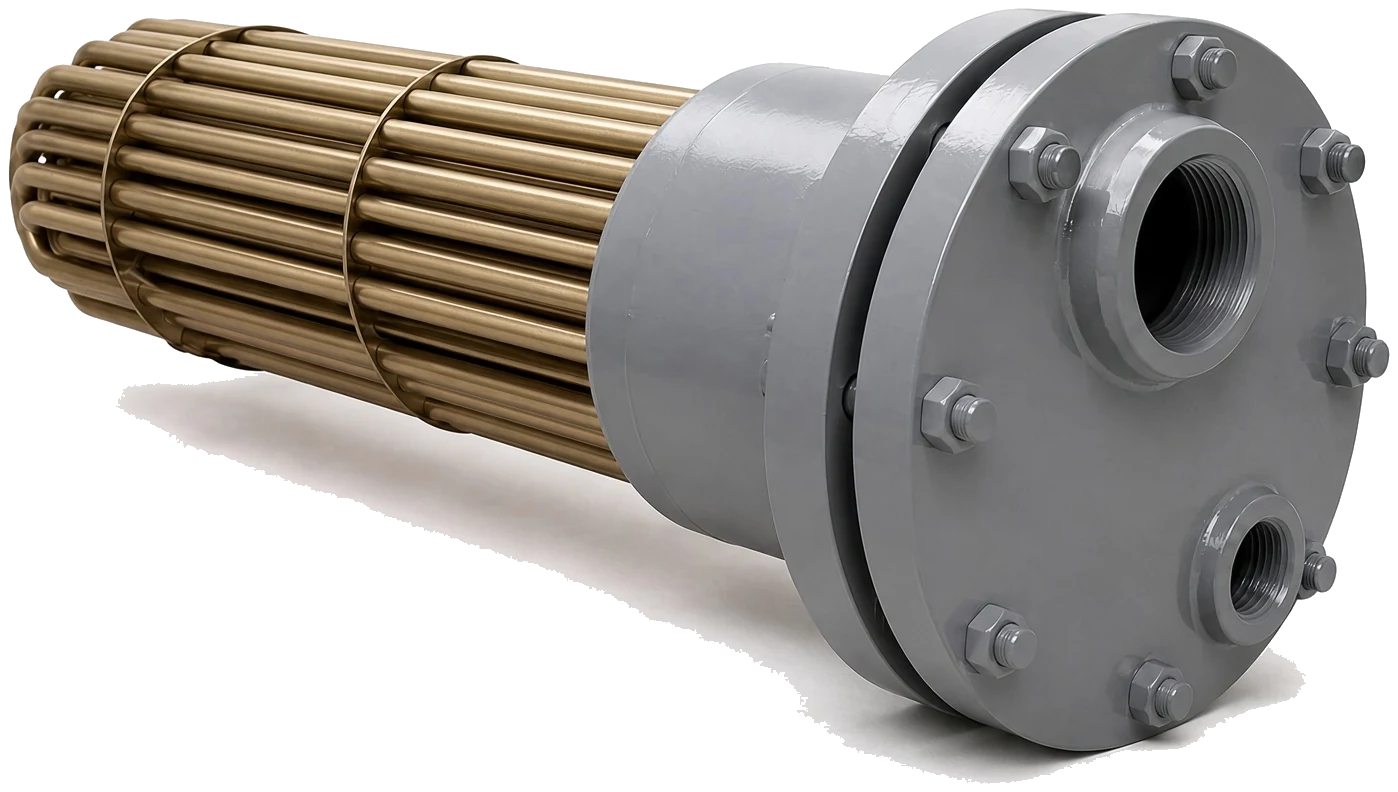
A bonnet is a casting bolted to the tubesheet that turns the seawater around. Water arrives, changes direction, and either leaves through the other bonnet or turns back through another pass. That change of direction, at velocity, in salt water, makes the bonnet the most aggressive corrosion environment on the whole unit, and it is why bonnet material is the second decision after tube material on any marine build.
The bonnet is a casting full of turning seawater and it is the first thing on a cooler to corrode. Replacement bonnets in bronze, cast iron or 316, with the gasket sets that should be renewed every time one comes off.
Three materials cover the range. Bronze is the marine standard, resistant to seawater and giving a sound thread for an anode boss that will still take a plug after twenty removals. Cast iron is cataloged for closed-loop industrial water and has no place on a raw water side. 316 stainless appears on the HC frames where the whole assembly is specified in stainless, particularly alongside titanium tubes.
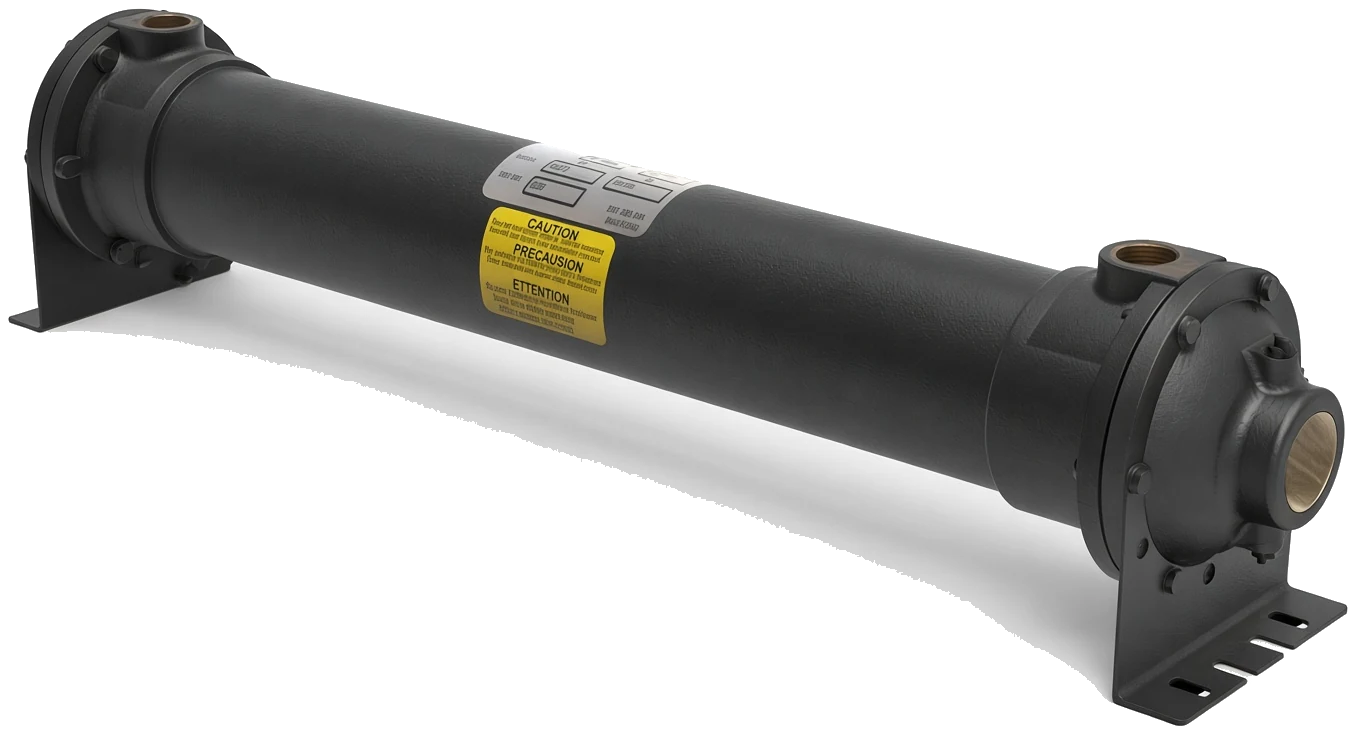
Order gaskets by frame, because the pattern follows the tubesheet and bonnet flange rather than a standard size. Keep a set on board for each cooler, alongside the anodes, so a bonnet can come off at any service without waiting for parts.
Request a Quote



Why Bonnets Corrode First
Water entering a bonnet slows, turns and accelerates into the tubes, and every part of that involves separated flow, local high velocity and turbulence against a cast surface. Turbulent seawater removes protective films faster than smooth flow does, which is why a bonnet can be visibly attacked while the shell it is bolted to looks new.
The partition plate on a multi-pass bonnet takes the worst of it, because it stands directly in the turning flow with water on both faces. A wasted partition lets water short-circuit from one pass to the next inside the bonnet, and the symptom is a cooler that has lost performance with no leak and no visible fouling. Check the partition whenever a bonnet is off.
Getting the Gasket Right
The gasket pattern follows the tubesheet and the bonnet flange, including the partition line on a multi-pass unit, so it is ordered by frame rather than by a nominal size. A gasket that seals the outer ring but not the partition line lets passes short-circuit internally, which looks exactly like a fouled cooler on the gauges.
Fit dry unless the material specifically calls for a lubricant, tighten in a diagonal sequence rather than around the circle, and bring the bolts up in stages. Overtightening crushes the gasket past its working range and distorts a bronze flange. Both mistakes end up back on our phone as a weeping cooler.
Anode Bosses and Threads
The anode boss is a tapped hole in the bonnet that has to survive twenty or more anode changes over the unit's life. Bronze holds that thread well; the plug is usually the softer part and that is deliberate, because a damaged plug is a cheap part and a damaged casting is not. Do not overtighten, and use a sealant suited to seawater and to the boss material.
A stripped boss thread is a genuine reason to replace a bonnet, and it is not worth improvising around with oversized plugs or thread compound. Without a sound anode connection the tubesheet is unprotected, which is covered on Zinc Anodes.
Finding Cast Iron on Raw Water
It happens more often than you would expect: a unit is replaced at short notice with an industrial build, cast iron bonnets and plain copper tubes go onto a raw seawater side, and it lasts a season. If you find cast iron bonnets on a seawater circuit, that unit was never specified for the duty, whatever it cost.
The fix at minimum is bronze bonnets with anode bosses, and it is worth checking the tube material at the same time, since the two usually went in together. Send the frame number and we will tell you what the marine option set for that frame is and what changing to it involves.
Never Reuse a Gasket
A crushed gasket refitted relies on the same set profile meeting the same imperfections in the same orientation, which is a bet you settle after the system is refilled.
Questions from the yard
No. Cast iron is cataloged for closed-loop industrial water and it rusts through quickly in raw seawater, particularly in a bonnet where the flow turns at velocity. Bronze is the marine choice and it also gives a durable thread for the anode boss. Fitting cast iron on raw water buys one season.
Yes. A gasket seals by being crushed and takes a permanent set on first torque, so a refitted one depends on the same profile finding the same surface imperfections in the same orientation. It sometimes holds and often weeps once the system is refilled and warmed. Keep a set on board per cooler.
Check the bonnet partition plate. On a multi-pass unit a wasted partition, or a gasket that has failed along the partition line, lets water short-circuit from one pass to the next inside the bonnet. Less water goes through the tubes, performence drops, and nothing leaks. It looks exactly like fouling on the gauges.
Measure the bolt circle diameter and bolt count, the flange outside diameter, the connection size and thread, and the number and thread of the anode bosses. Note wether there is a cast partition and where it sits. Photograph the flange face and the inside of the bonnet, and we can identify it from that.
Improvised repairs on an anode boss are a poor idea, because without a sound anode connection the tubesheet loses its protection and the failure that follows costs far more than the casting. A stripped boss is a legitimate reason to replace the bonnet. Order the bonnet with new gaskets and a fresh anode set.