1-805-484-2992
Quotes - Engineering - SalesParts And Spares
Keeping a Cooler in Service
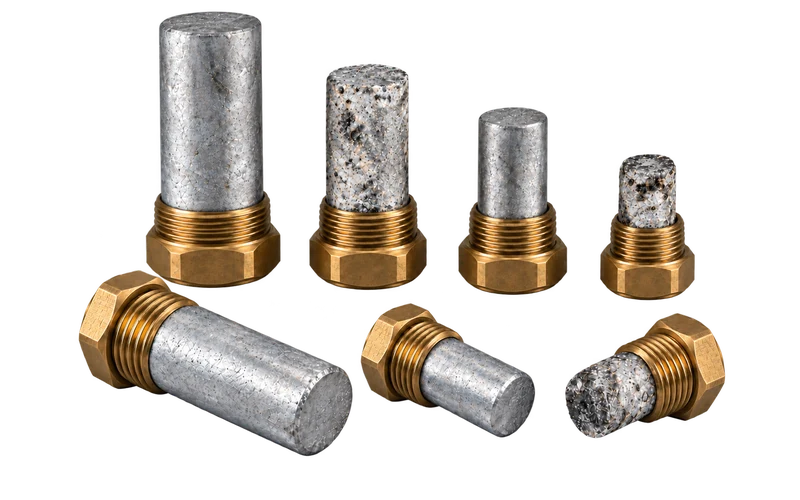
A shell and tube heat exchanger is a maintainable machine, and most of them are replaced too early. The shell is a plain pressure vessel with no moving parts, and on a unit that has been looked after it often has decades of life left in it when the bundle is finished. The parts that wear are predictable: zinc anodes, which are consumable by design, gaskets, which are consumable every time a bonnet comes off, the bonnets themselves, and the tube bundle. All of them fit the B, HC and AB frames described under Shell and Tube.
Most coolers that get scrapped could have been kept. Anodes, gaskets, bonnets and complete tube bundles keep a sound shell in service for another decade at a fraction of the cost of a new unit.
Buying the right part means identifying the frame first. Anodes vary in thread and length by frame and bonnet, gaskets are cut to the tubesheet and bonnet pattern, and a bundle has to match tube count, length, diameter and pass arrangement exactly. That is why the first thing we ask for is the part number from the nameplate, and the second is a photograph of what came out.
Call 1-805-484-2992 with the number on the nameplate. If the plate is unreadable, measure the anode thread, the bonnet bolt circle and the shell diameter and length, photograph the tubesheet face, and we can identify the frame from that.
Request a Quote

Identifying What You Need
The frame number on the nameplate resolves nearly every parts question, because it encodes shell size, tube length and the option set. With it we can supply the correct anode thread, the right gasket pattern and a bundle that matches the pass arrangement without any guesswork. Photograph the plate from straight on and include any stamped suffixes.
Where the plate is gone, work from measurements: shell outside diameter and overall length, bonnet bolt circle and bolt count, anode thread size, connection sizes and positions, and tube count and diameter from the tubesheet face. Those together narrow the frame to one or two candidates, and a photograph of the tubesheet usually settles which.
When to Renew Rather Than Repair
A tube that has failed can be plugged at both ends, which takes it out of service and removes its surface area. That is a legitimate short-term measure and it gets a vessel home. What it is not is a maintenance strategy. Track the plugged tube count, because each plug shifts flow distribution across the remaining tubes and raises velocity slightly in all of them.
Once plugs reach the low single-digit percentage of the tube count, the unit has lost measurable performence and the remaining tubes are working harder than they were designed to. That is the point to plan a bundle renewal rather than wait for the next failure at an inconvenient moment.
Gaskets Are Not Optional
A bonnet gasket seals by being crushed, and it takes a permanent set the first time it is torqued. Refitting a used gasket relies on the same crushed profile finding the same imperfections in the same orientation, which sometimes works and often produces a weep that is found after the system is refilled and pressurized.
Order gaskets with every anode set so they are on the shelf when a bonnet comes off. They are the cheapest part in the whole assembly and the most common reason a straightforward anode change turns into a second trip. Details of the sets are on Bonnets and Gaskets.
Planning a Bundle Change
A bundle renewal needs two things arranged in advance: the bundle itself, which on a less common frame or in titanium is built rather than stocked, and clear space in line with the shell to withdraw the old bundle and insert the new one. Allow at least the tube length plus room to handle and set the bundle down.
Establish both before the outage rather than during it. If the clearance is not there, because a bulkhead or a generator went in after the cooler, the options are unbolting the shell and moving it, or replacing the unit with a fixed tube design that does not need withdrawal. Both are decisions to make with a plan rather than a crane already booked.
The Shell Outlives Everything
On a cooler that has had its anodes changed, the shell is usually the one part with nothing wrong with it, which is exactly the part people throw away.
Points to settle before ordering
Measure. Shell outside diameter and overall length, bonnet bolt circle and bolt count, anode thread size, connection sizes and positions, and tube count and diameter read off the tubesheet face. Photograph the tubesheet and both bonnets. That combination narrows the frame to one or two candidates and we can confirm from there.
On the larger frames, substantially, and it reuses the shell, mountings and all the pipework so the vessel is back to work faster. On the smallest frames the difference narrows and a complete unit is sometimes the better buy. Send the frame number and we will price both so the comparison is real.
Plugging is a legitimate way to get home, but each plug removes surface area and shifts flow onto the remaining tubes. Track the count, and once it reaches the low single-digit percentage of total tubes, plan a bundle renewal. Waiting for the next failure means doing the work at whatever moment the tube chooses.
Do not. A gasket seals by being crushed and takes a permanent set on first torque, so refitting one relies on the same profile matching the same surface imperfections in the same orientation. It sometimes holds and often weeps after the system is refilled. Gaskets are the cheapest part in the assembly.
Yes, and it is the cheapest moment to do it. If the old bundle pitted or eroded, going from copper to copper-nickel or from copper-nickel to titanium at renewal changes the outcome without touching the shell, connections or mountings. Tell us how the old bundle failed and we will advise.