1-805-484-2992
Quotes - Engineering - SalesMaterial Selection
Choosing the Tube Material
The tube is the only part of a seawater cooler that has salt water on one side and the fluid you are protecting on the other. Pick the wrong heat exchanger tube material for the seawater a vessel works in and the unit has a predictable failure date; pick the right one and the shell outlives several bundles. This page is the product side of that decision: what we build the B, HC and AB frames in, how it is written on the part number, and what to send us so the choice is made once.
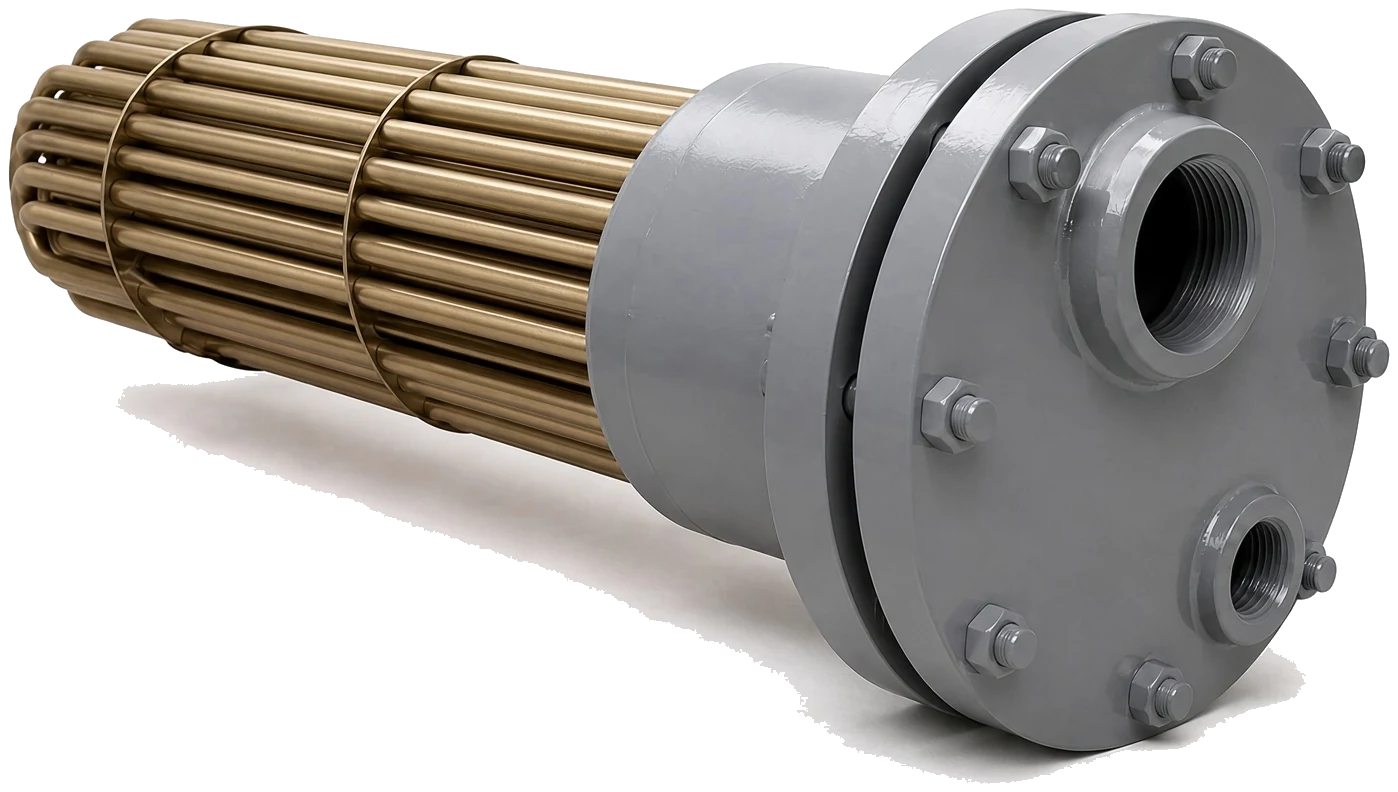
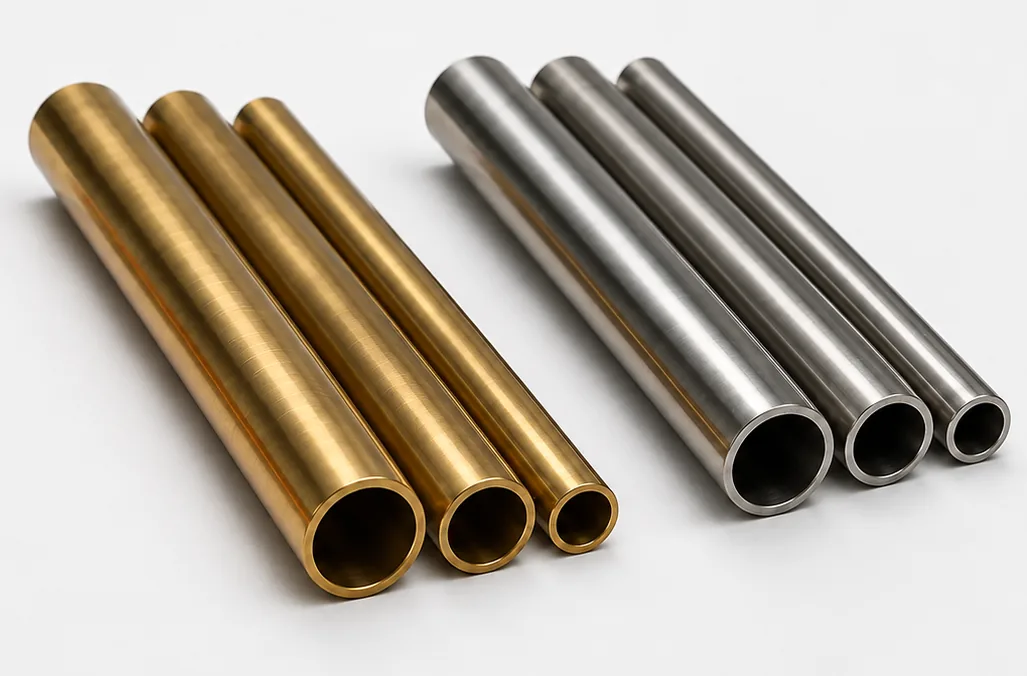
There are three tube materials in marine use on these frames. 90/10 copper-nickel is the standard, written CN on the B and HC frames and CNT on the AB, and it is what we hold on the shelf in bronze bonnets with zincs. Titanium is the T option on the HC frame and the material of every evaporator and condenser we build. 316 stainless is cataloged on the HC frame and belongs on the closed side, or in clean flowing water only, never in stagnant seawater.
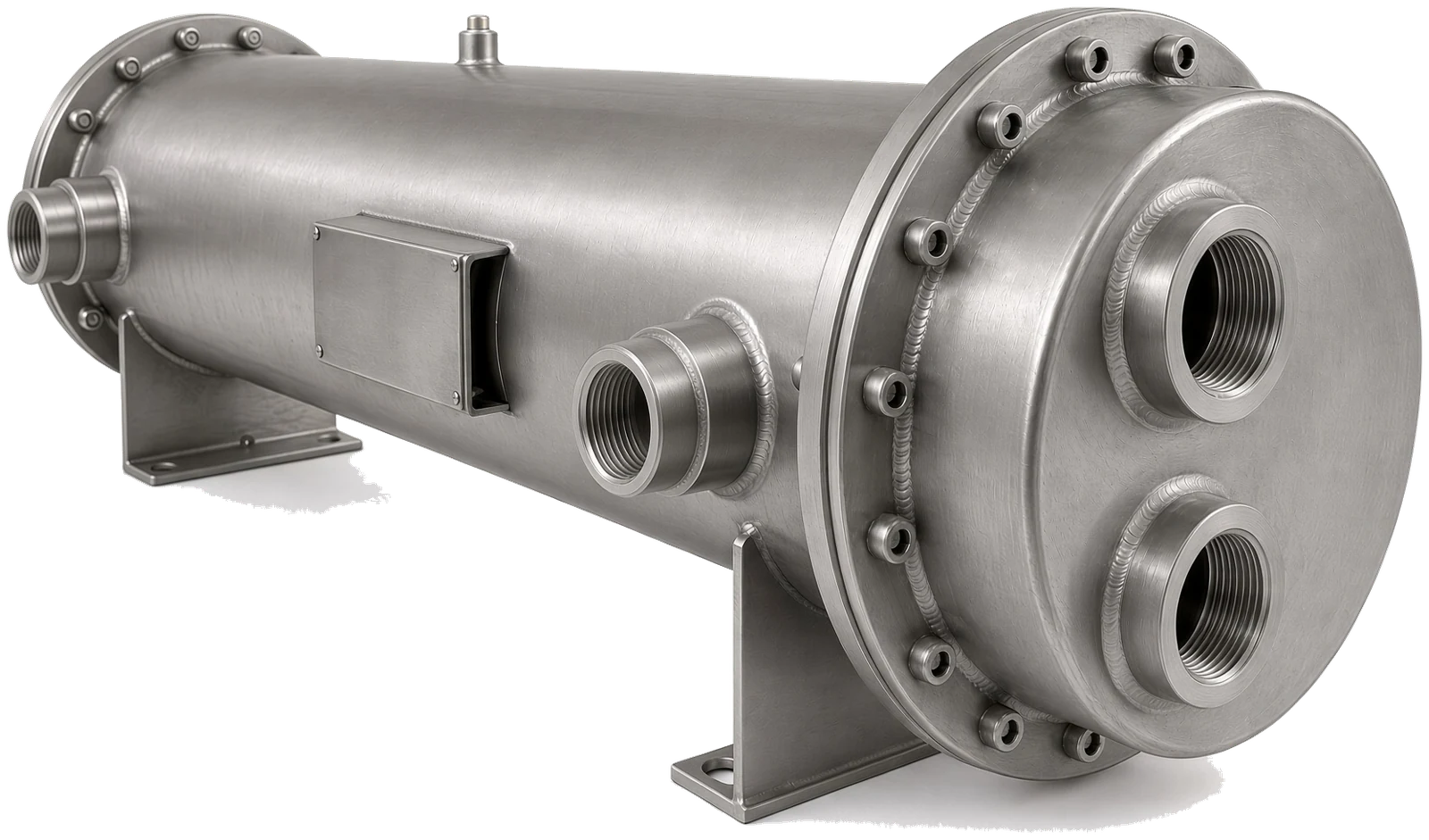
With the inquiry, send a nameplate photograph, the engine model and horsepower or the oil heat load, the old part number, the connection sizes, and one line on the water: summer temperature, harbor or open sea, chlorination, and how the last bundle failed. That is enough to fix the tube, tubesheet and bonnet codes.
Request a Quote



Copper-Nickel: the Standard Marine Build
90/10 copper-nickel forms a protective film in clean seawater within the first weeks of service and, at the velocities a well-designed cooler runs at, keeps it. It also releases enough copper to discourage marine growth, which is a real benefit on a cooler that runs intermittently. On the B Series the full marine option set is BR-CN-B-Z, bronze bonnets, copper-nickel tubes and zincs, and on the AB it is CNT-B-Z. Those are the builds we stock.
Its limits are velocity and water quality. Above the velocity the film can hold, the tube thins at the inlet end; under deposits in silty or sulfide-bearing water it pits; and chlorine residual attacks it directly. Inside those limits it is the economical choice for most engine cooling, and where a copper-nickel bundle has given fifteen seasons in a berth, ordering the same again is the right call.
Titanium: the T Option and the Duty Builds
Titanium is immune to chloride pitting and crevice attack at marine temperatures and has no practical velocity ceiling in seawater. On the HC frame it is ordered as the T tube option with 316 or bronze bonnets and a 316 or titanium tubesheet, and the frame's own pressure and temperature ratings apply. Evaporators and condensers are built in titanium as a matter of course and rated per duty, so call for a rating on those.
Two cautions come with it. Titanium has no antifouling behavior, so a titanium bundle in a fouling berth needs the same velocity and strainer discipline as any other. And it is noble, so it makes every other metal in the seawater circuit work harder as an anode; bonnets are chosen and zincs resized for that. Tell us what the pipework, valves and pump are made of when you convert.
Stainless, Copper and Cast Iron
316 stainless tubes are cataloged on the HC frame and are a good answer for a clean closed-loop fluid, a treated water system, or fast-flowing clean seawater that never stands still. They are a poor answer for a seawater cooler that idles, because stagnant seawater under a biofilm is the classic crevice cell and 316 pits in it. We will say so rather than sell it into that duty.
Plain copper tubes and cast iron bonnets are cataloged for industrial closed-loop work and have no place on a raw water side whatever the price difference looks like on paper. If an old cooler carries those codes and has been running on seawater, its short life is explained, and the replacement should carry the marine option set. Stainless Steel in Seawater covers the stainless case in detail.
Making the Choice From the Water
First, summer water temperture: every corrosion mechanism speeds up with heat, and a boat working tropical or Gulf water year round is a titanium case even in clean sea. Second, silt and pollution: a strainer that fills every watch, a harbor with industrial discharge or a sulfide smell at the sea chest all point the same way. Third, chlorination: any dosing in the circuit rules copper-nickel out. Fourth, velocity: if the duty has to fit a frame that pushes tube velocity high, titanium is the material that allows it.
Then read the old bundle. Thinning at the inlets is velocity, pits under deposits are water quality, both are solved by changing material. Even wastage is missing anodes and heavy scale on sound tubes is low flow, and neither is solved by titanium. Send the nameplate, the engine or oil duty and a line on the berth to Sales@HeatX.com or call 1-805-484-2992, and we confirm the tube, tubesheet and bonnet codes with the replacement. Seawater Velocity and Erosion gives the velocity limits.
Same Frame, Different Metal
Tube material is an option code on the same frame, so choosing titanium over copper-nickel changes the life of the cooler without changing its envelope, connections or mounting.
Service life questions
90/10 copper-nickel for clean, open, moderately cool seawater at sensible velocity, which covers most engine cooling and is the standard marine build. Titanium where the water is warm, silty, polluted or chlorinated, where velocity has to be high, or where the vessel idles with seawater in the tubes. Stainless only in clean flowing water or on the closed side.
CN is copper-nickel tubes, CNT the same on the AB frame. T is titanium tubes. BR or B is bronze bonnets. Z means zinc anodes are fitted. 316 calls out stainless tubes, tubesheet or bonnets. A marine build reads BR-CN-B-Z on a B Series or CNT-B-Z on an AB. Send us the full number and we decode the rest.
The T option is cataloged on the HC frame, which covers the same duties with a 300 PSI shell and NPT or SAE connections. Where a B or AB cooler is failing on water quality, we normally cross it to the equivalent HC frame in titanium and match the connection sizes and mounting. Send the old part number and we confirm the fit.
Only in clean seawater that keeps moving. Stainless depends on oxygen to hold its passive film, and stagnant seawater under a biofilm strips it and starts crevice pitting. A cooler that runs every day in open water can do well; one that sits for weeks with seawater in the tubes will not. For that duty use copper-nickel or titanium.