
1-805-484-2992
Quotes - Engineering - SalesCompact Cooling Replacements
4.5 liter four cylinder ratings
A John Deere 4045 jacket water cooler replacement is usually decided by the space, not the duty. Marine ratings on the 4.5 liter four cylinder broadly run from around 60 horsepower on auxiliary and light duty work up to about 200 horsepower on the higher rated propulsion versions. The heat rejection for any of those comes off the engine data sheet for that rating, and at these outputs the required surface fits comfortably in a small frame.
The 4.5 liter 4045 turns up in small fishing boats, launches and generator sets, always in a space nobody planned for maintenance. We select a compact replacement cooler that fits the envelope and the duty.
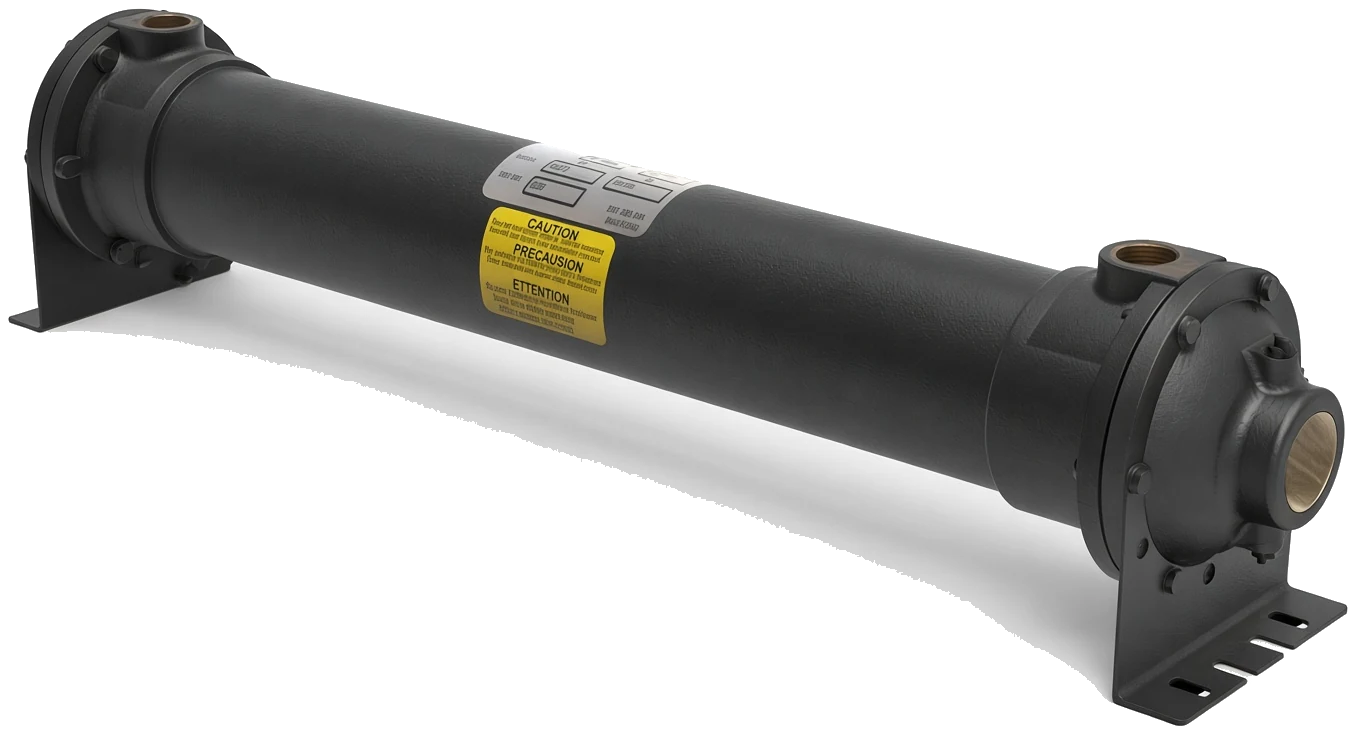
What does not fit comfortably is anything longer than the original. These installations are tight: launches, small fishing boats, sound enclosed generator sets and workboat auxiliaries where the cooler sits between the engine and a bulkhead with a hand span to spare. We work to your measured envelope, which means length between bonnet faces first, then shell diameter, then connection orientation.
The build is the standard marine option set. Seawater on the tube side in copper-nickel tubes, coolant on the shell side, bronze bonnets and a brass tubesheet with replaceable zinc anodes in the raw water end. Send the engine plate photograph, the old unit measurements and the connection sizes to Sales@HeatX.com and we will confirm the selection.
 Small Frames
 Genset Ready
 Zinc Anodes
 Bronze Bonnets
Selecting for a 4045
Small duty, tight space, so the measurements carry more weight than the calculation.
Duty Inputs
- Engine model code from the plate
- Rated horsepower and rated RPM
- Propulsion or auxiliary rating
- Seawater source and temperature
- Available length and clearance
What We Supply
- Compact shell and tube units
- Bronze bonnets and gaskets
- Copper-nickel tubes, brass tubesheet
- Zinc pencil anodes and spares
- Small lube oil coolers
Duty Profile
- Short daily running periods
- Shallow and estuary water
- Enclosed and inaccessible mountings
- Long winter lay-up
| MODEL / RATING | HORSEPOWER | DUTY | TYPICAL SELECTION |
| 4045 auxiliary and light duty | About 60 to 100 hp | Jacket water | B Series small frame |
| 4045 continuous duty | About 100 to 140 hp | Jacket water and lube oil | B Series marine build |
| 4045 propulsion mid range | About 140 to 175 hp | Jacket water and lube oil | Small HC Series frame |
| 4045 higher propulsion ratings | About 175 to 200 hp | Jacket water, oil, gear | HC Series plus lube oil cooler |
| Generator set variants | Call for rating | Constant speed jacket water | AB Series or B Series |
Lay-Up Damage
Small boats sit still longer
A 4045 in a leisure or seasonal commercial boat may run three hundred hours a year and sit for the rest. Seawater left standing in a warm shell over a lay-up does more harm than a busy season does, because the water goes stagnant and the oxygen concentration cells go to work on the tubesheet and the tube ends.
Drain the raw water side and pull the anodes before a long lay-up. If the boat is ashore, leaving the bonnets loose so the shell can dry is better than sealing damp salt water inside it. This one habit extends bundle life more than any material upgrade at this size.
Planning the job before you start
On small installations the cooler often cannot come out without moving something else, and the bundle certainly cannot be pulled in place. Check the clearance you need to withdraw the bundle before you buy a unit that assumes it. Where there is no room, a complete unit that can be unbolted and lifted out whole is the practical choice.
Photograph the installation from three angles before removal, including the hose runs and any wiring or control cables crossing the space. Small engine bays get reassembled from memory more often than from notes, and the photographs cost nothing.
Related

ENGINES • JOHN DEERE
John Deere 6068
The six cylinder step up and where the frames change
+ Learn More
HEAT EXCHANGERS • PARTS
Zinc Anodes
Replaceable pencils for small bonnets and how often to change them
+ Learn More
VESSELS & ENGINES • BY VESSEL
Fishing Boats
Small commercial hulls and the raw water they work in
+ Learn MoreSeawater and material questions
At that rating the duty is comfortably inside a small frame, so the frame is chosen by envelope and connection sizes more than by surface area. Send the engine model code, the rated speed and the space you have between bonnet faces and we will confirm a B or small HC Series selection.
Usually, with adapters specified as part of the order. It is better to settle that at quotation than in the boat. Tell us the thread form and size at both ends of the old unit and what hose you intend to reuse, and we will list any adapters needed on the quote.
On a seasonal boat the usual cause is standing seawater over lay-up combined with anodes nobody pulled. Both attack the tubesheet and tube ends rather than the middle of the tube. Drain the raw water side, inspect anodes at every service, and the next bundle will last considerably longer.
Often it is integral to the engine at these ratings, so the seperate shells aboard tend to be the marine gear cooler and any small hydraulic circuit. Those are sized on heat load, oil grade and allowable pressure drop. Send the gear model and oil grade and we will quote them alongside.
Yes, working from the auxiliary rating rather than the propulsion rating because the constant speed duty appears in a different column on the engine data sheet. Give us the set rating in kilowatts, the enclosure dimensions and the penetration positions, and we will select a frame that fits the space.

