
1-805-484-2992
Quotes - Engineering - SalesThe Larger Deere Blocks
9.0 and 13.5 liter propulsion ratings
The 6090 and 6135 are where Deere marine duty stops being small boat work. The 9.0 liter commonly runs somewhere around 250 to 450 horsepower and the 13.5 liter from roughly 400 up to about 750, and at the upper ratings the lube oil and charge air circuits carry loads that need their own attention rather than a share of the jacket water shell. We size each circuit from the heat rejection published for the specific rating.
At 9.0 and 13.5 liters these are the Deere blocks doing serious propulsion work. Larger frames, real oil cooler duties and a raw water side that has to be sized rather than assumed.
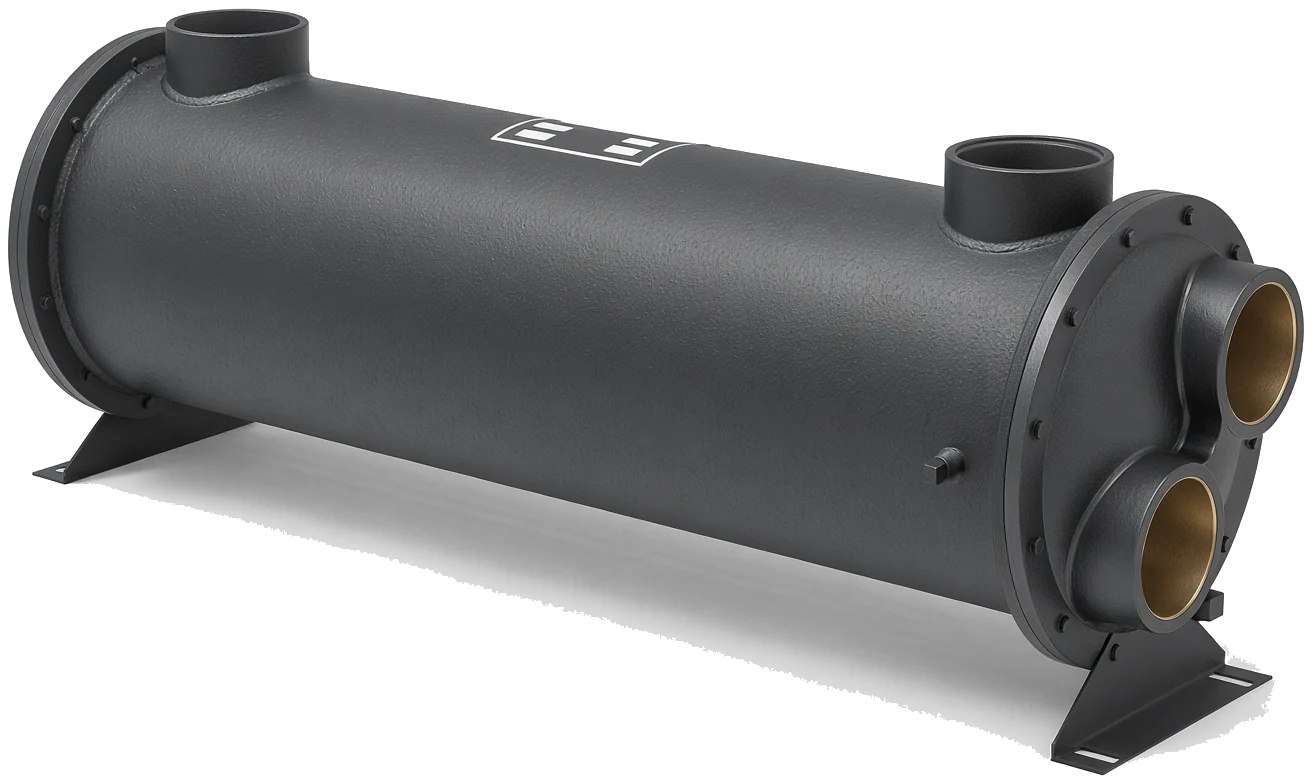
These engines go into larger trawlers, crew boats, small ferries and prime power generator sets, which means longer running hours and less tolerance for a marginal cooler. A replacement jacket water cooler for a 6135 is typically a mid to large HC Series frame in the marine option set, with the pass arrangement chosen to hold raw water velocity in range at the flow the pump actually delivers.
The material set stays the same as the smaller blocks: copper-nickel tubes carrying seawater on the tube side, coolant or oil on the shell side, bronze bonnets and brass tubesheet with replaceable zinc anodes. Titanium is available where the water is warm or dirty. Send the engine model code, rated horsepower and rated speed, plus the old unit dimensions, and we will confirm the selection.
 Mid Frames
 Charge Air
 Gear Oil
 Long Hours
Specifying 6090 and 6135 Coolers
At these ratings each circuit gets its own inputs and its own frame decision.
Duty Inputs
- Model code, rated horsepower and RPM
- Jacket water and charge air rejection
- Lube oil load, grade and allowable drop
- Raw water flow at the shell
- Envelope length and mounting centers
What We Supply
- Mid and large HC frames, marine build
- Separate lube oil and gear coolers
- Copper-nickel or titanium tubes
- Bronze bonnets with zinc anodes
- Bundles for sound existing shells
Duty Profile
- Long commercial running hours
- High load fraction at cruise
- Coastal and offshore raw water
- Scheduled maintenance regimes
| MODEL / RATING | HORSEPOWER | DUTY | TYPICAL SELECTION |
| 6090 turbocharged | About 250 to 350 hp | Jacket water and lube oil | HC Series with CN tubes |
| 6090 turbo aftercooled | About 350 to 450 hp | Jacket water, oil, charge air | HC Series plus lube oil cooler |
| 6135 mid ratings | About 400 to 550 hp | Jacket water, oil, gear | HC Series mid frame |
| 6135 higher ratings | About 550 to 750 hp | Jacket water, oil, charge air | HC Series plus gear oil cooler |
| Prime power generator sets | Call for rating | Constant speed jacket water | AB Series or HC Series |
Sizing the Oil Circuits
Load, grade and pressure drop
Lube oil at 6135 ratings is a substantial duty and it is sized entirely differently from jacket water. Heat load comes from the engine data sheet, the oil grade sets the viscosity behavior, and the allowable pressure drop limits how many passes we can use. Cold start is the binding case: an arrangement that is ideal at operating temperature can be unacceptable at fifteen degrees.
Marine gear coolers follow the same method against the gear heat load. On a heavily loaded reduction gear working a controllable pitch propeller the load is meaningful and worth sizing rather than assuming. Send the gear model, oil grade and circuit pressure and we will quote it alongside the engine coolers.
What reaches the shell
The flow the pump is rated for and the flow arriving at the cooler are different numbers once the strainer, the hull fittings and thirty feet of hose have taken their share. At these frame sizes the difference matters, because velocity is what sets both the heat transfer coefficient and the erosion risk on the tube side.
Give us the pump size, the pipe run and any restrictions you know about. If the numbers are uncertain we will work to a conservative assumption and say so in the quote. A stated assumption is honest engineering; a confident figure nobody measured is how coolers end up undersized.
Related

ENGINES • JOHN DEERE
John Deere 4045
The compact four cylinder end of the Deere marine range
+ Learn More
APPLICATIONS • OIL COOLERS
Lube Oil
Shell and tube oil coolers sized on load and pressure drop
+ Learn More
ENGINEERING • SELECTION
Flow and Drop
Why pump rating and cooler inlet flow are different numbers
+ Learn MoreQuestions on this engine
Broadly, the 9.0 liter 6090 sits around 250 to 450 horsepower and the 13.5 liter 6135 from roughly 400 to 750, depending on aspiration and rated speed. Work from your engine plate rather than the range, because heat rejection is published against the specific rating and drives every other decision.
At these ratings usually yes. The oil load is large enough to justify its own shell, sized on heat load, oil grade and allowable pressure drop with cold start viscosity as the limiting case. Send the oil grade and circuit pressure with the engine rating and we will size it properly.
Probably. Heat rejection rises with the rating, and a cooler chosen for the old figure will run short of surface at the new one. Tell us both ratings and the existing frame size. Where the envelope will not take the larger shell we will set out the alternatives, including parallel units.
Compare the pump rating against the actual system: strainer condition, hull fitting size, hose length and bends all reduce what reaches the cooler. If you cannot measure it, give us the pump size and pipe run and we will size on a conservative assumption and state it clearly in the quotation.

