1-805-484-2992
Quotes - Engineering - SalesSelection Guide
Two Ways to Move the Same Heat
The plate heat exchanger vs shell and tube question on a marine vessel is decided by six things: space, approach temperature, what is in the seawater, how the unit will be cleaned, the pressure and temperature it must hold, and what it costs to buy and to keep. A plate unit leads on the first two and on cleaning. A shell and tube leads on silt, on pressure, on oil, and on having nothing that ages except a zinc. Everything else is detail.
Neither type is better; each is better at something. This page sets the two side by side on the things that matter on a vessel, so the choice for a given duty comes from the duty and not from habit.
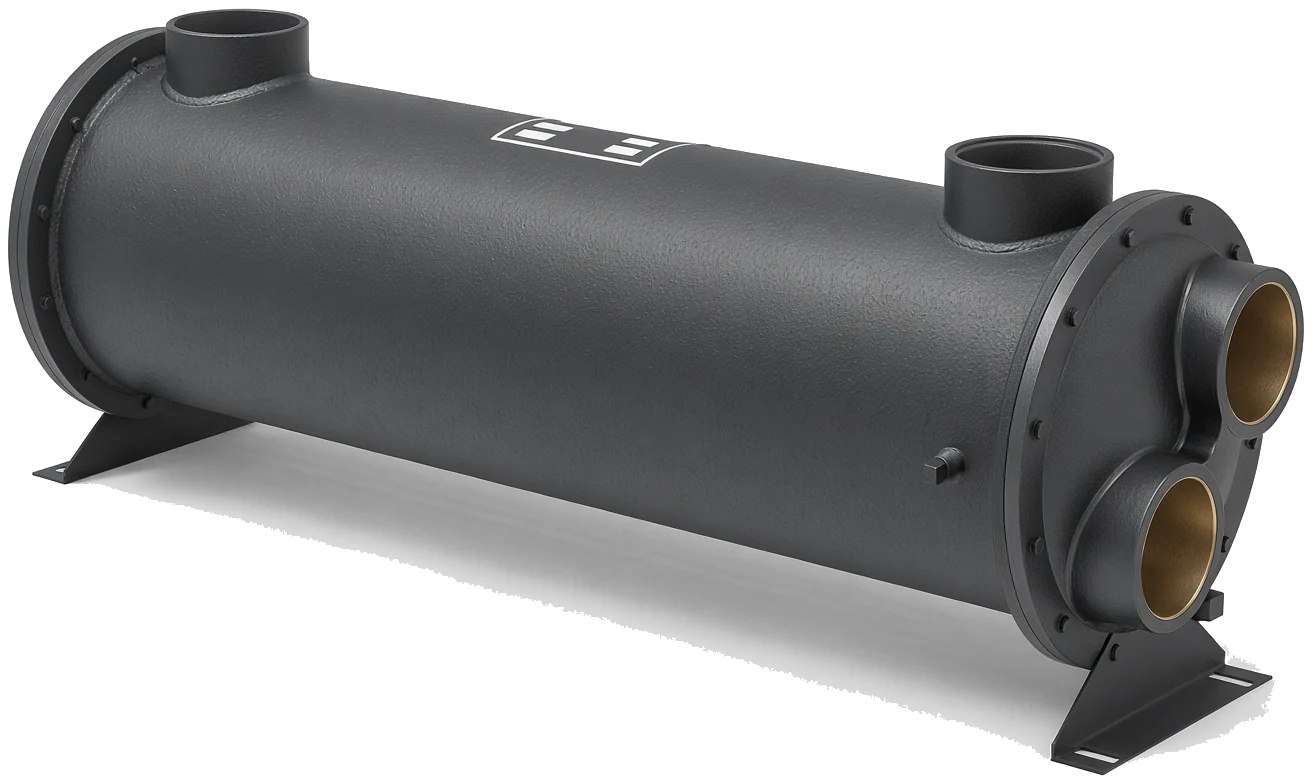
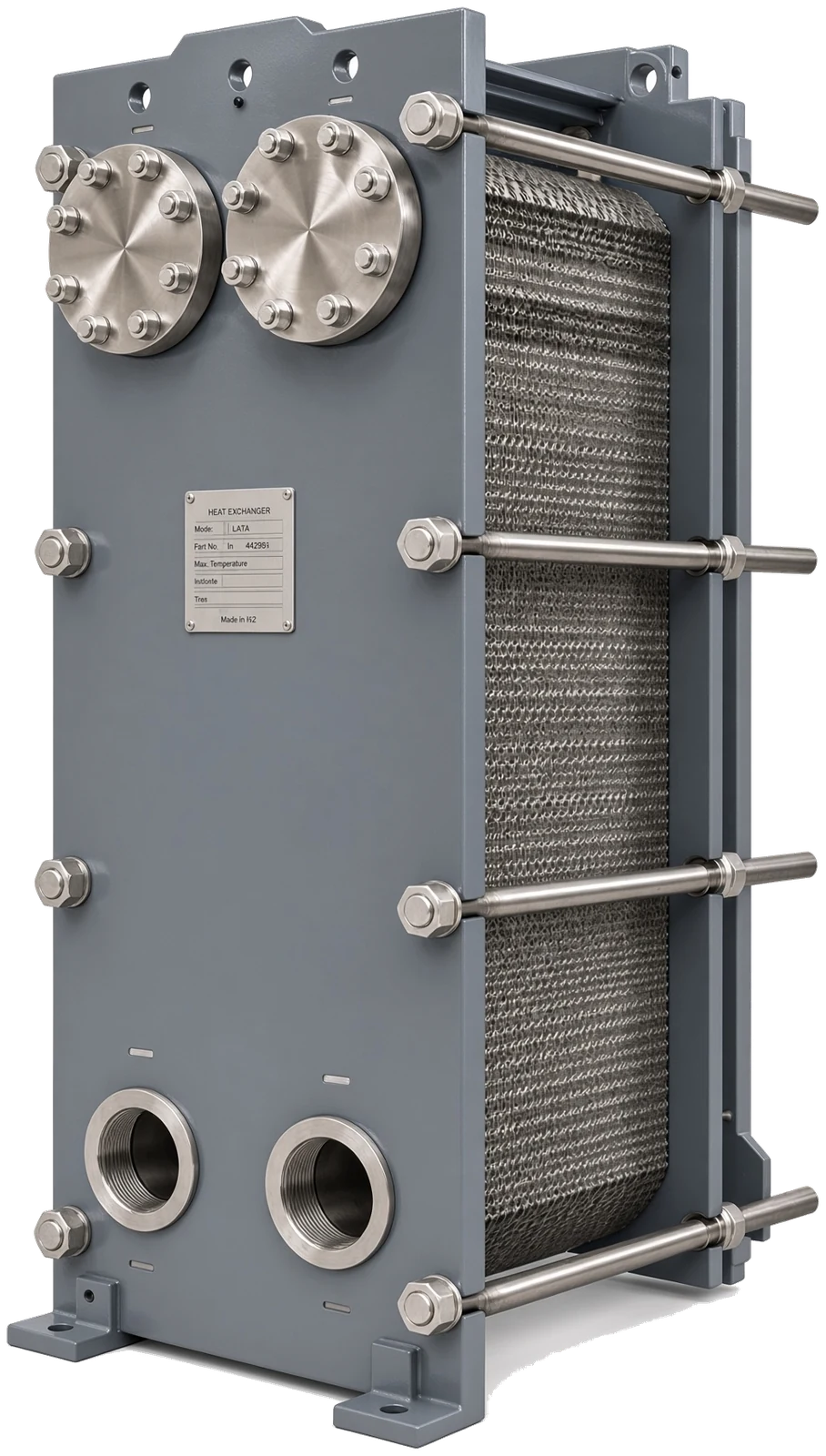
Both are built for seawater on this site. Shell and tube units carry copper-nickel or titanium tubes with seawater on the tube side, bronze bonnets and zinc anodes. Plate and frame units carry pressed titanium plates with seawater in alternate channels and elastomer gaskets sealing the pack. Both are supplied for replacement of an existing unit or for a new duty, and both are confirmed against the nameplate and duty data you send before they are built.
Approach temperature is the difference between the seawater leaving and the cooled fluid leaving. A plate unit can be rated with that gap very small. A shell and tube needs a wide gap or a great deal of surface, and on condensing duty that gap is paid for in compressor power every hour the plant runs.
Request a Quote



Footprint and Approach Temperature
A plate pack puts a large surface area into a small block, and that block needs clearance on one side to slide the pressure plate back, not a full unit length to withdraw a bundle. On a crowded machinery flat that is the difference between fitting and not fitting. All four connections sit on the fixed frame end, so the pipework arrives from one direction and the unit can stand against a bulkhead.
The thermal advantage is the approach. Turbulent flow in thin channels gives a plate unit a heat transfer rate a bundle cannot approach, so it can be rated with the seawater leaving within a few degrees of the fluid it cooled. On central cooling that keeps the fresh-water loop cool in warm seas. On chiller and refrigeration condensing it lowers condensing pressure and takes load off the compressor for as long as the plant runs.
Silt, Fouling and Cleaning
The narrow channels that make a plate unit efficient are also its weakness in dirty water. Weed, shell fragments and coarse silt that would pass straight through a tube lodge at the channel inlet and block it, and a blocked channel starves its neighbors. A plate unit needs a good strainer ahead of it and a crew that watches the pressure drop across it. A shell and tube with copper-nickel or titanium tubes tolerates the same water with less attention.
Once fouled, though, the plate unit is the easier one to put right. The pack is opened in place with the pipework intact, the plates are hosed and brushed, and the unit is closed on a new gasket set. A bundle has to come out of the shell, which means room to withdraw it and a rodding job on each tube. Scale on either type is handled by circulated cleaning as described on Cleaning and Descaling.
Pressure, Temperature, Oil and Vibration
A shell and tube unit is a pressure vessel with no elastomer across the fluid boundary. The HC Series and AB Series are rated to 300 PSI and the B Series to 250 PSI on the shell and 350°F. A gasketed plate unit is limited by its gaskets and its frame and is rated per duty, and a hot engine room shortens gasket life whatever the rating says.
Oil belongs on the shell side of a tube unit. Lube and hydraulic oil at working viscosity generates a pressure drop through plate channels that the oil pump has to overcome, and oil systems run at pressures a gasket pack is not built for. Vibration goes the same way: a cooler bolted to an engine bracket lives with the engine's vibration, and a bolted bundle with cast bonnets shrugs it off where a clamped stack of thin plates and gaskets would work loose.
Which Duties Go Which Way
On most vessels engine jacket water is shell and tube, sized by horsepower, mounted on or beside the engine, with copper-nickel tubes and zincs. Lube oil, reduction gear oil, hydraulic and thruster oil are shell and tube for the pressure and viscosity reasons above. Small chiller and refrigeration condensers are shell and tube too, because at that size the plate unit's advantages do not outweigh a gasket set. The ranges are on Shell and Tube.
Central fresh-water cooling on a larger vessel is a plate duty, and so are chiller condensing and refrigeration condensing on larger plants, where the close approach pays back in compressor power and the footprint saving is real. Lube oil on the largest vessels and jacket water on the largest installations sometimes go to plate for the same reasons. See HVAC Chiller Condensers and, for a like-for-like swap of either type, Replacing an Existing Cooler.
Duty Decides, Not Habit
The vessel that puts a plate unit on every duty buys gaskets for jobs a bundle does better, and the one that never does gives up floor space and compressor power it did not need to.
Installation and service questions
For central cooling and for condensing on larger vessels, usually yes: it is smaller, its approach temperture is closer, and it opens in place for cleaning. For engine-mounted jacket water, for oil, for dirty seawater and for anything at high pressure, the shell and tube is the better unit. The duty decides, not the type.
Oil at working viscosity generates a high pressure drop through narrow plate channels, oil systems run at pressures a gasket pack is not built for, and an oil-side gasket failure puts oil into the seawater. The shell side of a tube unit carries viscous oil at pressure comfortably. On the largest vessels plate lube oil coolers exist; below that, shell and tube.
Yes, a good one, and it needs to be cleaned. Plate channels are narrow and a piece of weed or shell that would pass through a tube lodges at a channel inlet and blocks it. Watch the pressure drop across the unit as a fouling indicator. A shell and tube tolerates poorer straining, which is one reason it keeps the raw water duties.
Either way, if the duty suits the new type. Send the nameplate of the existing unit, the duty or the flows and temperatures, the connection sizes and the space available. We rate the replacement for the same duty in the new type, tell you honestly if the duty argues against the change, and confirm the selection with you before it is built.