
1-805-484-2992
Quotes - Engineering - Sales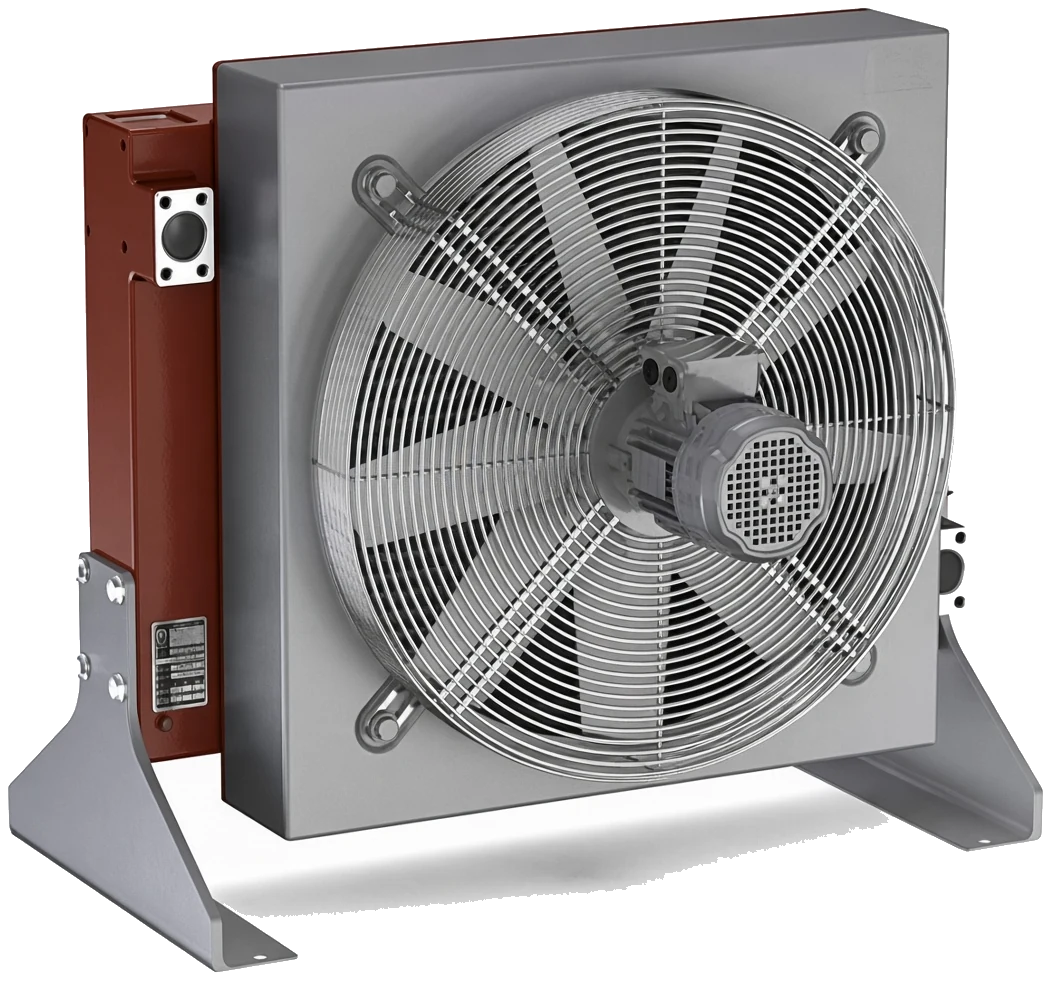
H Series Heresite
Hydraulic motor driven air cooled oil coolers, H10 through H500, for crane bases, winch packs and any position with hose but no electrical supply. Cores coated in Heresite for open deck service.
| PRODUCT | TYPE | STYLE | RATING |
|---|---|---|---|
| Heat Exchanger | Air Cooled | Hydraulic Motor Drive | 250 PSI / 250°F |
Specifications
Configuration & Size
Core Type:
Bar-and-plate aluminum
Size Range:
H10 through H500
Fan Drive:
Hydraulic motor
Connections:
SAE or NPT
Brand:
AKG
Materials
- Core: Brazed aluminum bar-and-plate
- Coating: Heresite baked phenolic
- Fan Motor: Hydraulic, gear type
- Shroud: Coated steel or aluminum
H Series Hydraulic Drive
Hose only, no electrics needed
The H Series solves the problem of cooling a machine that has hydraulic power and nothing else. A hydraulic motor drives the fan, taking flow from the machine's own circuit, so the cooler needs no cable, no starter and no switchboard capacity. On a crane pedestal, a trawl winch base or a self-contained deck pack, that removes the single most awkward part of an air cooled installation. Sizes run from H10 up to H500, which covers small packs through to heavy continuous duty.
There is a control benefit that comes free with the arrangement. The fan turns when the hydraulic circuit is live, which on intermittent deck gear means the cooler works during the burst and stops between them. That matches the way a winch or a crane actually generates heat, and it avoids the situation where an electric fan runs continuously to no purpose while the machine sits idle for an hour.
Cores are bar-and-plate aluminum rated 250 PSI and 250°F with SAE or NPT connections, and every core we ship for marine duty is coated with Heresite. The coating is a baked phenolic finish applied by HeatX to AKG cores for salt-air service, and it leaves the pressure and temperature ratings alone. On an open deck it is the difference between a core that lasts and a core that quietly loses its fins.

For an H Series selection we need the fan motor supply as well as the thermal duty: the flow and pressure available for the fan circuit, and whether it comes from a dedicated pilot line or is shared with the machine's working functions.
Request a QuoteH Series Heresite Applications





The fan circuit and the oil circuit
Two separate hydraulic paths meet at an H Series unit. The oil being cooled passes through the core itself, entering a manifold and distributing through flat oil passages between the plates. The fan circuit is a different matter entirely: a small flow at working pressure drives a gear motor that turns the fan, then returns to tank. The two do not mix inside the unit.
That separation is what makes the arrangement flexible. The fan flow can come from a dedicated pilot line, from a small auxiliary pump section, or be teed from a function that is live whenever the machine works. Each option changes when the fan turns, so it needs deciding at design rather than discovering on commissioning.
Specifying the H Series
From a dedicated pilot line or its own pump section wherever possible, so the fan runs on a predictable supply. A tee from a pilot circuit that is live whenever the machine is powered works well. What to avoid is taking flow from a working function that only sees pressure occasionally, because the fan then runs at random.
Only if it's supply stays live. A hydraulically driven fan stops when the drive flow stops, which suits burst duty but gives no post-run cooling. If your system needs cooling to continue while the machine is idle, either keep the fan circuit powered or rely on reservoir volume to absorb the residual heat.
Because motor displacement sets fan speed for a given flow. Two units with identical cores and different fan motors move different amounts of air, so a replacement chosen from the core number alone can under-perform. Send both plates and we will match the airflow as well as the core.
Very, provided the core is coated and there is a wash-down routine. These units routinely live at deck level in spray. Mount so water drains out of the fins rather than pooling, fit a guard that can be cleared of line and net without tools, and rinse from the discharge side with fresh water.
Sometimes the core and shroud carry over and only the motor and mounting change, but it is worth checking rather than assuming. Send the existing frame number and the fan circuit data you can make available, and we will say whether the conversion is sensible or whether an H Series unit is the cleaner answer.
An H Series number is the letter H followed by the frame size, from H10 through to H500, with suffixes for the fan motor displacement, the fan arrangement and the connection style. The frame number tracks core face area and airflow, so it is the number to quote rather than the outside dimensions. The complete cataloged list of sizes, airflows and drawings is held on file with our sales desk. Call us with the number on the nameplate and the fan motor plate, and we will confirm the frame and the drive before quoting a replacement.

