
1-805-484-2992
Quotes - Engineering - Sales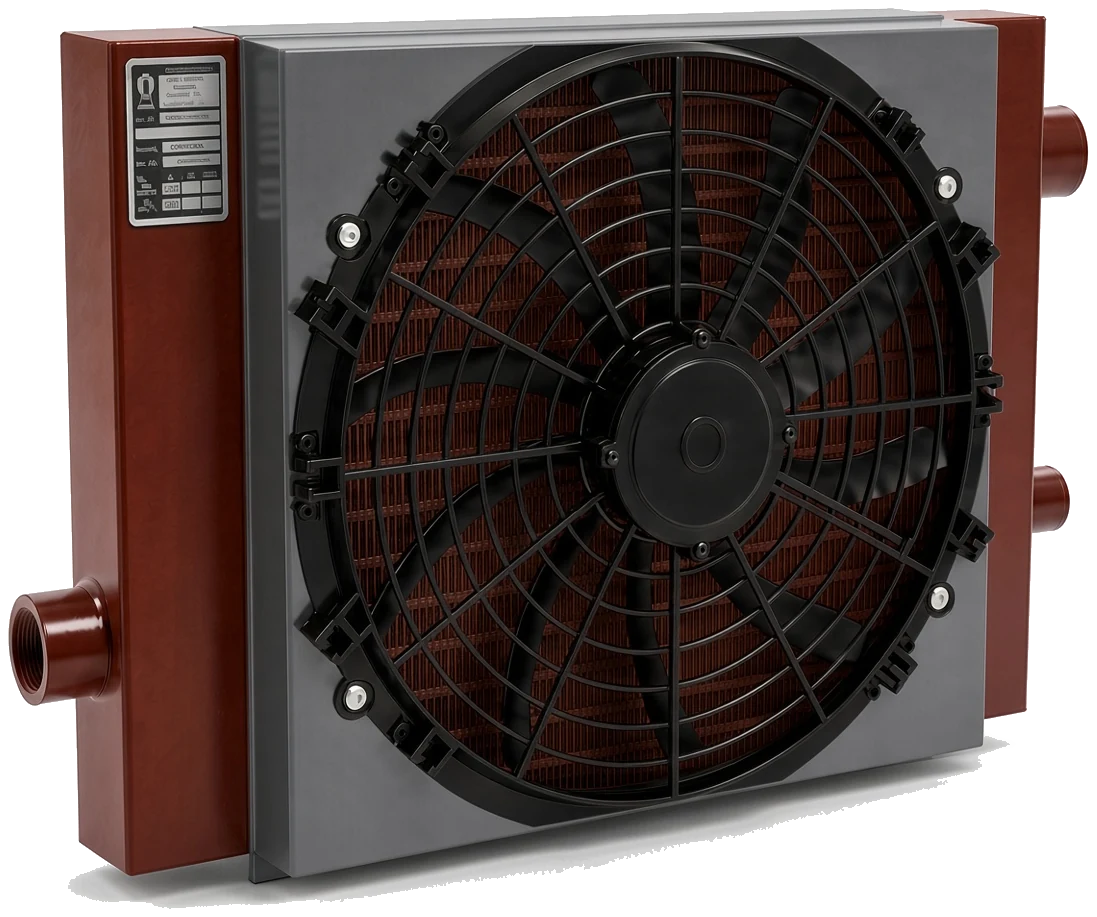
DCS Series Heresite
Small air cooled oil coolers running on the vessel's own 12 or 24 volt supply. Sizes DCS10 to DCS60, bar-and-plate cores coated in Heresite, for foredeck gear and small packs with no AC power and no hydraulic pilot to spare.
| PRODUCT | TYPE | STYLE | RATING |
|---|---|---|---|
| Heat Exchanger | Air Cooled | DC Motor Driven Core | 250 PSI / 250°F |
Specifications
Configuration & Size
Core Type:
Bar-and-plate aluminum
Size Range:
DCS10 through DCS60
Fan Drive:
12 V or 24 V DC motor
Connections:
SAE or NPT
Brand:
AKG
Materials
- Core: Brazed aluminum bar-and-plate
- Coating: Heresite baked phenolic
- Fan Motor: DC, 12 V or 24 V
- Shroud: Coated steel or aluminum
DCS Series on Vessel DC
Twelve or twenty four volts, small loads
Not every position on a boat has AC power or a spare hydraulic line. A foredeck locker with a windlass, a small davit pack, a stern thruster power unit or a workboat with no generator at all typically has one supply available: the vessel's 12 or 24 volt DC system. The DCS Series is built for exactly that, with a DC motor driving the fan and sizes running from DCS10 through DCS60 to suit the loads that fit inside a DC power budget.
The size range is deliberately modest, because DC fan power is limited by what the battery system and its cabling can supply continuously without voltage drop becoming a problem. That is the real constraint on these units, and it is worth checking before selecting. A fan drawing current at the end of a long thin cable run sees a lower voltage than the panel shows, turns slower, and moves less air than the rating assumes.
The core is the same bar-and-plate aluminum construction used across the range, rated 250 PSI and 250°F with SAE or NPT connections. Every core we ship for marine service is coated with Heresite, a baked phenolic finish that HeatX applies to AKG cores for salt-air duty. It does not alter the pressure or temperature ratings, and on a foredeck position where spray is constant it is what keeps the fins attached.

Tell us the system voltage, the continuous current available at the cooler position, and the cable run length and size. On a DC installation those three numbers matter as much as the heat load, because a starved fan does not deliver its rated airflow.
Request a QuoteDCS Series Heresite Applications




The DC fan and its supply
Oil enters the core manifold and spreads through flat passages between brazed plates, with corrugated fin material in the air layers between them. A DC motor mounted in the shroud turns the axial fan and draws ambient air through the core. Everything about the oil path is identical to the AC and hydraulic driven units; only the way the fan is turned differs.
The supply side is where DC installations differ in practice. Current flows from the battery bank through a fuse and a cable run to the motor, and every meter of that run drops voltage. Size the cable for the continuous current at the far end rather than the nominal figure, and fuse at the source. A voltage-starved motor turns slowly and the core underperforms with no obvious fault.
Specifying the DCS Series
The range runs DCS10 through DCS60, which covers small auxiliary oil circuits, windlass and davit packs and small thruster units. Above that the fan current stops being affordable on a DC system. If your load needs more air than the range offers, an AC or hydraulic driven unit is the right answer.
Almost always voltage drop. A long or undersized cable run means the motor sees less than system voltage, so it turns slower and moves less air. Measure the voltage at the motor terminals with the fan running, not at the panel. Corroded terminals add resistance and make it worse each season.
On a DC system, no. Fit a thermostat in the return line so the fan runs only above a set oil temperture. That cuts average current draw substantially, protects the battery bank when the engine is off, and stops the cooler over-cooling oil in cold weather. Use switching gear rated for DC, not AC.
Use whatever the vessel has, but 24 volt is easier for the same power because it draws half the current and therefore suffers less voltage drop for a given cable. On a 12 volt boat with a long run to the foredeck, cable size becomes the limiting factor rather than the cooler itself.
The core will, provided it drains. Heresite handles the salt on the fins and the ratings are unchanged. Mount the unit so water runs out of the fins rather than standing in them, keep the terminals glanded and out of direct spray, and rinse with fresh water on the deck gear schedule.
A DCS number is the DCS prefix followed by the frame size, DCS10 through DCS60, with suffixes covering the fan voltage, the fan arrangement and the connection style. The number carries the core face area and the airflow, so quote it rather than measuring the outline. Every cataloged size, with airflow figures and dimensional drawings, is on file with our sales desk. Call us with the number on the nameplate together with the vessel supply voltage, and we will confirm the frame and the motor before quoting a replacement.

